


 Damage
  Loss
Loss  Theft
Theft 


What Size Water Heater Do You Actually Need?
Have you ever stepped into a cold shower halfway through your morning routine? Or waited 20 minutes for the tank to recover before washing dishes? Chances are, your water heater is undersized — or you're simply not sure what size you need in the first place. Choosing the right water heater is one of the most impactful home decisions you can make, and getting it right means reliable hot water, lower energy bills, and fewer headaches down the road.
Whether you're replacing an aging unit or upgrading to something more efficient, this guide walks you through everything you need to know to make the right call — including a detailed look at tankless vs. traditional tank options, household sizing charts, and how to calculate your home's actual hot water demand.
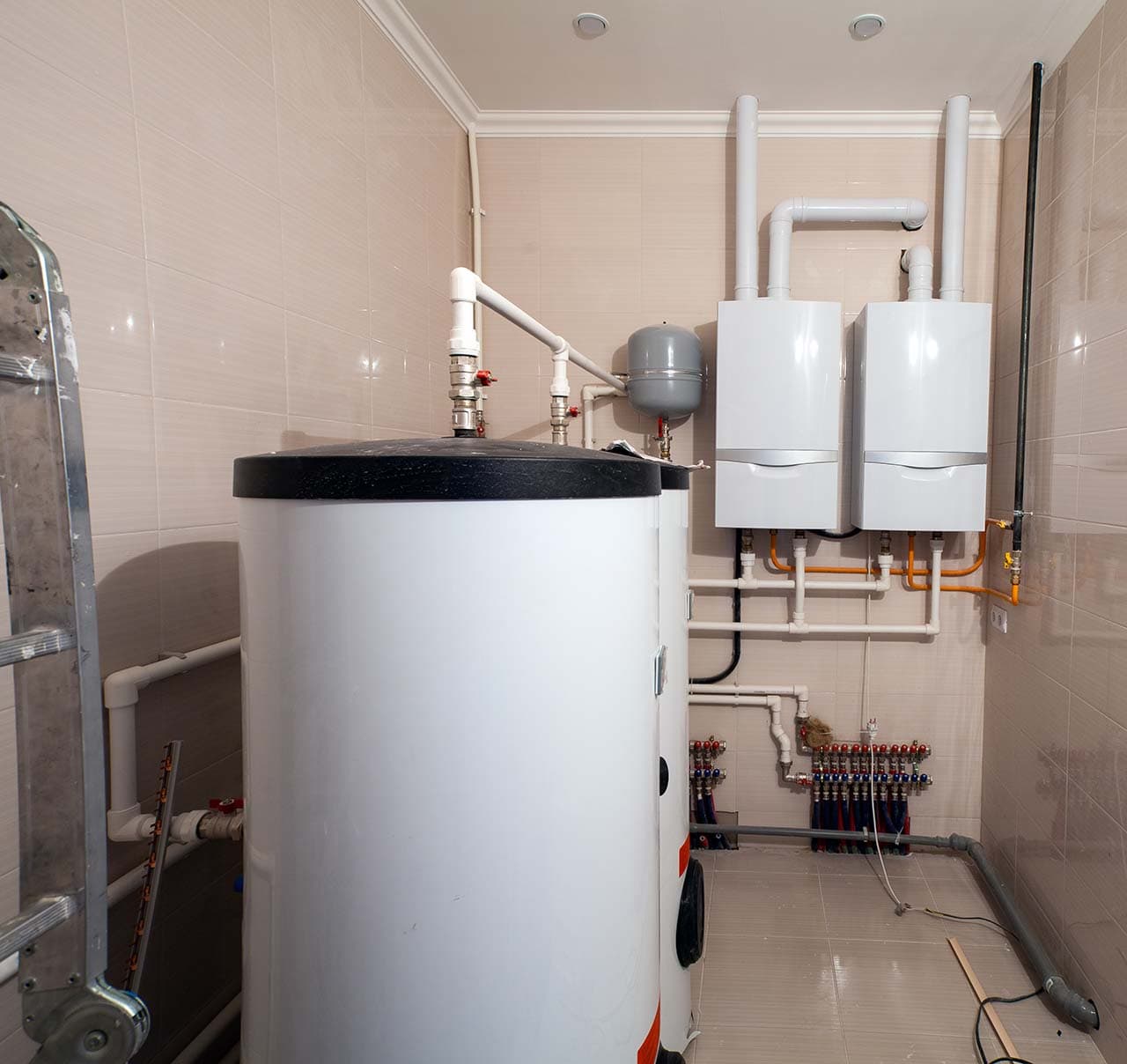
Tankless vs. Traditional Tank Water Heaters
The first decision most homeowners face is whether to go with a traditional storage tank water heater or a tankless (on-demand) unit. Both have genuine advantages — and the right choice depends heavily on your household size, usage patterns, and installation setup.
Tankless water heaters deliver hot water on demand, heating water only when you need it. They can supply between 2 and 12 gallons per minute (GPM) depending on the unit, making flow rate the key sizing metric. Traditional tank heaters store a set volume of preheated water — so you're sizing based on gallon capacity and how quickly the tank can recover.
Climate matters: In colder regions, incoming groundwater is much colder, which reduces the effective output of any water heater — especially tankless models. A unit rated at 8 GPM in a warm climate may only deliver 5–6 GPM in a northern winter. Always factor in your local climate when sizing up.
Tankless Hot Water Heater Size Chart
Use this chart as a starting point for right-sizing a tankless unit to your household. Flow rate (GPM) is the critical metric — more simultaneous fixtures means a higher GPM requirement.
| Household Size | Gas Tankless HDO Size (GPM) | Electric Tankless HDO Size (kW) |
|---|---|---|
| Family of 2 | 6 – 8 GPM | 10–14 kW |
| Family of 3 | 7 – 9 GPM | 15–23 kW |
| Family of 4 | 8 – 10 GPM | 20–28 kW |
| Family of 5 | 9 – 11 GPM | 25–34 kW |
| Family of 6+ | 11+ GPM | 34+ kW |
Standard Gas Water Heater Size by Family
Traditional storage tank heaters are sized by gallon capacity. The table below reflects recommended tank sizes based on family size and whether demand is classified as regular or high (more frequent showers, dishwasher use, laundry, etc.).
| Family Size | Demand Level | Gas Tank (Gallons) | Electric Tank (Gallons) |
|---|---|---|---|
| 1–2 people | Regular/Low | 30 | 40–50 |
| 2–3 people | Regular | 40 | 40–50 |
| 2–3 people | High | 50 | 50–65 |
| 3–4 people | Regular | 50 | 50–65 |
| 3–4 people | High | 60 | 65–80 |
| 5+ people | Regular/High | 75+ | 80+ |
Why electric tanks run larger: Electric water heaters typically recover more slowly than gas units, so they need more stored capacity to cover peak demand periods. A gas 40-gallon unit may be equivalent in real-world use to a 50-gallon electric tank.
What Does Gallons Per Minute (GPM) Mean?
If you're evaluating a tankless heater, GPM is the number you'll see most often. One gallon per minute is equivalent to 231 cubic inches per minute of water flow. To put it in perspective, a standard showerhead uses roughly 2 gallons per minute, and a kitchen faucet uses around 1.5–2 GPM. Running two showers simultaneously means you need at least 4 GPM of hot water capacity.
Use this simplified chart to estimate the total GPM your household might need during peak demand — typically morning routines when multiple fixtures run at once.
| Household Size | Low GPM Estimate | High GPM Estimate |
|---|---|---|
| 1–2 people | 2 GPM | 5 GPM |
| 2–4 people | 3 GPM | 4 GPM |
| 3–5 people | 4 GPM | 8 GPM |
| 5+ people | 5 GPM | 10+ GPM |
How to Calculate Your Home's Hot Water Usage
Rather than guessing, you can calculate your actual hot water demand in a few straightforward steps. This is especially useful if your household falls into an edge case — lots of appliances, a home office, frequent guests, or commercial-grade fixtures.
-
Check Your Utility Bill
Your water bill often lists total gallons used per month. Divide by 30 for your daily average, then by the hours of peak use to get an hourly demand figure. This baseline gives you a concrete starting point.
-
Audit Your Water Meter
Turn off all fixtures and check whether the meter dial is still moving — a sign of hidden leaks that inflate your usage figures. A leak-free reading gives you accurate data to work with.
-
Evaluate Your Appliances
Different appliances use very different amounts of hot water. A standard dishwasher uses 6 gallons per cycle; a clothes washer uses around 16.5 gallons per load; a 10-minute shower uses roughly 20–25 gallons. Add up your daily totals to understand your peak hour demand.
-
Use a First Hour Rating (FHR) Table
First Hour Rating is the number of gallons a tank water heater can supply in one hour starting with a full tank. Match your peak hour demand to a water heater's FHR, and you'll have a unit that won't leave you cold mid-shower.
-
Calculate Using a Verified Formula
The U.S. Geological Survey provides a standardized household water use calculator. Cross-reference it with the American Water Works Association data to compare your household's usage against national averages — a useful sanity check before finalizing your selection.
First Hour Rating Reference Table
The table below shows average hot water usage by activity, which helps you build out a realistic peak-hour demand profile for your home.
| Activity / Fixture | FHR (Gallons/Hour) | GPM Flow Rate | Units Per Use |
|---|---|---|---|
| Bathing / Showering | 20 gal | 1.5–3 GPM | — |
| Washing Hair | 6 gal | 0.5–1 GPM | 1 |
| Hand Washing | 2 gal | — | — |
| Dishwasher (by hand) | 4 gal | 2–5 GPM | — |
| Shaving | 1 gal | — | 2 |
| Running Dishwasher | 6 gal | 1.5 GPM | — |
| Running Clothes Washer | 16.5 gal | 1 GPM | — |
| Hi-Ada Fixture | 15 gal | — | 1 |
| Top-Loader Washer | 25 gal | — | — |
| Auto Dishwasher (1 gal/min) | 6 gal | — | — |
Additional Factors to Consider
Beyond household size and GPM calculations, several other factors should influence your final water heater selection:
A surge tank determines how much water can be supplied at one time. If demand spikes unexpectedly, a tank with strong surge capacity prevents the heater from falling behind — particularly important in larger households.
A water heater installed in an unheated garage or basement performs differently than one inside a conditioned space. A colder environment reduces efficiency and may warrant a larger or more insulated unit.
Incoming groundwater temperature varies significantly by region and season. The colder your source water, the harder your heater has to work. In colder climates, size up — especially for tankless electric models.
Insulation value (R-value) plays a key role in standby heat loss for tank-style heaters. A higher R-value means less heat escaping between uses — directly reducing your energy bills over time.
Planning to add a bathroom, host extended family, or install a hot tub? Size for your anticipated future demand, not just current use. Going one size up today is far cheaper than replacing a unit in two years.
Hard water causes mineral buildup inside tanks and on heating elements — reducing efficiency and lifespan. In areas with hard water, consider a unit with an anode rod designed for hard water, or pair it with a softener.
Ready to Upgrade Your Hot Water Setup?
The MRCOOL 50-Gallon Electric Tank Water Heater delivers reliable, efficient hot water for households of 3–5 people — built for performance and long-term value.
MRCOOL 50-Gal Electric Heater