


 Damage
  Loss
Loss  Theft
Theft 


Elliptical Training Advantages: Insights from a Fitness Expert
Share
Elliptical trainers are among the most versatile pieces of equipment you can find in any gym — or bring into your own home. The smooth, gliding pedal motion replicates the natural feel of walking and jogging, while the vertical stride pattern mirrors the challenge of climbing stairs. Add in the moving handlebars, and you have a machine that simultaneously engages your arms, chest, and shoulders for a comprehensive, muscle-toning experience.
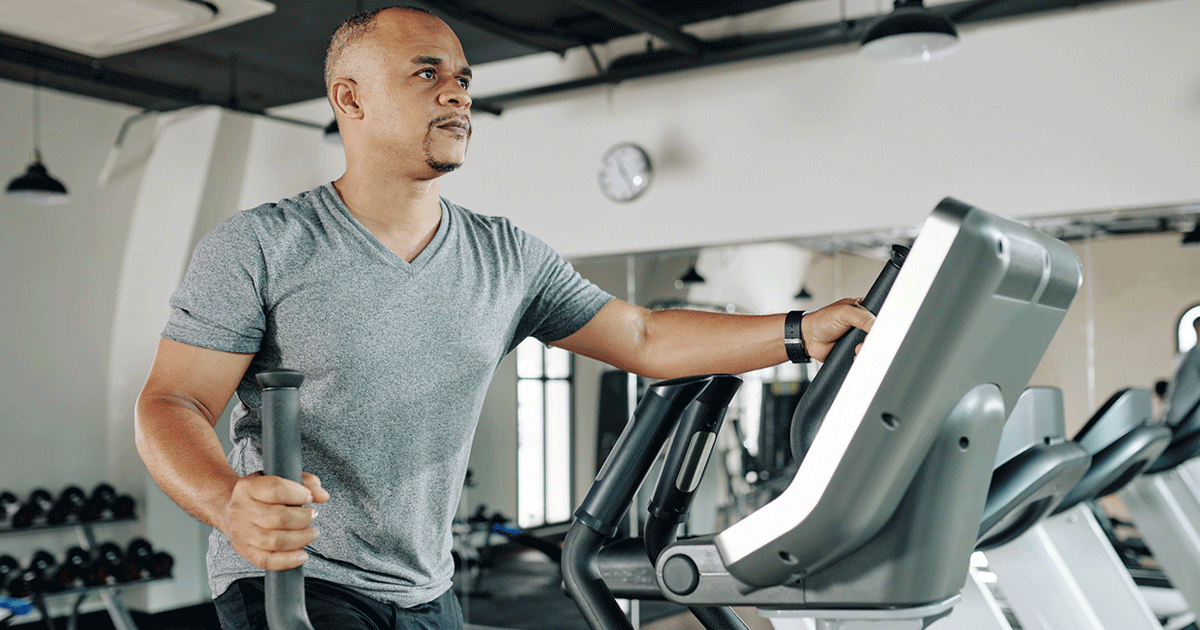
Fitness professionals love the elliptical for its incredible flexibility. It can serve as a dedicated cardiovascular tool for heart health and calorie burning, a muscle-strengthening device, or even a rehabilitation aid for individuals working on movement control and body mechanics. The elliptical covers a remarkable range of training needs within a single machine.
High-intensity runners, in particular, can greatly benefit from elliptical sessions on recovery days. Running every single day places enormous stress on muscles and joints, and the elliptical provides an effective way to unload that tension while still maintaining an active workout schedule.
Despite their versatility and user-friendly design, elliptical machines may not be the ideal choice for everyone. Older adults and individuals who struggle with balance might find a stepper machine more suitable, since it offers a more controlled, stable movement pattern without the lateral sway that can sometimes occur on an elliptical trainer.
Elliptical vs. Treadmill: How Do They Compare?
One of the standout advantages of the elliptical over treadmill running is its ability to significantly reduce what exercise scientists call "ground reaction force" — essentially, the impact that reverberates through your body each time your foot strikes a surface. On the elliptical, this stress is dramatically minimized, which means less tension and pressure on your knees, hips, and lower back compared to traditional running.
At the same time, elliptical workouts qualify as weight-bearing exercise, which plays a crucial role in strengthening your skeletal system. Unlike cycling or swimming, you are standing upright and supporting your own body weight throughout the entire workout, meaning gravity is actively working to help build stronger bones.
That said, the treadmill does hold certain advantages. Because the elliptical assists your movement — the pedals help propel your body forward — you can achieve an elevated heart rate but may not burn quite as many calories as you would during a full running session on the treadmill. Each machine has its strengths, and the best choice depends on your individual fitness goals.
Why Should You Consider Elliptical Workouts?
If you are in good physical condition and do not experience knee or hip problems, elliptical sessions work beautifully as part of a balanced fitness program. Pairing them with weight-bearing activities like strength training, walking, jogging, or running can help maximize your bone density and overall physical resilience.
For those dealing with knee osteoarthritis, hip discomfort, or degenerative disc conditions in the back, the elliptical can step in as your primary cardiovascular exercise. It delivers the heart-pumping benefits of an intense cardio session without placing undue stress on sensitive joints — a major advantage for anyone managing chronic pain or joint conditions.
Of course, quality elliptical machines represent a real investment, with gym-caliber models running into the thousands of dollars. They also demand a fair amount of floor space. If you are considering purchasing one for your home, look for a model that features the classic forward-and-backward elliptical motion rather than a purely up-and-down stair-climbing pattern. Machines with moving arm handles are also preferable, since they engage the upper body and deliver a more complete workout.
Featured Product
Searching for the perfect home elliptical? Check out a top-rated option available in our store:
NordicTrack AirGlide 7i EllipticalAs for workout frequency, aim to meet recognized cardiovascular guidelines: roughly three one-hour sessions of easy-to-moderate exercise per week, or about 150 minutes of higher-intensity activity spread across several days. Use those benchmarks as a starting framework to figure out how many elliptical sessions fit naturally into your weekly routine.
How to Use the Elliptical with Proper Form
Although elliptical workouts are gentler on the joints and spine than many other cardio options, poor technique can still lead to musculoskeletal imbalances over time. Because the machine assists your forward motion, it is easy to fall into the trap of simply going through the motions without actively engaging the quadriceps and other leg muscles. Focus on deliberately pushing your legs down and back, then pulling them up and forward in a full, cyclical pattern — similar to the motion you would use on a bicycle or while running.
Resist the temptation to crank up the resistance too quickly, especially if you are just starting out. The goal is to find a level of resistance that feels challenging yet allows you to maintain smooth control and solid technique. Once you begin flailing or losing your rhythm, you are no longer getting an effective workout — and you may risk injury.
Pro Tip: Using the Arm Handles
One of the most common questions people ask is whether they should use the moving arm handles. The answer is simple: if you can coordinate your arms and legs together smoothly, absolutely use them for a full-body workout. If coordination feels difficult at first, stick with the stationary center handles for balance and support. Master the leg movement first, then gradually incorporate the arms. The key is to avoid shifting side to side — use the arms to counterbalance and stabilize your leg motion.
Coordinating all four moving parts — both arms and both legs — can be tricky for some users at first. Take your time getting comfortable with the leg stride before adding upper-body movement. The effort to learn proper form is well worth it, as it transforms the elliptical from a simple cardio machine into a powerful full-body training tool.

Ready to experience these benefits at home? Explore the elliptical we recommend:
NordicTrack AirGlide 7i Elliptical