


 Damage
  Loss
Loss  Theft
Theft 


Pellet Grill vs. Gas Grill: Which One Belongs in Your Backyard?
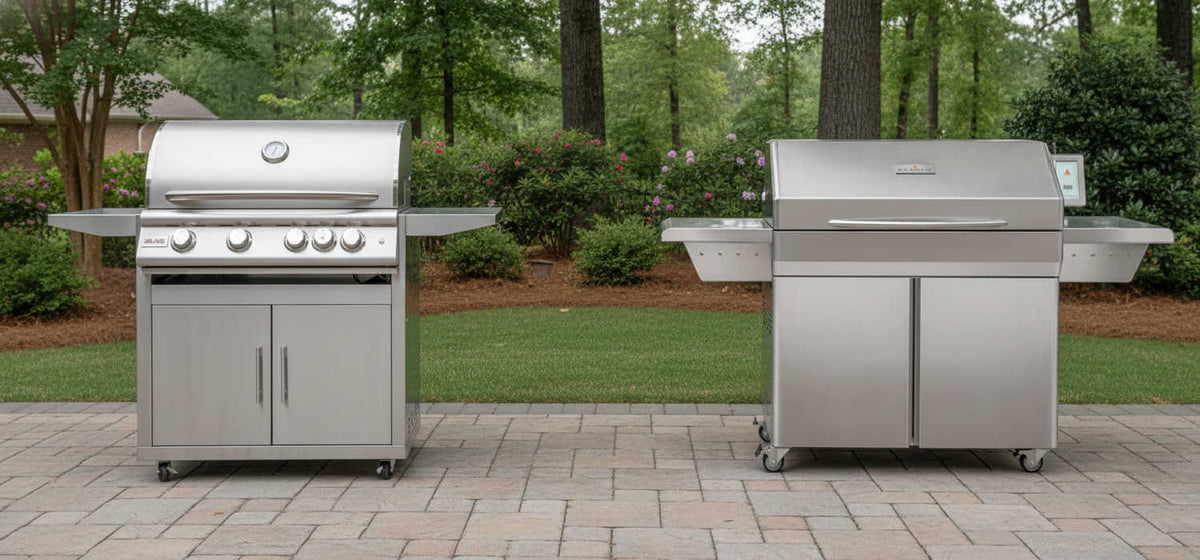
Two Grills. Two Philosophies. One Backyard.
Whether you're a weekend warrior who needs dinner on the table in 20 minutes or a low-and-slow enthusiast chasing perfect brisket, the type of grill you own shapes every cookout you'll ever have. Pellet grills and gas grills both have passionate followings — and for good reason. Each one excels in specific situations. The key is knowing which fits your lifestyle.
This guide cuts through the noise and walks you through the real differences: flavor, temperature control, convenience, startup time, maintenance, and overall value. By the end, you'll know exactly which grill deserves a permanent spot on your patio.
What Sets These Two Grills Apart?
A pellet grill burns compressed wood pellets fed automatically by an auger system, producing both heat and authentic wood smoke. A gas grill uses propane or natural gas ignited by burners — straightforward, fast, and reliable. The difference in fuel isn't just mechanical; it fundamentally changes what ends up on your plate.
| Feature | Pellet Grill | Gas Grill |
|---|---|---|
| Fuel Source | Wood Pellets | Propane / Natural Gas |
| Flavor Profile | Rich, smoky, wood-fired | Clean, neutral grill flavor |
| Heat Source | Indirect (convection) | Direct flame |
| Temperature Range | ~160°F – 500°F | ~300°F – 700°F+ |
| Startup Time | 10–15 minutes | Under 5 minutes |
| Ease of Use | Set-and-forget digital control | Manual knob adjustment |
| Price Range | $400 – $2,000+ | $200 – $1,500+ |
Pellets vs. Propane: How Each Grill Cooks
The cooking method is where these two grills diverge most sharply. Understanding how each transfers heat to your food will completely change how you think about which recipes suit which machine.
Pellet Grill
Wood pellets ignite in a fire pot. A fan circulates heat and smoke throughout the cooking chamber in a convection-style loop. Food cooks evenly with minimal hot spots, absorbing smoky flavor throughout the process.
Gas Grill
Gas burners produce direct radiant heat from below. You get intense, immediate sear capability with precise control per burner zone. Perfect for steaks, burgers, and anything that needs a hard, fast crust.


Temperature Control — Who Wins?
Temperature management separates a good cook from a great one. Both grill types offer control, but in very different ways.
Pellet Grill Temperature Control
Pellet grills use a digital controller — often with Wi-Fi connectivity — to regulate temperature automatically. The auger feeds more or fewer pellets based on your set point. Swings of ±10–15°F are typical, which is precise enough for almost any recipe. You set it, walk away, and come back to perfectly cooked food.
Gas Grill Temperature Control
Gas grills put you in full manual control. Turn the knob up, turn it down — the heat responds within seconds. This real-time responsiveness is excellent for searing or adjusting mid-cook but requires you to stay present and attentive throughout the session.


Indirect vs. Direct Heat — What It Means for Your Food
Pellet grills cook primarily with indirect heat — the flame never touches the food. This makes them exceptional for long, slow cooks like ribs, brisket, pork shoulder, and whole chickens. The convection airflow keeps temperatures consistent from corner to corner.
Gas grills excel at direct heat cooking. The flame sits just below the grates, creating the high-contact sear that gives steaks their crust, burgers their char, and vegetables their caramelized edges. Some gas grills include an indirect zone by turning off one burner — versatile, though not quite as hands-off as a pellet setup.
The Smoke Advantage
Nothing a gas grill produces can replicate the depth of flavor that comes from hours in real wood smoke. Pellet grills infuse everything — chicken, fish, vegetables, even desserts — with a complexity that gas simply cannot match. If flavor is your top priority, the pellet grill wins without debate.
Pellets vs. Fuel Type — How It Shapes Every Bite
With a pellet grill, the wood species you choose directly affects the flavor of your food. Hickory delivers bold, bacon-like smokiness. Apple and cherry add sweetness and color. Mesquite brings intensity. You can blend pellet types to craft your own flavor signature — something no gas grill can offer.
Gas grills produce a clean, neutral cooking environment. What you taste is the food itself, seasoning, and any marinades — not the fuel. For those who prefer a pure, non-smoky flavor, this is a feature, not a limitation.

Day-to-Day Grilling: Low-and-Slow vs. Fast Cooking
Think about how you actually use your grill throughout the week — not just during the big weekend cook. That everyday use case matters more than anything else when choosing between these two.
Weeknight with a Pellet Grill
Set your temperature 15 minutes before cooking. Load the food, let the digital controller handle the rest. Walk inside, finish your prep, come back when the probe alarm sounds. Zero babysitting required.
Weeknight with a Gas Grill
Turn the knob, wait two minutes, and you're cooking. Gas grills are unbeatable for quick weeknight meals. Chicken breasts, fish, vegetables — 20 minutes start to finish, including cleanup.


Startup Time, Convenience, and Cooking Workflow
Convenience is often the deciding factor for people who grill multiple times per week. Here's how the two compare from the moment you step outside to the moment food hits the table.
| Step | Pellet Grill | Gas Grill |
|---|---|---|
| Ignition | Press button, auto-start | Turn knob, instant flame |
| Preheat Time | 10–15 minutes | 3–5 minutes |
| Cook Monitoring | Minimal — set & forget | Frequent manual checks |
| Post-Cook Cleanup | Ash removal, grease drain | Brush grates, grease trap |
| Best For | Long cooks, smoking, roasting | Quick grilling, searing |
Maintenance and Cleanup Differences
Every grill requires upkeep. The type of maintenance, and how often you need to do it, varies considerably between pellet and gas units.
Pellet Grill Maintenance
- Empty ash from fire pot regularly
- Clean grease management system after each cook
- Vacuum interior every few sessions
- Keep pellets dry — store in sealed containers
- Inspect auger and fan seasonally
Gas Grill Maintenance
- Brush grates after each use
- Clean burner ports to prevent clogs
- Empty grease trap regularly
- Check gas connections and hoses seasonally
- Inspect igniter function before season
Pellet grills demand slightly more routine attention due to ash buildup and pellet management. Gas grills are simpler to clean quickly but require vigilance around gas line safety and burner health over time.
Pellet Grill Pros and Cons
Pros
- Authentic wood-fire smoke flavor
- Hands-free digital temperature control
- Versatile: smoke, roast, bake, grill
- Consistent even cooking chamber-wide
- Wi-Fi control on modern models
Cons
- Slower preheat than gas
- Requires electricity to operate
- Pellets need dry, sealed storage
- Limited high-heat sear performance
- More interior cleaning required
Gas Grill Pros and Cons
Pros
- Near-instant ignition and preheat
- High heat for hard sears
- Simple, intuitive operation
- No electricity required
- Lower entry-level cost
Cons
- No natural wood-smoke flavor
- Requires manual monitoring
- Propane tanks need refilling
- Hot spots common on cheaper models
- Less versatile for slow cooking
Which Grill Should You Choose?
If flavor, versatility, and hands-off cooking are your priorities — the pellet grill is your answer. If you need speed, simplicity, and a powerful sear on demand — gas is your machine. For the backyard enthusiast who wants the best of both worlds, many pitmasters own one of each. But if you're picking just one, the pellet grill delivers an experience gas simply cannot replicate.
Recteq X-Fire Pro 825