


 Damage
  Loss
Loss  Theft
Theft 


How to Pick the Perfect Trail Mountain Bike: Your Complete Buying Guide
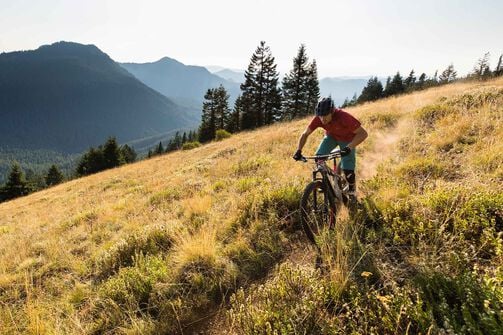
Choosing the right trail mountain bike for your adventure, terrain, and riding style.
Mountain biking is all about freedom on two wheels. There are no strict rules about how you should enjoy the trails. Maybe you need a rugged bike for daily errands and weekend adventures, or perhaps you dream of racing through technical downhill courses. Whatever your goal, the key is finding what brings you joy. And if you want a bike that lets you sample every flavor of off-road riding, a trail mountain bike is the ultimate pick.
In This Guide
▸ What Is a Trail Mountain Bike?
▸ Hardtail or Full-Suspension for Trail Riding?
▸ Trail Bike Geometry: Balancing Climbs and Descents
▸ Selecting the Right Wheel Size
▸ Must-Have Features for a Versatile Trail Bike
▸ Traditional Trail Bike or E-MTB?
▸ Exploring Trail Bike Options
▸ Budget and Value Considerations
▸ Maintenance and Long-Term Ownership
▸ Start Your Trail Riding Adventure
What Is a Trail Mountain Bike?
When most people picture a mountain bike, they are actually thinking of a trail bike. These are adaptable, all-round machines built to handle a little bit of everything. More specialized categories — such as enduro rigs or cross-country racers — zero in on one particular discipline, but that specialization comes with trade-offs. An enduro bike, for instance, will outperform a trail bike on punishing downhill runs. However, features like aggressive tires, heavy-duty suspension, and steep geometry also add weight and reduce agility when you need to pedal back uphill.
Trail bikes generally offer between 120 mm and 150 mm of suspension travel at both ends, combined with balanced geometry and components engineered for the broadest possible range of conditions. If you only had space in your garage for a single mountain bike, a versatile trail bike would be the smartest choice for most riders.
Hardtail or Full-Suspension for Trail Riding?
Across the many styles of mountain biking — cross-country, trail, enduro, and downhill — you will encounter two fundamental frame designs: the traditional hardtail and the more modern full-suspension setup. A hardtail features a rigid rear end with only a front suspension fork to soak up bumps. A full-suspension bike adds a rear shock as well, making it noticeably more capable and comfortable over rough terrain. The trade-off? Full-suspension bikes typically cost more and demand additional maintenance to keep that rear linkage performing at its best.
For many riders, the choice between hardtail and full-suspension boils down to budget. A quality hardtail can be offered at a significantly lower price than a comparable full-suspension model, and with no rear shock to service, lifetime ownership costs stay lower too.
That said, budget is not the only factor — some riders genuinely prefer hardtails. Many cyclists started their off-road journey on a hardtail and cherish the raw, connected feeling these simpler bikes deliver. If your local trails tend to be smooth and flowing, you may not even feel the need for rear suspension. For most riders tackling steep, rocky, root-filled terrain, however, a full-suspension trail bike will feel more manageable and far more enjoyable. Ultimately, the decision comes down to balancing your budget with your personal riding style.
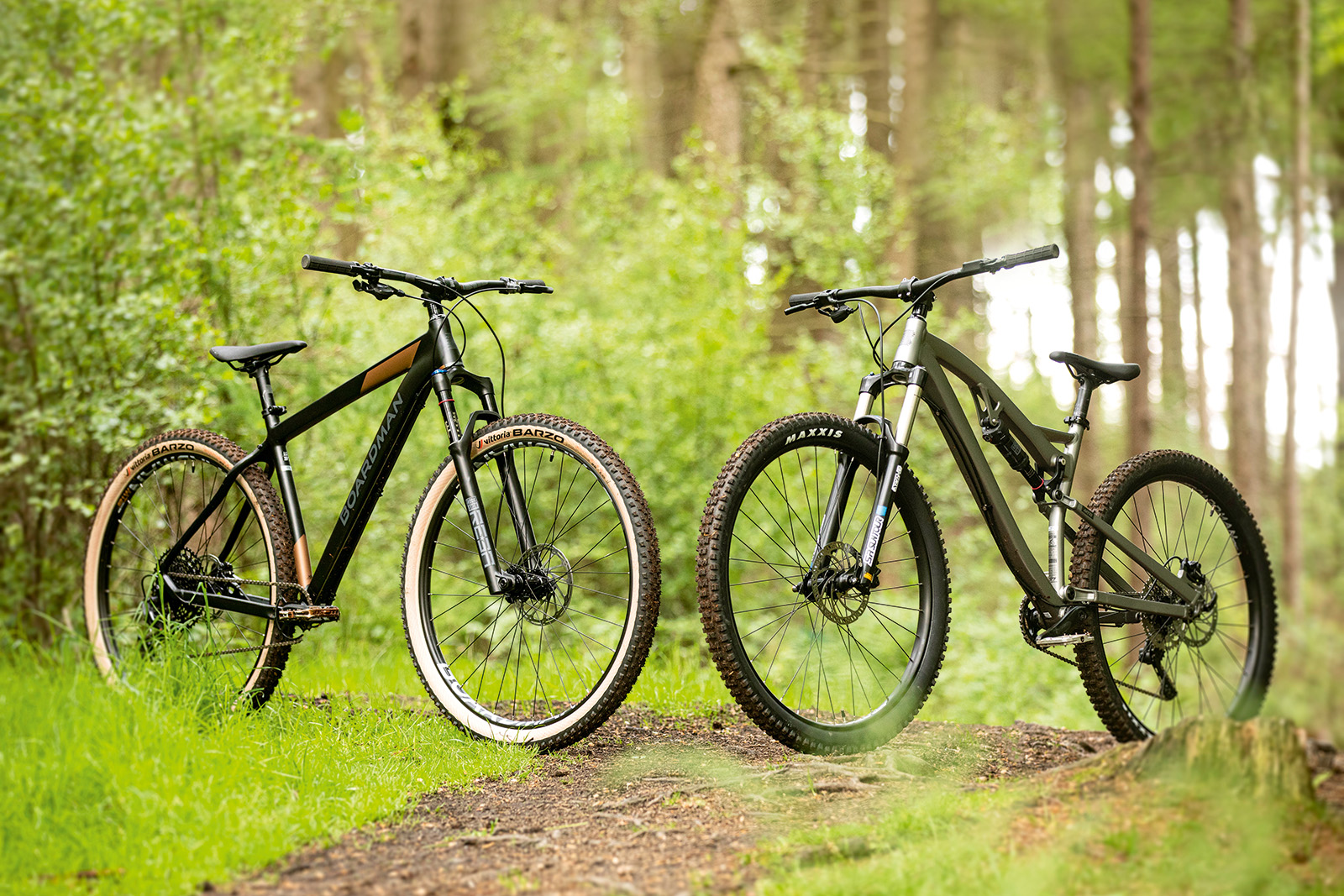
Trail bike comparison: hardtail vs. full-suspension — agility vs. comfort on the trail.
Trail Bike Geometry: Balancing Climbs and Descents
Geometry describes the proportions and angles of a bike frame, going well beyond the simple question of "does it fit me?" Although geometry numbers can seem overwhelming at first, once you understand the basics, you can predict how a bike will feel before you ever throw a leg over it.
Head angle is one of the most commonly discussed measurements. The terms "slack" and "steep" describe how tilted the front fork is. A slacker head angle keeps a downhill bike stable at extreme speeds, while a steeper angle gives quicker steering for tight switchbacks and punchy climbs.
Seat-tube angle follows the same logic. A very steep seat tube positions you in a powerful pedaling stance for long climbs, but it can shift extra weight onto your wrists on flatter sections. Trail bikes typically opt for a moderate seat-tube angle that keeps your ride versatile and comfortable across varied terrain.
Reach is another major dimension. Longer reach adds high-speed stability but can make the bike harder to maneuver in tight spots. Shorter reach boosts nimbleness at the expense of composure when things get fast. The best trail bikes split the difference with what is known as balanced geometry — moderate head angle, seat-tube angle, and reach figures that let you enjoy the entire ride from bottom to top.
Selecting the Right Wheel Size
Wheel size plays a huge role in how your trail bike behaves. The two most popular options are 29-inch and 27.5-inch wheels, and each has distinct advantages. For the majority of riders, 29-inch wheels are the go-to choice because they roll over obstacles more easily and maintain momentum better on varied terrain.
More aggressive riders sometimes prefer a smaller 27.5-inch rear wheel paired with a 29-inch front wheel — a configuration known as a "mullet" setup. This combination makes it easier to flick the rear end through tight turns on technical trails while still benefiting from the rollover capability of a larger front wheel.
For smaller-framed riders, bikes in XS and S sizes sometimes ship with 27.5-inch wheels front and rear. The reasoning is straightforward: a comfortable, proportional fit and easy handling matter more than the extra speed a larger wheel can offer. At the end of the day, the right wheel size is the one that makes your bike the most fun to ride.
Must-Have Features for a Versatile Trail Bike
Because trail bikes are built to do everything, their components need to be robust and adaptable. Look for a wide-range cassette and powerful hydraulic disc brakes as non-negotiable starting points. The broad gear range makes grinding up steep climbs far more manageable, while quality brakes ensure you can scrub speed confidently on demanding descents.
A dropper seatpost is another feature worth prioritizing. With the push of a lever, it lets you lower the saddle out of the way for steep descents, then raise it back up for efficient climbing — all without stopping. This single upgrade can dramatically boost your confidence and control on technical terrain.
Finally, tubeless-ready tires are a must. Running tubeless lets you drop tire pressures for improved grip and dramatically reduces the risk of punctures compared to traditional inner-tube setups. Many quality trail bikes ship with tubeless-compatible wheelsets and tires, making the conversion straightforward whenever you are ready.
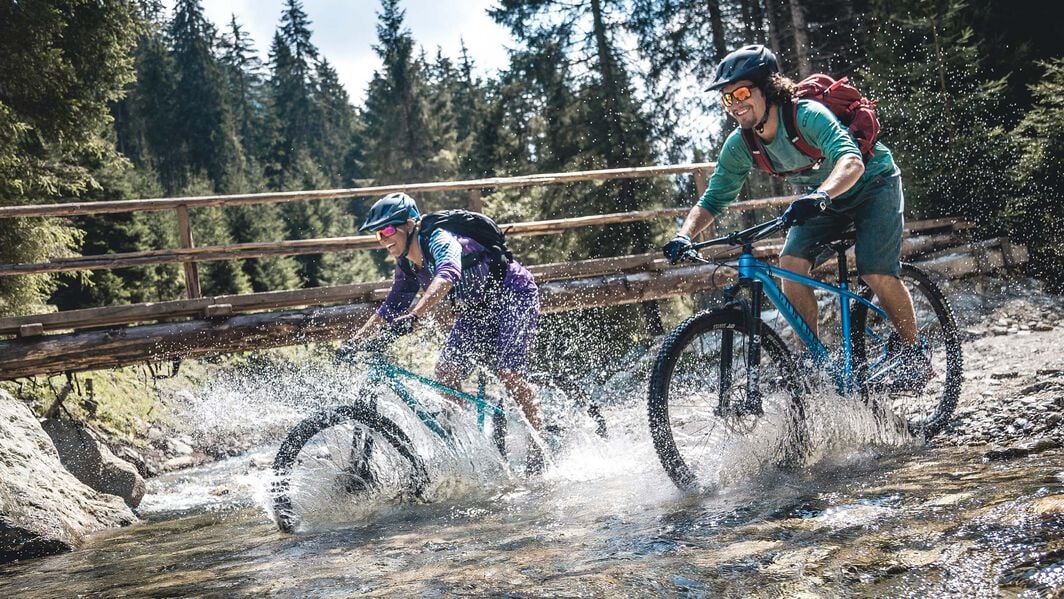
Exploring rugged terrain — the right features make all the difference on every ride.
Traditional Trail Bike or E-MTB: Finding the Best Fit
Electric mountain bikes — commonly called e-MTBs — have surged in popularity, and many trail bike models now come in both pedal-only and motor-assisted versions. Some riders love the simplicity and lighter weight of a traditional mountain bike, while others find that the addition of a motor is an absolute game-changer.
The motor assistance lets you ride farther, cover ground faster, and tackle steeper technical climbs than you could under your own power alone. Importantly, modern e-MTBs are designed to deliver the same riding experience as their non-motorized counterparts. Whether you pick the standard or electric version of a given model, you can expect very similar geometry, suspension behavior, and component quality. The question is simply whether you want the extra boost of a motor or prefer to be your own engine.
Exploring Trail Bike Options
Trail bikes come in several families, each tuned for a slightly different rider. Full-suspension all-rounders are designed for riders looking for a fun, confidence-inspiring experience — whether you are exploring your neighborhood trails or venturing further into the backcountry. They feature balanced geometry, durable components, and comfortable suspension that handles a wide range of conditions.
More aggressive trail bikes push the boundaries with longer suspension travel — up to 160 mm — and progressive geometry. These machines open up almost limitless possibilities, from gnarly rock gardens to bike-park laps, while still being capable enough to pedal back up the hill without issue.
Hardtail trail bikes remain an excellent entry point into off-road riding. Built with agile aluminum frames, they offer a comfortable and responsive ride across many surfaces. Their simplicity keeps the price down and maintenance minimal, making them perfect for riders who want to explore without overcomplicating things.
Budget and Value Considerations for Trail Bikes
Trail mountain bikes span a wide price spectrum, and finding the right balance of performance and value is key. Entry-level aluminum hardtails deliver excellent fun per dollar, while mid-range full-suspension models offer a noticeable step up in capability and comfort. At the top end, carbon-fiber frames and premium suspension components shave weight and increase responsiveness, but the performance gains become more incremental at higher price points.
Our advice? Think about where and how often you ride. If you are hitting the trails every weekend and tackling technical terrain, investing in a quality full-suspension bike will pay off in ride quality and durability. If you are just getting started or ride mostly smooth singletrack, a well-specced hardtail delivers incredible value and lets you put your savings toward gear, protection, and upgrades down the road.
Maintenance and Long-Term Ownership
Keeping your trail bike in top shape does not have to be complicated, but it does require consistency. After every ride, give the frame, drivetrain, and brakes a quick once-over. Clean off mud and debris before it has time to dry and harden. Lubricate the chain regularly, check tire pressures before heading out, and inspect brake pads for wear.
Full-suspension bikes need periodic suspension servicing — typically every 50 to 100 hours of riding depending on conditions. Hardtails are simpler in this regard, needing only fork maintenance. Regardless of frame type, scheduling an annual professional tune-up is a smart investment that keeps everything running safely and smoothly for years to come.
Find Your Perfect Trail Bike and Start the Adventure
Choosing the right trail mountain bike is a personal journey, and there is no single answer that works for everyone. Consider the type of terrain you ride most, whether you value climbing efficiency or downhill confidence, and how much you want to invest. Armed with the knowledge from this guide — suspension type, geometry basics, wheel size, and essential components — you are well equipped to make a confident decision.
The trails are waiting. All that is left is to pick the bike that matches your ambition and start exploring.