


 Damage
  Loss
Loss  Theft
Theft 


Understanding MTB Suspension Travel: How Much Do You Actually Need?
Looking for more suspension travel on your mountain bike? Or perhaps wondering if a short-travel setup might be a better fit? Knowing how much travel you actually need — and understanding what it does — is essential to picking the right bike for your terrain and goals.
You're going to invest in quality components, so it pays to learn about suspension travel before committing. Would you rather ride on a bike perfectly suited to your terrain, or one that holds you back? Let's walk through everything you need to know.
What Exactly Is Suspension Travel on a Mountain Bike?
Mountain bikes come in a wide range of styles, but one of the biggest differentiators is how much suspension travel they offer. Suspension travel isn't just a random number — it's a direct measurement of how far your fork and rear shock can compress to absorb rough terrain.
In the simplest terms, mountain bike suspension travel describes how many millimeters your fork or rear shock can move through its full stroke. The more travel your suspension offers, the more it can absorb — bigger hits, deeper ruts, and steeper drops. Less travel, on the other hand, keeps things snappy, efficient, and light for smoother trails and climbing.
A lot of mountain bikes create some confusion here. They all have fork suspension and many have rear suspension too. When a bike states it has "140mm of travel," that means the suspension fork (or shock) can compress up to 140 millimeters before bottoming out. All the MTB travel numbers you see are produced by a specific combination of frame design and suspension components working together.
When to Choose a Long-Travel Mountain Bike
Long Travel Range: 140mm – 180mm+
Ideal for aggressive trail riding, enduro racing, and downhill courses.
Long-travel mountain bikes generally offer between 140mm and 180mm or more of suspension stroke. They're designed for serious terrain — steep descents, rock gardens, root-laden trails, and everything in between. If your riding involves chairlifts, shuttle runs, or gravity-fed trails, a long-travel bike is your best friend.
Large-travel bikes handle those 150mm+ fork compressions like a dream. Trail features that would rattle your fillings on a shorter-travel bike feel manageable and smooth. The trade-off? These bikes tend to be a bit heavier and slightly less efficient on long climbs. They're also typically more expensive because of their beefier suspension components.
That said, don't count them out for versatility. A capable rider on a long-travel bike can still handle cross-country terrain. You might sacrifice a bit of climbing speed, but when the trail pitches downward, nothing else comes close.
If you're mostly riding trails that are rough, steep, and technically challenging — or if you simply want maximum confidence on aggressive terrain — the extra travel is well worth its weight. Enduro bikes and downhill rigs live in this category for good reason.
Some riders also find long-travel bikes attractive simply because they're more forgiving. A longer-travel suspension allows you to carry speed over obstacles without having to be pixel-perfect with your line choices. That forgiveness translates directly into more fun on rough terrain.

When to Choose a Short-Travel Mountain Bike
Short Travel Range: 80mm – 120mm
Perfect for cross-country riding, smooth trails, and fitness-focused rides.
Spinning up climbs is where a short-travel MTB truly shines. If you measure success in terms of speed, efficiency, and maximum energy transfer, a bike with 80mm to 120mm of travel is built precisely for that purpose.
Cross-country and short-travel trail bikes fall into this category. They are efficient and usually lighter than bikes with more suspension. If you love fast-paced, smooth-flowing singletrack or gravel-adjacent trails, a short-travel rig is the way to go. Marathon XC races and endurance events practically demand this type of setup.
If you notice pro riders at cross-country events with lightweight frames, rigid cockpits, and quick-rolling tires, that's the short-travel world in action. Every gram matters, every pedal stroke counts, and the suspension exists mainly to take the edge off roots and small rocks rather than absorbing massive impacts.
But don't let the lower numbers fool you — a short-travel bike isn't fragile. A confident rider can push a 100mm bike through surprisingly rough terrain. You'll just feel more of the trail, and your body will absorb what the suspension doesn't. That immediate feedback is something many riders prefer — it makes you a more skilled, more engaged pilot.
If you're after a bike that just wants to make you faster and more efficient, whether that's for racing or simply covering ground with a smile, the short-travel category has your name on it.
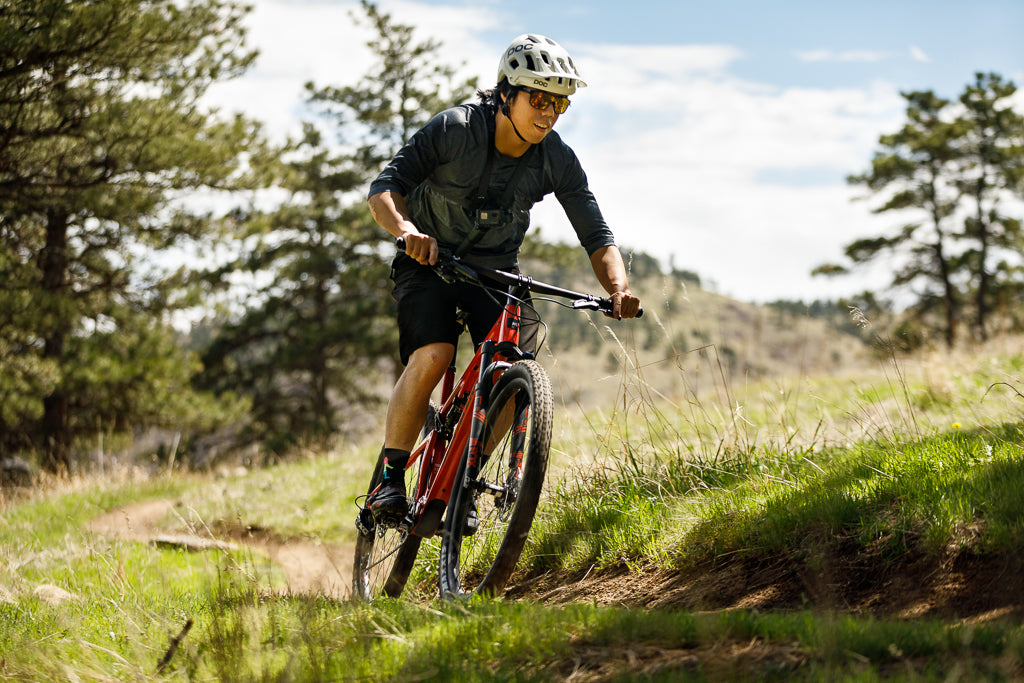
So How Much Suspension Travel Do You Really Need?
There's no single perfect answer — and that's actually a good thing. The right amount of travel depends on the kind of riding you do most often. Most riders overthink this, but it really comes down to matching your bike to your terrain and priorities.
Let's break it down by the most common rider profiles:
Soft-Pedaling & Mellow Trails
For gentle fire roads, light singletrack, and casual weekend rides, 80mm–100mm is plenty. You'll love the lightweight, efficient feel.
Trail Riding & All-Mountain
Varied terrain with climbs and descents? A 120mm–140mm bike handles the widest range of conditions with confidence.
Enduro & Aggressive Descents
Big drops, rock gardens, and high speeds demand 150mm–170mm. Built to take punishment and keep you in control.
Full Downhill & Bike Park
Chairlift-assisted, gravity-only riding? Go 180mm–200mm+. Maximum absorption for maximum sends.
Real Rider Perspectives: What Experienced Riders Say
We gathered thoughts from experienced riders across different disciplines to give you a sense of how real people approach this decision:
I used to think bigger was always better, but after switching to a 130mm trail bike I realized I was overbiking for 90 percent of my rides. Climbs became fun again, and I'm just as fast descending because I actually have to ride with better technique. It's made me a sharper rider overall.
— Seth K., All-Mountain Rider
I'd rather be slightly overburdened on the climbs than undergunned on the descents. I run 160mm front and rear, and honestly the newer bikes pedal so much better than they used to. The weight penalty is minimal, and I never feel like I'm out of my depth when a trail gets rowdy.
— Charlie B., Enduro Racer
Near my home I ride smooth singletrack about 80 percent of the time, so I went with a 120mm bike. It's quick, responsive, and pure joy on flowy trails. But when I travel to rougher spots, I sometimes wish I had a bit more cushion. Having two bikes would be ideal, but for my typical rides, short travel is absolutely the right call.
— Monica R., XC Enthusiast
What About Mid-Travel "Quiver Killer" Mountain Bikes?
There's a reason the 120mm to 140mm travel range has become incredibly popular in recent years. Bikes in this sweet spot — often called "quiver killers" — aim to do everything reasonably well. They climb with enough efficiency to keep you happy on long days, and they descend with enough composure to handle most trail features without breaking a sweat.
If you could only own one mountain bike — and many riders are in exactly that situation — a mid-travel trail bike is arguably the smartest choice. You won't set any downhill speed records, and you won't win an XC race, but you'll have a bike that handles 90 percent of situations with total confidence and genuine fun.
Modern geometry and suspension designs have pushed these bikes to incredible levels of capability. A 130mm bike today performs better than a 160mm enduro rig from a decade ago. Progressive geometry, better kinematics, and improved suspension components mean you get more performance from less travel than ever before.

How to Choose the Right Mountain Bike for You
Choosing a mountain bike isn't just about suspension numbers — though they're an important piece of the puzzle. You also need to consider wheel size, frame material, geometry, and your own physical build and riding style.
Ask yourself: where do you ride most often? Are your trails smooth and fast, or rough and technical? Do you live near a lift-access bike park, or do every one of your rides start with a long climb? Your honest answers to these questions will point you in the right direction faster than any spec sheet.
If you're a bigger rider who carries more weight, you'll naturally want more suspension support. Heavier riders compress suspension further, so sizing up in travel by one category can help maintain the plush feel and control you need. Conversely, lighter riders can often get away with less travel because their suspension doesn't compress as deeply under normal riding conditions.
No matter what, it's wise to test ride a few options before committing. The way a bike feels underneath you — how it responds to your weight, your pedaling input, and the terrain — tells you more than any review ever could. Visit your local bike shop, hit a demo day, and let your body make the final decision.
Ultimately, the best mountain bike is the one that makes you want to ride more. Whether that's a nimble 100mm cross-country machine or a burly 170mm enduro beast, choose the bike that aligns with your riding goals and puts the biggest grin on your face every time you hit the trail.

Featured Product
Ready to Hit the Trail?
The GT Zaskar FS Comp 29 delivers versatile suspension travel, modern geometry, and trail-ready confidence in one complete package.
GT Zaskar FS Comp 29The Bottom Line
Suspension travel is a tool, not a trophy. Match it to your terrain, your riding style, and your goals. Whether you go short, mid, or long — the best choice is the one that keeps you riding and smiling. Get out there and enjoy the trail.