


 Damage
  Loss
Loss  Theft
Theft 


Everything You Need to Know About the 29er MTB
Contents
- The evolution of the 29er in mountain biking
- Why choose a 29-inch mountain bike?
- Are there any drawbacks?
- Handling and ride feel on tight trails
- How frame geometry changes on 29ers
- What type of rider suits a 29er?
- How to decide: Is a 29er the right MTB for you?
- FAQs about 29er mountain bikes
The Evolution of the 29er in Mountain Biking
Mountain biking has always been a sport defined by constant evolution. From early rigid steel frames to today's advanced full-suspension designs, the pursuit of performance has never slowed. One of the most influential changes in recent decades has been the widespread adoption of the 29-inch wheel — or the "29er" as riders affectionately call it.
In the early days, 26-inch wheels reigned supreme. They were nimble, lightweight, and responsive. But as riders started seeking more speed on technical terrain and longer distances, a bigger wheel format began to gain traction. The 29er entered the scene and quickly proved that larger wheels could roll over obstacles more efficiently, maintain momentum better, and provide a more stable ride.
By the mid-2010s, 29ers had taken over the cross-country and trail segments of mountain biking. Today, they are the dominant wheel size across most categories, from XC racing to enduro, and even gaining ground in downhill. It's a full-circle shift that transformed how bikes are designed, ridden, and raced.
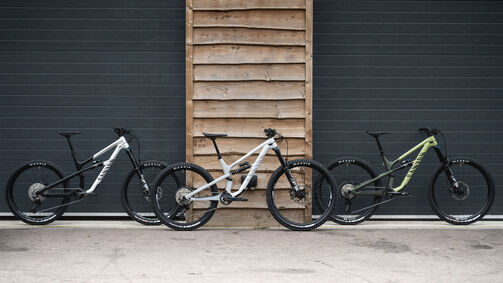
Why Choose a 29-Inch Mountain Bike?
The appeal of the 29er is rooted in physics. A larger wheel has a higher contact patch with the ground, which means more grip, more stability, and a smoother roll over roots, rocks, and other trail obstacles. Where a 26-inch wheel might drop sharply into a hole or bounce off a rock, a 29er climbs over it with far less disruption.
Speed is another major advantage. On open trail and undulating terrain, 29ers maintain momentum more effectively than smaller wheels. Once rolling, that bigger wheel keeps going. For riders who cover long distances or tackle sustained climbs, this translates into genuine energy savings over a ride.
There's also the confidence factor. Newer riders often find that a 29er gives them a sense of stability and predictability that encourages them to push harder and ride terrain they might otherwise avoid. That extra confidence can accelerate skill development significantly.
Strengths of the 29er
- Superior rollover ability on rough terrain
- Better momentum and rolling efficiency
- Improved traction and contact patch
- More stable at speed on open trails
- Confidence-inspiring for all skill levels
Points to Consider
- Slightly heavier wheel system overall
- Less nimble in very tight switchbacks
- Longer wheelbase can feel different at first
- Frame sizing trickier for shorter riders
Are There Any Drawbacks to a 29-Inch Mountain Bike?
No bike is perfect, and it's worth being honest about where 29ers have limitations. The most commonly cited drawback is maneuverability in tight, technical terrain. The longer wheelbase that comes with bigger wheels can make sharp switchbacks and narrow single-track feel less snappy than a shorter, more compact 27.5-inch setup.
Weight is another consideration. Larger rims, tires, and tubes add up. While modern component technology has minimized this difference significantly, the 29er will generally edge out heavier than a comparable 26 or 27.5-inch build.
Fit can also be a challenge for shorter riders. On very small frame sizes, the large wheel diameter can create clearance issues and geometry compromises that affect how the bike handles. Riders under 5'4" may want to try a few options before committing to a 29er.
The key to choosing a wheel size is riding style over trend. A 29er is a remarkable machine, but only if it genuinely matches how and where you ride. Don't buy into the hype — buy into the fit.
Handling and Ride Feel of 29er MTBs on Tight Trails
Understanding how a 29er handles begins with the geometry. A longer wheelbase means the bike is inherently more stable at higher speeds and on straighter descents. The trade-off is that quick, darty direction changes require more input from the rider.
Modern frame designers have worked hard to offset this through steeper seat tube angles, shorter chainstays, and slacker head tube angles. The result is a 29er that feels far more agile today than those from even five years ago. Trail and enduro 29ers in particular have benefited enormously from this geometric evolution.
On tighter trails, an experienced rider will barely notice the difference. It's largely a matter of adapting technique — a slightly wider line here, a more deliberate entry into corners there. The benefits of the bigger wheel on the majority of trail surfaces far outweigh any occasional loss of snap in hairpin turns.
How Frame Geometry Changes on 29er MTBs
When you increase the wheel diameter, everything downstream in the frame must adapt. Designers raise bottom bracket height to clear the larger hoops, adjust chainstay length to manage the longer rear end, and recalibrate head tube angles to maintain steering response. It's a cascading design challenge that the best engineers handle with elegance.
The result, in modern 29er bikes, is geometry that provides a low, aggressive riding position without sacrificing standover height or control. Many brands now offer what's called "reach-adjusted" sizing — where the frame is proportioned specifically for the wheel size, ensuring riders of all heights can access a natural fit.
One notable benefit of the taller wheel is its effect on trail — the measurement that governs steering feel. A 29-inch wheel with a given fork offset will produce more trail than a smaller wheel, meaning the steering self-centers more readily. This contributes to that planted, confident feel 29er fans love.

What Type of Rider Would Suit a 29-Inch Mountain Bike?
The 29er is a remarkably versatile platform, but it shines brightest in specific scenarios. Understanding your riding style will help you determine whether a 29er is truly the right choice.
Endurance Riders
If you're covering serious mileage — think marathon races, bikepacking routes, or long days in the saddle — the 29er's rolling efficiency is a genuine asset. Less energy spent fighting terrain means more left for the miles ahead.
Cross-Country Racers
At the elite level, 29ers now dominate XC racing. The speed advantage on climbs and rolling terrain, combined with modern lightweight builds, makes the 29er the clear choice for competitive cross-country riding.
Trail Riders
For the everyday trail enthusiast who wants a bike that handles everything well — from flowy singletrack to rooted climbs — the 29er is hard to beat. It's the most well-rounded option in today's MTB market.
Enduro Riders
Enduro-spec 29ers have evolved to handle aggressive, high-speed descents while still pedaling efficiently back up. If you enjoy technical downhills as much as the climb, modern enduro 29ers deliver on both fronts.
Downhill Racers
The downhill category has been the last holdout for 29ers, but it too is shifting. More gravity riders are moving to 29-inch and mixed-wheel setups as the speed and stability advantages prove themselves on race courses worldwide.

How to Decide: Is a 29er the Right MTB for You?
Here's the honest truth — for the majority of mountain bikers, the 29er is the right choice. It's fast, it's stable, it's capable, and the modern crop of 29-inch bikes handles better than any previous generation. The wheel size has matured into a category-defining standard for good reason.
That said, if you're a shorter rider under 5'4", or you exclusively ride tight, twisty technical trails that reward a whippy, responsive bike, it's worth spending time on a 27.5 as well before committing. Ride both if you can. Your body and your terrain will tell you what's right.
Still unsure? Ask yourself one question: where do you ride most, and what does that terrain reward? If the answer involves speed, flow, and a variety of surface types, the 29er will serve you exceptionally well for years to come.
Ready to Ride a 29er?
The GT Zaskar FS Comp 29 is a precision-tuned trail machine built for riders who demand performance on every surface. Full suspension, 29-inch wheels, and aggressive geometry — this bike is built to deliver.
GT Zaskar FS Comp 29FAQs About 29er Mountain Bikes
How fast will a 29er mountain bike go?
Speed depends on the rider, terrain, and build — but 29ers are widely accepted as faster than smaller wheel sizes on open, rolling, and cross-country terrain due to their superior rolling efficiency and momentum retention.
Can you put 29-inch wheels on a 27.5 mountain bike frame?
In most cases, no. Frame clearances, geometry, and brake mount positioning are designed around a specific wheel diameter. Swapping between wheel sizes typically requires a purpose-built mullet or mixed-wheel frame to be done safely and correctly.
What size rider is best suited for a 29er?
Riders 5'4" and above generally find 29ers to be an excellent fit. Shorter riders can still ride 29ers, but fit becomes more nuanced and it's worth consulting a bike fitter or trying the bike before purchasing.
Are 29ers harder to maneuver than smaller wheel bikes?
In tight switchbacks and extremely technical terrain, 29ers can feel slightly less nimble. However, modern geometry improvements have made today's 29ers far more agile than earlier generations. Most riders adapt quickly.
Are you a plus-size rider?
29er bikes are offered across a wide range of frame sizes and some brands also produce plus-tire 29er builds with wider, higher-volume tires for additional traction and comfort. There are excellent options for riders of all sizes and builds.
Do 29-inch tires need different suspension settings?
Yes — the larger wheel acts as a small amount of additional suspension in itself, so you may find slightly different air pressure or sag settings feel better on a 29er compared to a smaller wheel. Your fork and shock manufacturer guidelines are a good starting point.