


 Damage
  Loss
Loss  Theft
Theft 


Your Complete Guide to Sunlight Readable Monitors
When screens are exposed to direct sunlight or intense reflective light, standard displays quickly become unreadable. Indoors, it is easy enough to shut the blinds or reposition a screen. But in commercial, industrial, and outdoor field settings, fighting ambient glare on backlit LCD panels presents a serious challenge. As the display industry advances, the demand for technologies that keep screens visible in bright outdoor conditions has grown tremendously.
Here is a closer look at what sunlight readable displays actually are, how the underlying technology functions, and where you can find the best options available today.
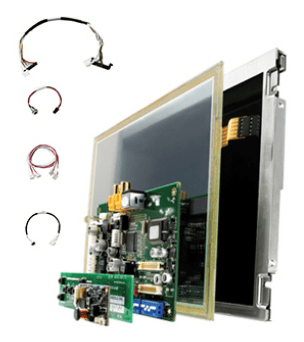
How Does a Sunlight Readable Monitor Work?
The earliest sunlight readable screens were functional but far from perfect. Many early high-brightness LCD models consumed excessive power and suffered from significantly shorter battery life compared to standard displays. Traditional sunlight readable panels drew so much energy that overheating became a frequent problem, shortening the lifespan of individual LEDs and the panel as a whole. Fortunately, modern engineering has introduced a range of improvements in battery efficiency, heat dissipation, and visibility through several distinct approaches.
On a standard LCD, the image you see is produced by a white backlight shining through each individual pixel. The colors and images on your screen are controlled by how much light each pixel allows through its red, green, and blue sub-elements. When a pixel is completely off, it appears black. LCDs also use a light diffusing layer between the backlight and the pixel grid to scatter light evenly, preventing visible bright spots on the display surface.
There are two fundamental ways to make an LCD easier to read under sunlight. The most straightforward is simply boosting the backlight intensity. Display brightness is measured in nits, with typical screens averaging between 250 and 450 nits. Displays rated at 800 or more nits are generally considered to meet the minimum threshold for sunlight readability, while most purpose-built sunlight readable monitors deliver 1000 nits or higher. Increasing the backlight output remains the most widely used method for achieving outdoor visibility on LCD panels.
Sunlight Readable Monitor Contrast
Contrast plays just as vital a role as brightness when it comes to outdoor display readability. The contrast ratio is a standard specification listed on virtually every display data sheet, expressed as a reference number such as 750:1. Entry-level displays usually fall within the 300:1 to 500:1 range, while premium LCDs can reach ratios of 1000:1 to 2000:1. The contrast ratio measures the relationship between the brightest white and the deepest black a display is capable of producing.
For outdoor use, the effective contrast ratio becomes the key metric — it represents the difference between light emitted by the screen and reflected ambient light from external sources. A higher effective contrast ratio translates directly to better legibility in bright sunlight conditions.
Key Takeaway: A monitor rated at 1000+ nits with a contrast ratio exceeding 1000:1 provides the foundation for truly readable outdoor screen performance. Both specifications work together — brightness alone is not enough without strong contrast to match.
Transflective Materials in a Sunlight Readable Display
An alternative approach to achieving sunlight readability involves replacing the standard diffuser material between the LED backlight and the LCD pixel layer with a transflective film. This material functions much like reflective sunglasses or a one-way mirror — its shiny surface faces toward the front of the screen. When sunlight enters the panel, it passes through the pixels, bounces off the transflective layer, and reflects back through the pixel grid toward your eyes. This clever design actually uses incoming sunlight to boost the screen's apparent brightness rather than fighting against it.
One trade-off with transflective diffuser technology is that it limits how much backlight passes through from behind the panel. This means that in dim or indoor environments without strong ambient light, transflective displays can appear darker and harder to read compared to traditional screens.
Optical Bonding for a Sunlight Readable Touch Screen
Optical bonding offers yet another method for improving screen visibility in direct sunlight and other intensely bright settings. In a conventional touchscreen device, the touch sensor and the LCD panel are two separate components, with the touchscreen mounted over the display surface and a thin air gap between them. When strong light hits the touchscreen layer, some of it reflects off the internal surfaces of both the touch panel and the LCD, reducing clarity. Optical bonding eliminates this problem by filling the air gap with a transparent adhesive gel that bonds the touchscreen directly to the LCD surface. Once the gel cures and hardens, the air gap disappears entirely, dramatically reducing internal reflections and enhancing overall visibility.
Sunlight Readable Display Surface Treatments
Beyond the internal engineering of a display, surface treatments provide another layer of outdoor readability enhancement. The most widely used treatments include anti-reflective (A/R) films and anti-glare coatings. Anti-reflective treatments work by layering multiple ultra-thin transparent films onto the monitor surface, with each layer carefully engineered in thickness and composition to disrupt specific light wavelengths and minimize reflection. Anti-glare treatments take a different approach, using a textured surface to scatter reflected light rather than allowing it to bounce directly back at the viewer. Both methods can be combined to produce displays that remain bright, crisp, and easy to read across virtually any lighting condition.
How is Sunlight Readable Monitor Visibility in Darkness?
The intense brightness of a sunlight readable display can become overwhelming when used at night or in dark environments. However, most industrial-grade sunlight readable monitors include both manual and automatic dimming features. An auto-dimmer uses an ambient light sensor — typically mounted on the front bezel — to continuously measure surrounding light levels and adjust backlight intensity in real time. This capability is essential for any touchscreen or industrial monitor that operates around the clock, ensuring comfortable viewing whether it is noon or midnight.
Common Sunlight Readable Monitor Uses
Vehicle-mounted touchscreen computers are among the most common applications requiring high-brightness LCDs, as ambient sunlight flooding through windows makes standard displays nearly impossible to read. Beyond vehicles, sunlight readable LCD technology is also widely deployed in indoor settings surrounded by large windows or open environments, including air traffic control centers, railroad cars, marine vessel bridges, agricultural machinery cabs, and public information kiosks.
Finding the Right Sunlight Readable Monitor for Your Application
A dependable sunlight readable display solution is a necessity for any commercial, industrial, military, or field application where bright light or direct sunlight could compromise the usability of a digital screen. Leading manufacturers offer sunlight readable systems suited for an extensive range of needs, from commercial kiosks to rugged industrial environments, and from security monitoring stations to marine and vehicular installations.
High-brightness, daylight-viewable touchscreen monitors are the ideal choice for any demanding ambient-light environment. The best enhanced high-bright TFT active matrix displays deliver brightness levels from 700 nits all the way up to 2200 nits, significantly outperforming standard commercially available non-enhanced products and ensuring exceptional clarity wherever your work takes you.
Featured Product
Ridgid CS6x VERSA Digital Recording Monitor
Explore professional-grade digital monitoring with Wi-Fi connectivity — built for demanding field and inspection environments.
Ridgid CS6x VERSA MonitorBackyard Provider — Equipping your workspace with professional-grade tools and technology.