


 Damage
  Loss
Loss  Theft
Theft 


The Complete Guide to Sizing Your Multi-Zone Mini Split AC System

Selecting the ideal cooling system plays a vital role in establishing a comfortable and energy-efficient indoor atmosphere. Multi-zone mini split air conditioners provide a versatile option that enables you to manage temperatures independently across various rooms. Whether you're enhancing your current residence or designing a fresh living area, grasping how to properly size your system marks the initial step toward optimal climate management.
This comprehensive guide will take you through the process of assessing your space, determining your cooling requirements, and choosing the appropriate setup of multi-zone indoor and outdoor components.
Getting to Know Multi-Zone Mini Split Systems
Multi-zone mini split configurations consist of one outdoor compressor unit linked to several indoor air handlers. Every indoor component can be regulated separately, delivering tailored temperature control for each specific area or zone. Unlike conventional central air systems that condition an entire home uniformly, multi-zone setups provide targeted comfort while potentially reducing energy consumption by cooling only the spaces you're actively using.
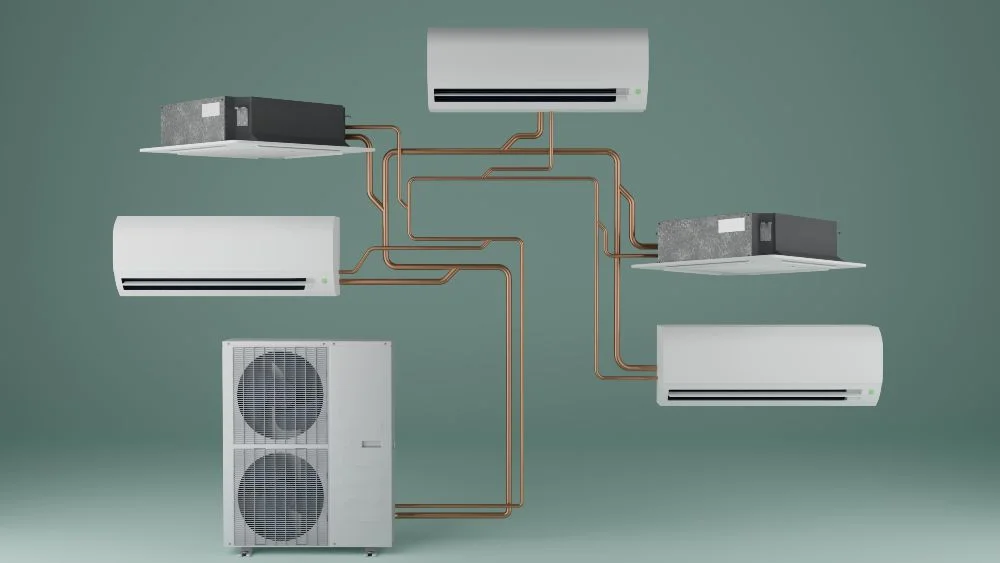
Beyond enhanced energy efficiency, these systems prove optimal for residences or workplaces with diverse usage patterns and changing specific requirements.
Key Elements That Influence System Sizing
Multiple variables affect the dimensions and arrangement of your multi-zone configuration. The primary and most significant factor is the total square footage of the area you intend to condition. As a baseline guideline, you'll require approximately 20 BTUs for each square foot. To illustrate, a 1,000-square-foot zone would typically demand around 20,000 BTUs of cooling power.
Nevertheless, square footage alone doesn't provide the complete picture. The configuration of your residence or workplace can significantly influence how effectively cool air moves through the space. Areas featuring open concepts perform differently than those with distinct smaller compartments, while rooms with extensive wall coverage or recessed areas will gain from having multiple indoor air handlers to ensure even temperature distribution.
Additional considerations include the frequency of room usage and any unique characteristics of the space. Rooms receiving abundant natural sunlight or featuring towering ceilings, extensive window installations, or heat-generating equipment may require enhanced cooling capacity. Likewise, the climate conditions in your geographic region play a crucial role—homes in more humid climates typically demand greater cooling capacity compared to those situated in drier regions.
Determining Your BTU Requirements
BTUs (British Thermal Units) serve as the standard measurement for gauging the cooling output of an air conditioning system. To calculate the BTUs required for your particular space, apply the following calculation:
Required BTU = Room Area × Floor Height × 8 × Sunlight Multiplier
To determine the cooling capacity required, begin by measuring the floor area of each room and then multiply by the room height. Following that, multiply by 8, and ultimately, factor in a "sunlight multiplier" of 1.2 for rooms with significant sun exposure, 1.0 for areas with moderate natural light, and 0.85 for spaces that remain predominantly shaded and receive minimal direct sunlight.
Consider this scenario: you have a living space measuring 30 feet in length and 15 feet wide, with a total area of 450 square feet. If the room features a 9-foot ceiling, you would calculate 450 multiplied by 9 to reach 4,050. Multiplying this by 8 produces 32,400. If this space benefits from exposure to a large window facing south and receives abundant all-day sunlight, applying the 1.2 multiplier yields an estimated requirement of 38,880 BTUs—suggesting you should target roughly 40,000 BTUs to adequately cool this area.
After calculating your BTU needs, match them with a suitable multi-zone compressor unit. Each compressor accommodates a range of BTU capacities, generally between 80 to 115 percent of its rated output. This flexibility enables you to customize your setup while maintaining space for minor variations in performance requirements.
Selecting the Appropriate Multi-Zone Unit
Once you've established your combined BTU requirements, begin the selection process for your indoor unit arrangement. Premium manufacturers provide indoor air handlers in multiple sizes, which includes 9,000, 12,000, 18,000, and 24,000 BTU options. You can combine these in various configurations to achieve your desired total capacity.
For compact rooms or additional zones under 1,000 square feet, a dual-zone configuration featuring two 9,000 BTU units may prove adequate. For mid-range properties spanning 1,000 to 2,000 square feet, consider a 27,000 BTU compressor paired with either a dual-zone or tri-zone setup. For larger residences exceeding 2,000 square feet, you'll likely require 36,000 BTU or greater capacity with tri-zone or quad-zone configurations to ensure comprehensive coverage.
Multi-Zone System Sizing Reference Table
| Total Square Footage | BTUs Required | Recommended Model | Zone Options | Indoor Unit Combinations |
|---|---|---|---|---|
| Up to 1,000 sq ft | Up to 20,000 | 18,000 BTU | Dual Zone | 9K + 9K, 9K + 12K, 9K + 18K |
| 1,000–1,500 | 20,000–30,000 | 27,000 BTU | Dual Zone / Tri-Zone | 12K + 12K, 12K + 18K, 9K + 9K + 9K, 9K + 9K + 12K |
| 2,000–3,000 | 30,000–40,000 | 36,000 BTU | Tri-Zone / Quad-Zone | 12K + 12K + 12K, 9K + 12K + 18K, 9K + 9K + 9K + 12K |
| 2,500–5,000 | 40,000+ BTUs | 42,000 BTU | Quad-Zone / Penta-Zone | 12K + 12K + 18K, 9K + 9K + 12K + 12K, 9K + 9K + 9K + 9K + 9K |

Setup and Upkeep Guidelines
To guarantee your system delivers peak performance, pay close attention to installation location and positioning. Indoor units should be mounted in locations with unobstructed airflow and minimal obstacles. Avoid positioning them behind large furniture pieces, drapes, or other barriers that could impede air distribution.
Consistent maintenance proves essential for sustaining efficiency and prolonging the operational life of your equipment. Regularly clean the filters, inspect for refrigerant leaks, and verify that the outdoor unit remains clear of debris and buildup. A properly maintained system will not only provide more effective cooling but will also consume less energy over its lifetime.
Premium Features of Modern Systems
Today's leading multi-zone mini split systems incorporate intelligent features that enhance both convenience and usability. Many models include built-in Wi-Fi connectivity, enabling you to manage your system remotely through a smartphone application. These systems also integrate with popular voice assistants, simplifying temperature adjustments through voice commands.
Enhanced energy-saving options such as programmable timers and eco-friendly modes help minimize utility costs. In humid conditions, the built-in dehumidification feature can also enhance indoor air quality and overall comfort. Quiet operation ensures that units won't interrupt sleep or disrupt activities, making them particularly well-suited for bedrooms and home office environments.
Ready to Upgrade Your Home Comfort?
Explore our premium selection of multi-zone mini split systems designed for optimal performance and efficiency.
Senville 36000 BTU Dual ZoneClosing Thoughts
Choosing the appropriate multi-zone mini split AC system requires careful evaluation of your space's square footage, cooling requirements, and the appropriate compressor capacity. By taking into account these elements and consulting the sizing reference above, you can create a customized cooling solution that provides maximum comfort and efficiency for your residence or workplace.
With the proper configuration, you'll benefit from a cozy, temperature-controlled environment specifically adapted to your individual requirements, while simultaneously enjoying decreased energy expenses and advanced features engineered to boost indoor climate control.
© Backyard Provider — Your Trusted Source for Outdoor Living & Home Comfort Solutions