


 Damage
  Loss
Loss  Theft
Theft 


Ductless Mini Split Heat Pumps: The Complete Guide
The majority of homes across the country rely on forced air HVAC systems for climate control — whether that means a natural gas furnace, central air conditioning, or an air-source heat pump. These systems push heated or cooled air through a network of ducts concealed behind walls and beneath floors. But what happens when your home lacks existing ductwork? Maybe you're converting a garage, finishing a basement, or adding a sunroom — and you need reliable temperature control without the headache and cost of running new ducts. Perhaps your current forced air setup just can't keep certain rooms comfortable. In all of these scenarios, ductless mini split heat pumps and air conditioners offer an outstanding solution.
These systems deliver impressive versatility, straightforward installation with zero ductwork required, and remarkable energy efficiency thanks to high SEER2 ratings. Available in numerous sizes and configurations, ductless mini split systems provide a flexible answer to virtually any heating and cooling challenge. Choosing the correct unit size is key to getting the most from your investment.
How Do Mini Split Heat Pumps Work?
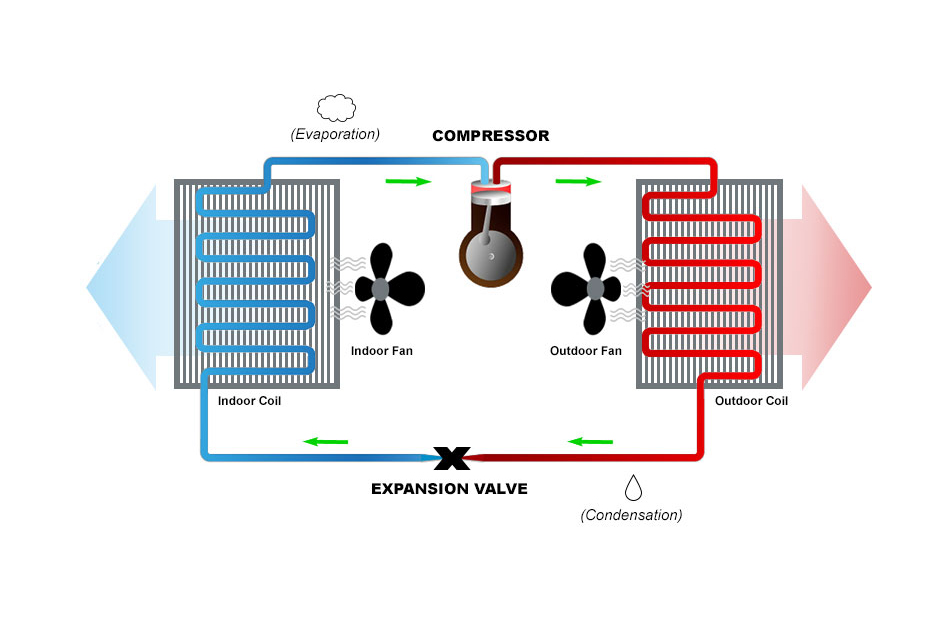
How exactly does a ductless heat pump operate? In many respects, it functions just like a conventional ducted heat pump. Both configurations rely on an indoor unit paired with an outdoor unit, and both use a chemical compound known as refrigerant that cycles between these two components to transfer heat. Whether it's the dead of winter or the peak of summer, both types of heat pumps can deliver the climate control you need.
The critical difference is in the name itself — ductless mini splits deliver comfort without any traditional ductwork. Because heated or cooled air flows directly from the indoor fan coil unit into your living space, you get more precise, zone-based temperature control. When you need comfort in multiple rooms, you simply add an indoor unit to each area that requires heating or cooling.

How Does a Mini Split Heat Pump Work? Components of the System
To truly understand how a mini split heat pump operates, it helps to examine the individual components. The system consists of an outdoor unit — which contains the compressor, condenser coil, and expansion valve — and an indoor unit equipped with a blower fan and evaporator coil. Copper tubing connects the two, allowing refrigerant to flow back and forth. Here's a detailed look at what each part does:
Refrigerant
Refrigerant travels in a sealed loop through copper tubing, moving between the indoor and outdoor units. In its liquid form it absorbs heat; in its gaseous form it releases it. The compressor and expansion valve regulate the temperature and pressure of the refrigerant to drive the entire heating and cooling cycle.
Compressor
Housed inside the outdoor unit, the compressor raises the refrigerant's pressure and temperature so it can effectively release heat — outside during cooling mode, or inside during heating mode. Basic models feature a single-speed compressor, while premium units use variable-speed compressors for greater efficiency and smoother operation.
Evaporator Coil
Found in the indoor unit, the evaporator coil pulls heat and moisture from the indoor air via refrigerant flowing through copper or aluminum tubing, thereby cooling the air that circulates into your room. When the system switches to heating mode, the process reverses — the indoor coil releases warmth absorbed from outdoor air.
Condenser Coil
Situated in the outdoor unit, the condenser coil expels heat gathered from inside your home during cooling by allowing liquid refrigerant to disperse that energy outdoors. In heating mode, the process flips — the coil absorbs heat from the outside air, even at lower temperatures, and channels it indoors to warm your space.
Expansion Valve
The expansion valve controls how much refrigerant enters the evaporator coil. By restricting the flow, it allows the refrigerant to rapidly expand, which drops its pressure and temperature — a key step in enabling the coil to absorb heat and facilitate cooling.
Pros of Mini Split Heat Pumps
There are numerous compelling reasons to choose a ductless mini split heat pump over a traditional ducted system. Here are the standout benefits:
✓ Energy Efficiency
Ductless mini split systems are remarkably energy efficient compared to their ducted counterparts. High-performance models can achieve SEER2 ratings (Seasonal Energy Efficiency Ratio) as high as 28.5 for cooling and up to 18 HSPF2 for heating. Many of these units qualify for the Department of Energy's ENERGY STAR certification for high efficiency appliances.
✓ Lower Energy Bills
Pair the outstanding energy efficiency of a mini split with the ability to only condition rooms while they're in use, and the savings on your monthly energy bills can be substantial. Many homeowners are pleasantly surprised by how quickly the energy cost reductions add up.
✓ Improved Air Quality
Since ductless systems don't rely on ducts to move air, they significantly reduce the spread of contaminants from room to room — things like cooking smoke, fireplace odors, and allergens. Without ductwork, there's also far less opportunity for dust and pollutants to accumulate and recirculate throughout your home.
✓ Installation Versatility
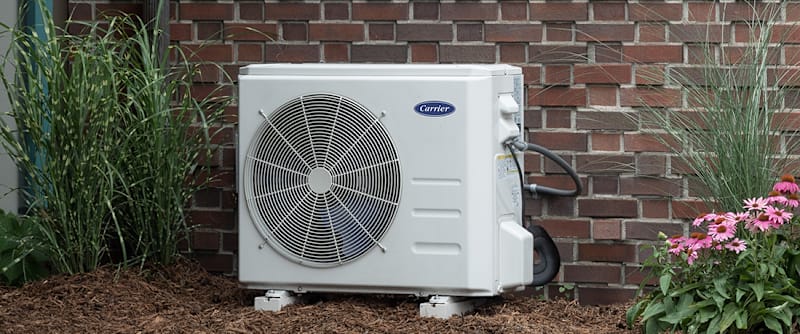
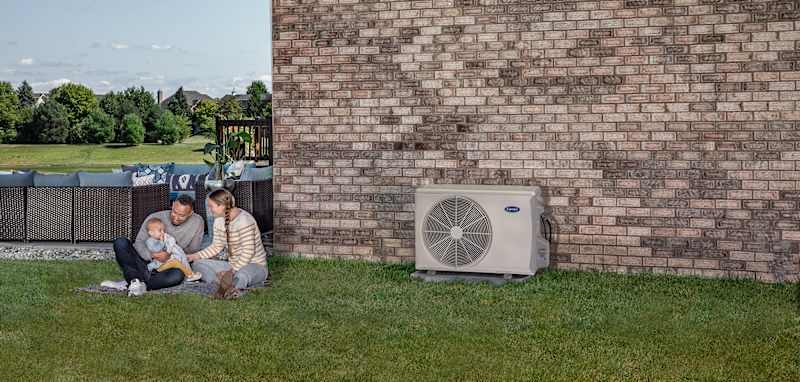
Ductless outdoor units tend to have a more compact footprint than traditional ducted outdoor units, making them ideal for tighter spaces, patios, and smaller yards.
✓ Comfort Boost
Ductless systems are perfect for adding climate control to rooms that aren't connected to your existing ducted system. They also work well as a supplement for rooms that your current system struggles to keep at a comfortable temperature.
Cons of Mini Split Heat Pumps
While ductless mini split systems have a lot going for them, it's important to weigh a few potential drawbacks before making a decision:
Higher Initial Investment
The upfront cost of a mini split heat pump can be significant. That said, the energy savings over time often offset this initial expense. And if you're looking to add ductwork where none currently exists, the installation costs for a traditional system can climb rapidly — making ductless heating and cooling more economical in the long run than it first appears.
Visible Indoor Unit
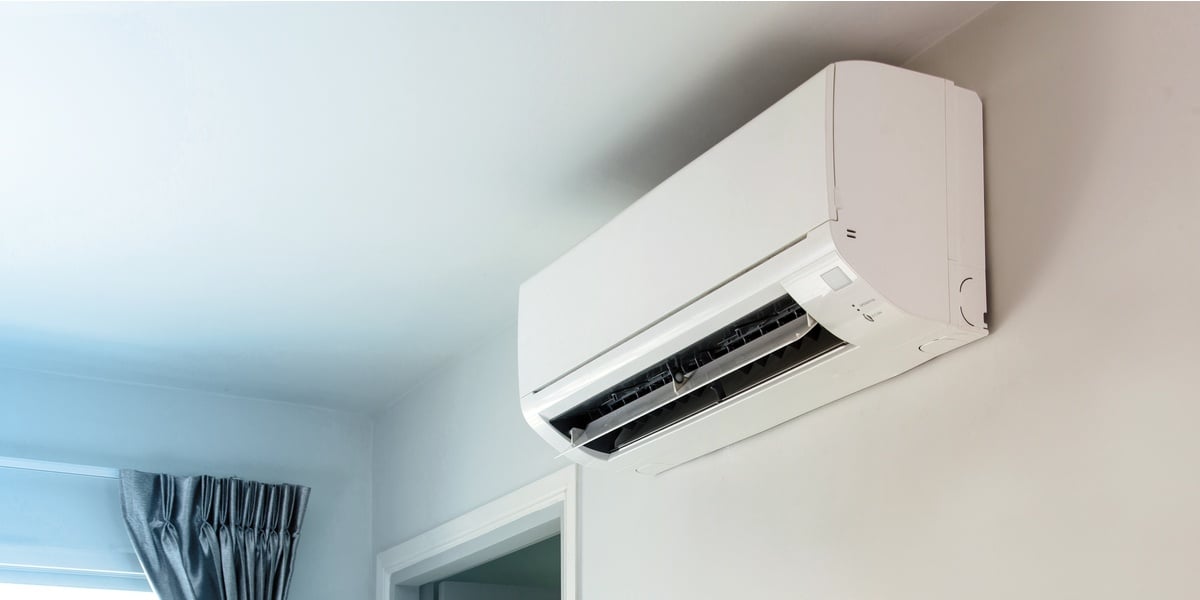
Most residential mini split indoor units mount directly on the wall in plain sight, which some homeowners find less aesthetically pleasing than the flush ceiling or floor vents of a ducted system. Traditional systems typically hide the indoor equipment in basements, utility closets, or garages.
One Indoor Unit Per Zone
If you want multiple rooms to be individually climate-controlled, you'll need a separate indoor unit for each zone. While this adds to the overall cost, the upside is that you only spend energy conditioning rooms you're actively using.
Lower Heating/Cooling Capacity
Ductless heat pumps are generally designed with lower BTU/h capacities than their ducted equivalents. However, as long as your HVAC professional correctly sizes the mini split for the intended space, you'll enjoy ample comfort — the key is proper sizing to match the room's requirements.
How Much Does a Mini Split Heat Pump Cost?
The average cost for a complete mini split heat pump system is approximately $7,500, though homeowners can expect to pay anywhere from $1,200 to $17,000 depending on the project. This wide range is driven by factors like the complexity of the installation, the number of zones (whether you opt for a 3-zone or 4-zone setup), and the efficiency rating of the chosen unit. Higher-efficiency models carry a steeper price tag upfront but tend to deliver meaningful savings on energy bills over the lifespan of the system. Labor is also a significant cost factor — every home is different, so getting a professional consultation is the best way to nail down an accurate estimate.
What Is a Good SEER Rating for a Ductless Heat Pump?
The ideal SEER rating for your mini split heat pump depends on your comfort needs and budget. SEER stands for Seasonal Energy Efficiency Ratio — it measures how much cooling output a unit produces relative to the energy it consumes over an entire cooling season. A higher SEER means better efficiency and lower utility costs. As of January 1, 2023, the Department of Energy mandates a minimum SEER rating of 15. In practice, mini split heat pumps currently available range from 17 to 42 SEER. Keep in mind that higher-rated units come at a premium, so finding the sweet spot between efficiency and affordability for your situation is important.
Why Choose a Ductless Mini Split Heat Pump?
When you're ready to select a ductless mini split heat pump for your home, room addition, or converted space, Backyard Provider is here to help. The technology behind ductless climate control has been advancing for over a century, and today's systems represent the pinnacle of comfort, efficiency, and dependability. Investing in a quality ductless mini split means you're not just getting temperature control — you're getting peace of mind backed by products built to last.
As you weigh your options, take some time to explore key topics like mini split installation and the differences between mini splits and central air systems. Understanding these distinctions — from installation complexity to long-term operating costs — will help you determine which approach is the best fit for your home and lifestyle.
Ready to find out if a ductless mini split heat pump is right for you? Browse our selection and discover the perfect solution for your space.
