


 Damage
  Loss
Loss  Theft
Theft 


How to Properly Install Window Air Conditioner Insulation
Key Factors Before Installing a Window Air Conditioner
Before you jump into insulating your window AC, there are several critical factors worth evaluating. Taking the time to understand these elements will save you headaches down the road and ensure your cooling system runs at peak performance.
Measuring Your Room Size
Window air conditioners are available in a wide range of sizes, and each model is designed to cool a specific square footage. The size of your room directly determines the cooling capacity you need. Choosing a unit that's too small won't cool the space effectively, while one that's too large will cycle on and off too frequently, reducing efficiency and increasing wear on the compressor.
The ARI (Air-Conditioning, Refrigeration and Institute) establishes standard guidelines for matching room sizes to BTU output. Units typically range from 5,000 BTU for small rooms up to 25,000 BTU or more for large open spaces. Here's a general reference to help you find the right fit:
| Room Size (sq. ft.) | Cooling Capacity (BTU/h) |
|---|---|
| 100 – 150 | 5,000 |
| 150 – 250 | 6,000 |
| 250 – 300 | 7,000 |
| 300 – 350 | 8,000 |
| 350 – 400 | 9,000 |
| 400 – 450 | 10,000 |
| 450 – 550 | 12,000 |
| 550 – 700 | 14,000 |
| 700 – 1,000 | 18,000 |
| 1,000 – 1,200 | 21,000 |
| 1,200 – 1,400 | 23,000 |
If your space exceeds 1,400 square feet, you may want to explore ductless mini-split systems or central air conditioning as more practical alternatives.
Understanding Your Window Design
Not every window is compatible with every air conditioner model. Most window AC units are built for standard double-hung windows, but yours might be a casement, sliding, or awning-style window. Before purchasing, take precise measurements of both the width and height of your window opening. This ensures a snug fit, which is critical for proper insulation later on.
Modern air conditioners often include adjustable side panels, but confirming compatibility with your specific window type avoids frustration during installation.
The Importance of Energy Efficiency Ratings
All air conditioners consume energy, but the amount varies dramatically between models. The EER (Energy Efficiency Ratio) and SEER (Seasonal Energy Efficiency Ratio) ratings tell you how effectively a unit converts electricity into cooling power. Higher numbers mean better efficiency and lower operating costs over time.
When shopping, look for units that carry the ENERGY STAR certification. These models meet strict federal guidelines for energy efficiency and can significantly reduce your monthly utility expenses. Many modern window ACs also feature smart controls and inverter technology that adjust compressor speed for even greater savings.
Window ACs with higher energy efficiency ratings may cost slightly more upfront, but they typically pay for themselves within one to two cooling seasons through reduced electricity bills.
Installing a Window Air Conditioner for Maximum Efficiency
Proper installation is everything. Even the best window AC unit will underperform if it's installed carelessly. Gaps around the unit, an uneven tilt, or missing weatherstripping can all undermine your cooling efficiency and drive up energy costs. Below is a step-by-step guide to getting it right.

Before you begin, gather the following tools and materials: a screwdriver, a level, foam insulation strips, weatherstripping tape, mounting brackets (if required by your model), and a measuring tape.
Inspect the Window Thoroughly
Start by examining the window and the surrounding frame. Check for cracked panes, rotting wood, peeling paint, or any structural damage. Even small imperfections can allow air leaks that defeat the purpose of insulation. If your window screen is damaged or bent, either repair or remove it before proceeding.
Also examine the window sash — it needs to sit firmly on top of the AC unit to create a reliable seal. If you're installing the unit early in the season, now is the perfect time to clean the window tracks and lubricate the slides for smooth operation.
Position the AC Unit Carefully
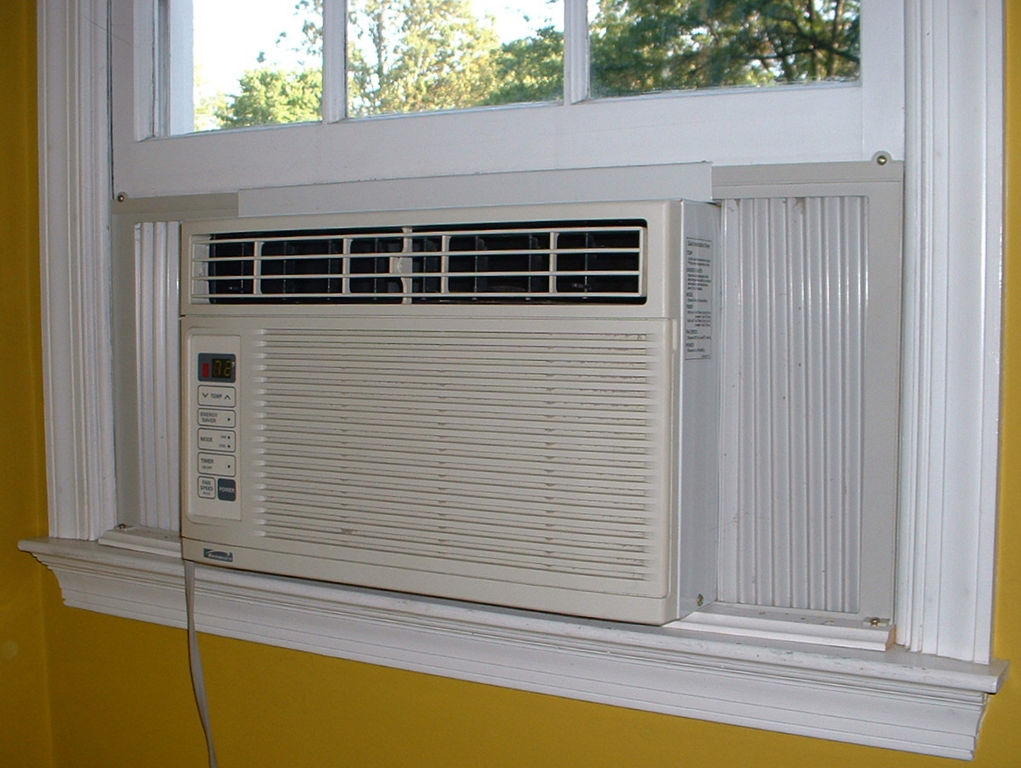
Following the manufacturer's instructions closely, place the air conditioner into the window opening. The unit should be centered within the frame, and the bottom mounting rail should rest securely on the window sill. Most units require a very slight backward tilt — about half an inch lower in the back than the front — to allow condensation to drain properly to the outside.
Once positioned, slide the extender panels outward on both sides until they meet the window frame edges. These panels fill the gaps between the unit and the frame, and they'll be sealed with insulation in the next steps.
Secure the Unit to the Window
After lowering the window sash down onto the top of the AC unit, use the provided L-brackets or screws to secure it in place. The sash should press firmly against the top of the air conditioner, creating a stable base. Many units also include an upper window lock bracket to prevent the window from being opened from outside — a useful safety and security feature.
Make sure every attachment point is snug. A loose unit will vibrate, create noise, and gradually shift out of alignment, opening up air gaps over time.
Seal the Side Curtains and Panels
The accordion-style side curtains that come with most window AC units are your first line of defense against air infiltration. Extend them fully and fasten them to the window frame with the included screws. However, these thin plastic panels alone don't provide adequate insulation.
For a truly effective seal, apply foam weatherstripping tape along every seam where the side panels meet the window frame. Pay special attention to the top rail, where the window sash sits on the unit — this is one of the most common areas for air leaks. You can also add a bead of removable caulk for an extra-tight seasonal seal.
How to Insulate Around a Window Air Conditioner
Now that the unit is securely installed, it's time to add proper insulation. This step is what separates a decent installation from an excellent one. Good insulation prevents drafts, blocks dust and pests, and dramatically improves the overall energy efficiency of your setup.
Identify Air Leaks Around the Unit
After the AC is installed, carefully inspect the entire perimeter of the unit. Run your hand slowly along every edge — top, bottom, and both sides. Feel for any drafts of cool or warm air seeping through. Common trouble spots include the area directly beneath the window sash, the junction between the side panels and window tracks, and the space between the unit's bottom and the window sill.
The gaps around a window AC may not look like much, but collectively they can let in a surprising amount of outside air. Even tiny openings reduce your unit's ability to maintain a consistent indoor temperature.
Insulate Around the AC Unit
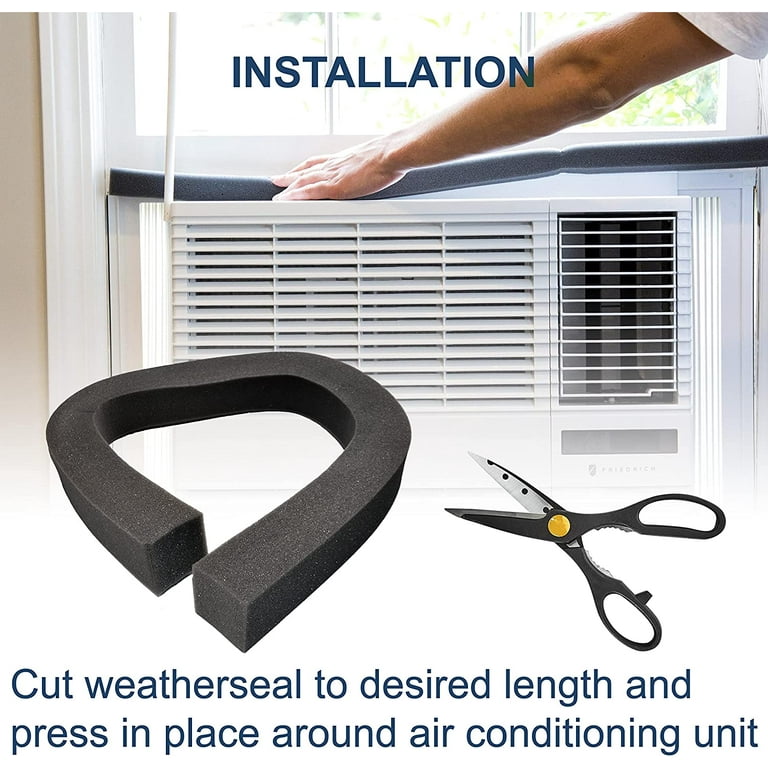
Once you've identified the leaks, cut strips of foam insulation to fit snugly into each gap. Press the foam firmly into place around the top, sides, and bottom of the unit. Self-adhesive foam strips work particularly well for this purpose, as they stay put without any additional hardware.
For wider gaps — especially at the top and bottom of the side panels — consider using backer rod foam. This is a flexible cylindrical foam strip that compresses into irregular-shaped openings and provides excellent thermal resistance. After inserting the backer rod, you can apply weatherstripping tape over the surface for a clean, finished appearance.
Weatherstrip and Cover the Exterior
Don't overlook the outside of the unit. Weather and environmental exposure can break down seals over time. Apply weatherstripping along the exterior edges where the unit meets the window frame to guard against rain, wind, and temperature extremes.
You can also purchase a fitted outdoor cover designed specifically for your unit's dimensions. These covers protect the external components from debris, snow, and UV damage during off-season months. Simply measure the exterior-facing portion of your AC and select a cover that fits tightly without restricting airflow when the unit is running.
If you leave your window AC installed year-round, applying insulation on the interior side during winter is equally important. An insulated interior cover prevents cold air from radiating into your living space and helps maintain consistent room temperatures throughout the colder months.
Wrapping It All Up
Installing a window air conditioner with proper insulation isn't particularly complicated, but it does require patience and attention to detail. When you take the time to seal every gap, secure every panel, and apply quality insulation materials, the payoff is significant — lower energy bills, quieter operation, and a home that stays comfortable no matter the season.
Whether you're setting up a new unit for the first time or improving the insulation on an existing installation, these steps will help you get the most out of your window air conditioner. A well-sealed unit doesn't just cool better — it lasts longer, runs more quietly, and keeps your indoor air cleaner by blocking outdoor pollutants and allergens.
Invest the effort now, and your comfort (and your wallet) will thank you for years to come.