


 Damage
  Loss
Loss  Theft
Theft 


The Best Window Air Conditioners for Every Room — Hands-On Tested
A quality window air conditioner can turn a sweltering room into a cool retreat in under an hour. These units are perfect for older homes that lack central HVAC, rental apartments where permanent modifications are off limits, and any space that simply needs targeted relief from summer heat. They are also a meaningful step up from even the best portable fans, delivering real temperature drops rather than just moving warm air around.
Today's window ACs have come a long way from the noisy, energy-guzzling boxes of years past. Modern units feature inverter compressors that continuously adjust their speed, smart Wi-Fi connectivity for phone and voice control, whisper-quiet operation, and significantly improved energy ratings. Some even double as heaters, providing year-round climate control from a single appliance.
With summer just around the corner, now is the ideal time to evaluate whether your current unit is up to the task — or if it is time for an upgrade. Below, we cover the most important criteria for choosing a window air conditioner, walk through how the best models are typically evaluated, highlight the unit types that matter, and feature a premium pick that goes above and beyond for serious home comfort.
The Top Window Air Conditioners Worth Considering
What stands out when experts put today's best models to the test.
After reviewing how leading publications test and rate window ACs, a few consistent themes emerge. The standout models cool a heated room quickly — typically dropping temperatures by at least 10°F within an hour. They manage to do this while remaining surprisingly quiet, with noise levels often below 55 decibels on their lowest setting. And they earn Energy Star certification while keeping electricity costs predictable, even during extended use.
Smart features have also become a genuine differentiator. The ability to control your unit from a smartphone app, schedule weekly routines, and integrate with Alexa or Google Assistant turns a basic cooling appliance into a connected home comfort system. Several leading brands — including LG, GE, Midea, Windmill, and Friedrich — now build Wi-Fi into their window units as standard.
Among the field, models with inverter compressors consistently outperform traditional on-off designs. Inverter technology allows the compressor to ramp up and down smoothly rather than cycling on and off, which reduces energy consumption by up to 35 percent, keeps room temperature steadier, and dramatically cuts noise. This technology is now widely recognized as the gold standard for efficient window air conditioning.
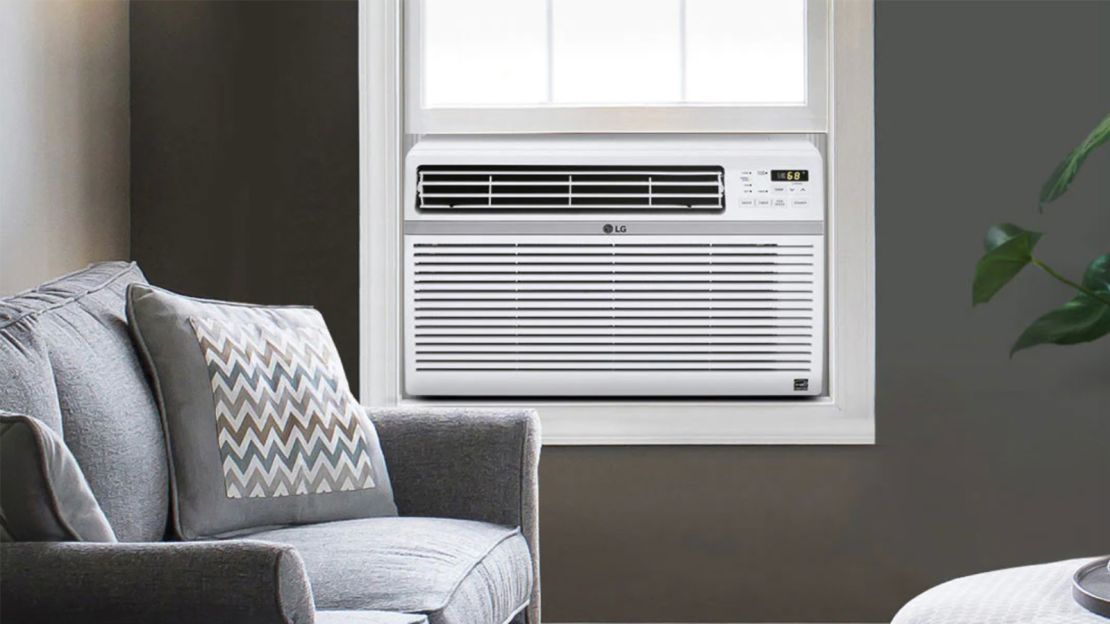
Best Budget-Friendly Window AC Options
Solid cooling without emptying your wallet.
You do not have to spend a fortune to get reliable cooling. Entry-level models in the 5,000 to 6,000 BTU range can handle bedrooms and small offices effectively, and many now include features that were once reserved for premium units — adjustable fan speeds, eco modes, built-in timers, and remote controls.
Budget picks from brands like LG, GE, and Frigidaire tend to score well on energy efficiency too, keeping long-term operating costs low. A 6,000 BTU unit running 12 hours a day through a typical three-month summer might cost roughly $75 to $80 in electricity — making these units easy on both upfront and ongoing budgets.
The trade-off with budget models is usually noise and the absence of smart connectivity. Most lack Wi-Fi and rely on basic IR remotes. They are also generally louder, which can be noticeable in a quiet bedroom at night. Still, for straightforward, no-fuss cooling, these units deliver excellent value.
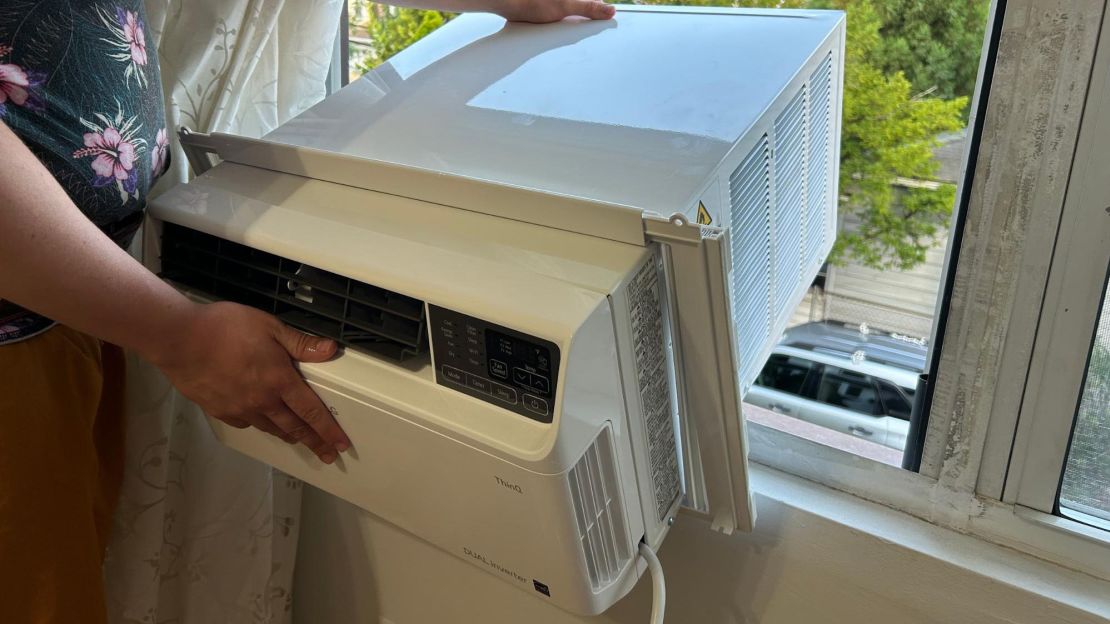
How Window Air Conditioners Are Evaluated
The criteria that separate average units from exceptional ones.
Understanding how experts test window ACs can help you make a more informed purchase. The evaluation process typically covers several key performance areas:
Setup & Installation
How straightforward is it to get the unit into a standard double-hung window frame? Clear instructions, included hardware, and manageable weight all contribute to a better installation experience.
Cooling Performance
The primary test: how quickly can a unit lower room temperature? A heated test space is monitored with lab-grade thermometers over one hour. The best units drop temps by 10°F or more in that window.
Noise Levels
Sound is measured with a decibel meter at multiple fan speeds. Top performers stay below 50 dB on low — quiet enough for a bedroom. Rattling, compressor clunking, and vibration are also assessed.
Energy Efficiency
Energy consumption is tracked during cooling tests and projected over a three-month summer. Units with higher CEER ratings and Energy Star certification earn top marks here.
Controls & Smart Features
Remotes, on-unit buttons, and smartphone apps are evaluated for responsiveness and ease of use. Integration with voice assistants like Alexa and Google Home is a growing bonus.
Build Quality & Warranty
Construction materials, filter accessibility, corrosion resistance, and manufacturer warranty terms all factor into long-term value and durability assessments.
How to Choose the Right Window Air Conditioner
Three essential factors to nail down before you buy.
Measure Your Room — Then Match Your BTU Rating
Cooling capacity is measured in British Thermal Units (BTUs). The general guideline is 20 BTUs per square foot of space. So a 400-square-foot living room calls for an 8,000 BTU unit, while a 200-square-foot bedroom is well served by a 5,000 to 6,000 BTU model. Oversizing causes the unit to short-cycle — cooling too fast without properly dehumidifying, which leaves the air clammy. Undersizing means the compressor runs constantly without reaching your target temperature.
Adjust your estimate based on conditions. Extra-sunny rooms may need 10 percent more BTUs, while heavily shaded rooms can get by with 10 percent fewer. Kitchens benefit from an extra 4,000 BTUs due to heat generated by appliances. And if more than two people regularly occupy the space, add about 600 BTUs per additional person.
Confirm Your Window Type
Most window ACs are designed for standard double-hung windows — the kind that slide up and down. If your home has casement windows (which crank open sideways) or sliding windows, your options are more limited, and you may need to consider a portable AC or a through-the-wall unit with a sleeve instead. Always measure the window opening width and check the unit's minimum and maximum extension dimensions before purchasing.
Prioritize the Features That Matter to You
Once you have the right size and window fit confirmed, narrow your choice based on the features you value most. If nighttime noise is a priority, look for models with QuietMaster or LoDecibel technology. If you want set-and-forget automation, seek out Wi-Fi-enabled units with scheduling apps. If year-round comfort appeals to you, a heat pump model that both cools and heats can eliminate the need for a second appliance entirely. And if keeping electricity costs low is paramount, look for Energy Star certification and high CEER ratings — especially in inverter-equipped models.
Other Noteworthy Window ACs on the Market
Additional models that stood out during expert evaluations.
Windmill AC — The Design-Forward Pick

The Windmill has earned a loyal following for its sleek, modern appearance and genuinely useful smart features. Its magnetic front panel makes filter cleaning effortless, and the companion app allows you to control everything from fan speed to scheduling while you are away from home. Installation typically takes under 30 minutes with two people, and the unit's build quality has held up well over multi-year use in editorial testing.
LG Dual Inverter Smart AC — High BTU Powerhouse
For larger rooms, the LG Dual Inverter series delivers substantial cooling — some models reach up to 14,000 BTUs — while keeping noise levels impressively low thanks to LG's LoDecibel engineering. These units also integrate with the LG ThinQ app for smartphone control and voice compatibility with Alexa and Google. The dual inverter compressor provides consistent temperature regulation without the frequent on-off cycling that characterizes older designs.

July AC — Aesthetic Meets Performance
The July Air Conditioner prioritizes visual design without sacrificing cooling capability. It scored high marks during editorial testing for ease of installation and attractive appearance — a welcome departure from the bulky, industrial look of traditional units. Its app controls work well, though the lack of a forward-facing display means you cannot see the set temperature from across the room. It comes with a 30-day trial and a one-year warranty.

GE Profile Window AC — Reliable All-Rounder
GE's Profile series offers a balanced package of solid cooling performance, straightforward installation, and smart home integration through the GE app with Alexa and Google compatibility. It does not lead any single category in testing, but it consistently performs well across the board, making it a dependable choice for users who want something that simply works without requiring a lot of research or compromise.

Featured at BACKYARD PROVIDER
Friedrich Kühl Inverter KHVS10B11A — 10,000 BTU Smart Window/Wall AC with Heat Pump
The Friedrich Kühl KHVS10B11A is built to a different standard than most residential window ACs. With commercial-grade construction, Precision Inverter technology, and an integrated heat pump, this unit delivers year-round climate control from a single 115-volt appliance. It cools with up to 10,000 BTUs and heats with 8,700 BTUs — effectively eliminating the need for separate heating and cooling units in moderate climates.
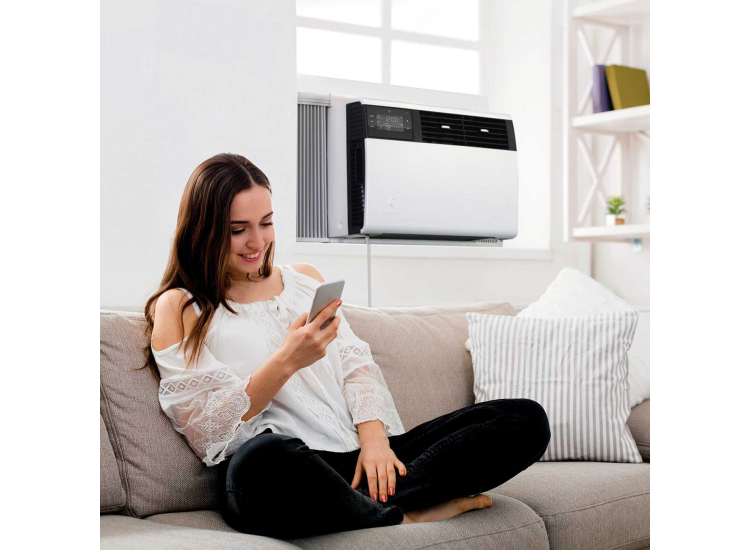
Friedrich's QuietMaster technology — featuring steel inner walls, sound-blocking insulation, and a rotary compressor mounted on vibration-isolating rubber grommets — results in operation that is up to 45 percent quieter than competing models. The Precision Inverter compressor adjusts output continuously rather than cycling on and off, delivering precise temperature control, lower energy consumption, and a longer compressor lifespan. Soft-Start technology ramps the compressor gently, reducing strain at each startup.
Smart connectivity comes standard. Built-in Wi-Fi pairs with the FriedrichLink app, allowing you to create a custom 7-day comfort schedule, control power and modes remotely, and manage multiple units as a single system. It also integrates with Amazon Alexa and Google Home. The unit uses R-32 refrigerant — more efficient than older R-410A — and carries Energy Star certification with a CEER of 14.
Additional features include a washable air filter with a check-filter reminder, an optional MERV 13 FreshAire filter for enhanced air purification, a fresh air intake and stale air exhaust for improved ventilation, and a slide-out chassis that accommodates both window and through-the-wall installations. Aluminum end plates resist corrosion, and easy-grip handles simplify maintenance access.
10,000
Cooling BTUs
8,700
Heating BTUs
14
CEER Rating
115V
Standard Outlet
Recall Notice — Midea U-Shaped ACs
In June 2025, Midea issued a recall covering approximately 1.7 million U-shaped and U+ window air conditioners due to potential water pooling and mold growth concerns. The recall also applies to units sold under partner brands including Frigidaire, Keystone, and Insignia. If you own a Midea U-shaped unit, check the official recall details to see if your model is affected and contact Midea for a repair kit or refund.
Frequently Asked Questions
What size window air conditioner do I need?
Use the 20-BTU-per-square-foot rule as a starting point. A 150-square-foot bedroom needs about 5,000 BTUs. A 350-square-foot living room needs closer to 8,000 BTUs. Adjust upward for sunny rooms, kitchens, or spaces with more than two regular occupants.
Why is my window AC dripping water?
Some condensation is normal — it means the unit is dehumidifying the air. However, excessive dripping often indicates improper tilting. Most window ACs should be installed with a very slight backward tilt so condensation drains to the outside rather than pooling inside or dripping indoors. Check your installation angle and ensure the drain channel is not blocked.
Are inverter window ACs worth the extra cost?
In most cases, yes. Inverter compressors can reduce energy consumption by up to 35 percent compared to traditional on-off units. They also maintain more consistent room temperatures, produce less noise, and tend to have a longer operational lifespan. The upfront premium typically pays for itself within two to three cooling seasons through lower electricity bills.
Can a window air conditioner also heat a room?
Only if it includes a heat pump. Most standard window ACs are cooling-only, but select models — like the Friedrich Kühl+ series — feature built-in heat pump functionality that provides energy-efficient heating down to outdoor temperatures of around 45°F. This makes them a practical year-round climate solution in moderate climates.
How often should I clean my window AC filter?
Most manufacturers recommend cleaning or replacing the filter every two to four weeks during heavy use. A clogged filter restricts airflow, forces the compressor to work harder, and reduces both cooling efficiency and air quality. Many modern units include a filter-check indicator to remind you when maintenance is due.
This article was written for informational purposes. Product availability and pricing may vary. Visit BACKYARD PROVIDER for current inventory and deals on premium window air conditioners and HVAC equipment.