


 Damage
  Loss
Loss  Theft
Theft 


Heat Pump Efficiency Ratings Explained: SEER, EER, HSPF, and COP
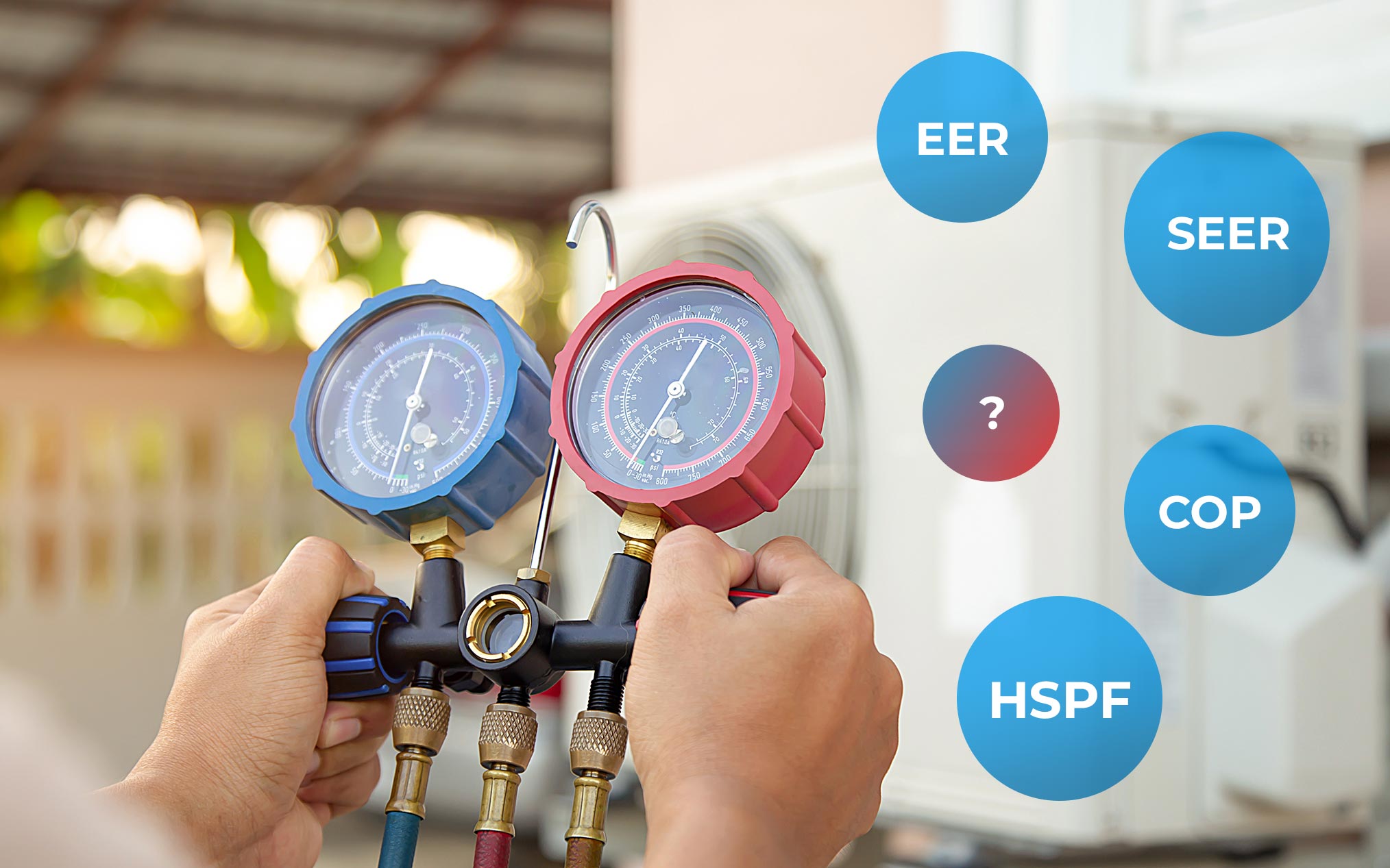
When you're browsing for a heat pump or weighing different options for your home's comfort system, you'll quickly run into terms like SEER, EER, COP, and HSPF. These acronyms all describe how efficiently a heat pump operates, and understanding what each one means will help you pick the right unit for your space, your climate, and your energy bills.
What SEER Rating Should You Look For?
SEER stands for Seasonal Energy Efficiency Ratio. It measures the ratio between the cooling output a unit delivers in BTU (British Thermal Units) and the electricity it consumes in watt-hours. In short, SEER tells you how well a heat pump performs across an entire cooling season for a given region's climate.
The higher the SEER number, the less electricity the system will burn through. Stepping up to a higher SEER usually costs more upfront, but the real-world gap between an 8 SEER unit and a 16 SEER unit can be dramatic over the long haul. As of 2023, the minimum SEER allowed on new installations in Canada is 15 SEER.
SEER2 is the updated version of the same standard. It tests under more realistic field conditions, so the numbers it produces are closer to what you'll actually see in your home. Just like SEER, a higher SEER2 is better, and the minimum SEER2 permitted is 14.3.
What Counts as a Good COP for a Heat Pump?
A solid COP for a residential heat pump sits somewhere between 3.0 and 5.0. Under perfect laboratory conditions, the highest COP ever recorded is about 8.8, but that's a figure you'll never see in day-to-day operation. For typical home use, a realistic top-end COP is around 4.5.
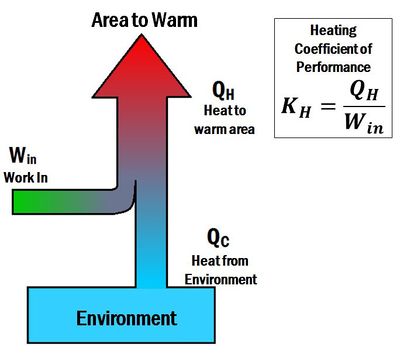
COP stands for Coefficient of Performance, and it's specifically a measure of heating efficiency. It's calculated as the ratio of heat energy produced by a device divided by the electrical energy it consumes to produce that heat.
Because outdoor conditions affect COP, manufacturers usually publish multiple COP values at different outside temperatures. You'll typically see values reported at 8.3°C (47°F), 0°C (32°F), -8.3°C (17°F), and -15°C (5°F). The peak heating output in kilowatts, divided by the electrical draw in kilowatts, gives you the COP. Since colder air makes it harder for the system to pull in heat, the COP drops when temperatures fall.
A higher COP means less electricity burned for the same amount of heat delivered. For instance, a unit running at a COP of 3 produces 3 kW of heat for every 1 kW of power consumed, translating to 300% efficiency or better.
What Is the HSPF Rating All About?
HSPF is short for Heating Seasonal Performance Factor. It's the heating-side counterpart to SEER and measures efficiency across an entire heating season rather than at a single moment.
To arrive at an HSPF number, you take the total heating output a system delivers over a season in BTU/hr and divide it by the electricity the unit pulls from the wall in watt-hours during that same stretch.
The higher the HSPF, the less electricity the heat pump consumes to do its job. In Canada, acceptable HSPF values fall between 7.1 and 13.2, with an average of about 8 for a city like Ottawa. Anything pushing 8 to 12 is generally regarded as a strong performer.
| HSPF Range | Performance Level |
|---|---|
| 7.1 – 8.0 | Entry-level efficiency |
| 8.0 – 10.0 | Solid, balanced performer |
| 10.0 – 13.2 | Premium efficiency range |
HSPF2 measures the same characteristic, but under tighter test conditions that reflect real-world use more accurately. When you want to convert a standard HSPF to an HSPF2 value, multiply it by 0.85 to get a close approximation. To move from HSPF2 back to HSPF, divide by roughly 0.89.
What Is Considered a Strong EER Rating?
EER is the Energy Efficiency Ratio. It's a cooling-efficiency measurement that applies to both air conditioners and heat pumps operating in cooling mode.
EER is measured with the outdoor temperature fixed at 35°C, the indoor temperature at 26°C, and relative humidity at 50%. The resulting number is the ratio of cooling output in BTU/hr to the wattage drawn by the system.
EER is the go-to metric technicians use when they want a snapshot of how well a cooling system is performing right now, without waiting for a whole season's worth of temperature swings to average out.
A higher EER equals lower electricity consumption. A unit rated at EER 4 produces 4 BTU/hr of cooling for every watt it pulls. For an AC, look for at least EER 8 to call it efficient. A truly good EER for a residential AC lands at 8.5 or above, and Energy Star-qualified units must hit at least 10.7 EER. The highest EER rating on the market right now is around 45.
Expert Guidance Whenever You Need It
Getting familiar with these rating systems puts you in a stronger position when the time comes to pick a heating or cooling solution that fits your home. Each acronym tells a slightly different part of the efficiency story, and together they give you a full picture of what a unit can deliver.
Whether you're thinking about replacing an aging system, upgrading to something more efficient, or installing a heat pump for the first time, our team is ready to walk you through the options. We'll help you match the right equipment to your climate, home size, and comfort needs, and we'll make sure the installation meets every manufacturer specification so your unit runs exactly the way it was designed to.
If you're ready to take the next step, our Armstrong Air 2.5 Ton Heat Pump Split System delivers reliable 14 SEER performance and solid year-round comfort for most residential spaces.
Ready to Upgrade Your Home Comfort?
Pair efficient performance with dependable engineering. The Armstrong Air 14 SEER split system is built to keep your home comfortable season after season, with the efficiency ratings to back it up.
Shop Armstrong Air 14 SEER →