


 Damage
  Loss
Loss  Theft
Theft 


Underwater Chainsaws: What They're Used For & Why They Cost So Much
Whether you're replacing pilings on your dock, clearing debris from a submerged structure, or tackling heavy-duty marine construction, there's a specialized tool built for the job — the underwater chainsaw.
Often referred to as "aquatic chainsaws," these machines do exactly what the name suggests: they operate while completely submerged in water. Although standard chainsaws and underwater chainsaws share a few similarities, aquatic models are purpose-built for a completely different environment, and that difference shows up in both their engineering and their price tag.
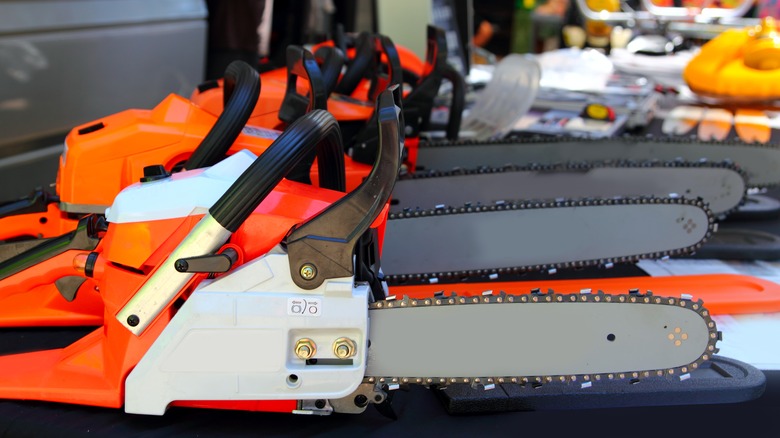
Two key factors set aquatic chainsaws apart from their land-based counterparts. First, conventional chainsaws come in pneumatic (gas-powered) and electric varieties — neither of which is safe or effective underwater. Underwater chainsaws are either hydraulic or pneumatic-marine rated, allowing them to function while fully submerged. Second, the engineering required to make these tools waterproof, corrosion-resistant, and powerful enough for marine use drives the cost up significantly.
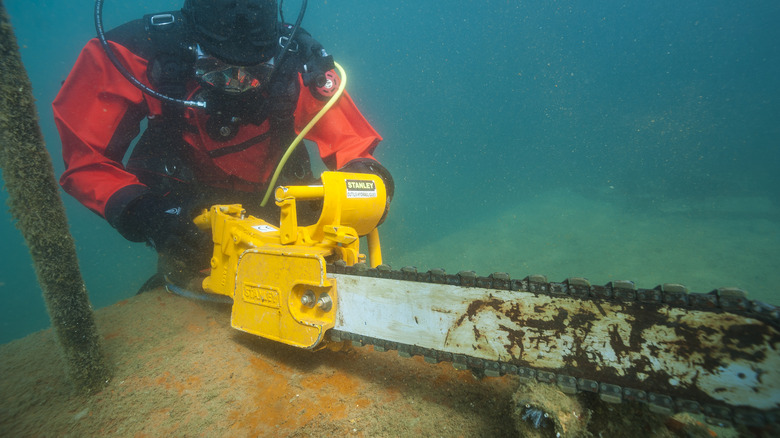
You can find budget-friendly underwater chainsaws starting at around $100 — these are typically lighter-duty models designed for cutting wood in wet conditions. By following basic maintenance best practices, an affordable aquatic chainsaw can serve you reliably for years, provided you use it within its intended limits.
On the other end of the spectrum, professional-grade hydraulic underwater chainsaws can run upward of $3,000 or more. Once you account for replacement chains, hoses, couplers, and other consumables, the total cost of ownership climbs even higher. So what makes these tools so expensive? To answer that, let's first look at what an underwater chainsaw actually is.
What Is an Underwater Chainsaw?
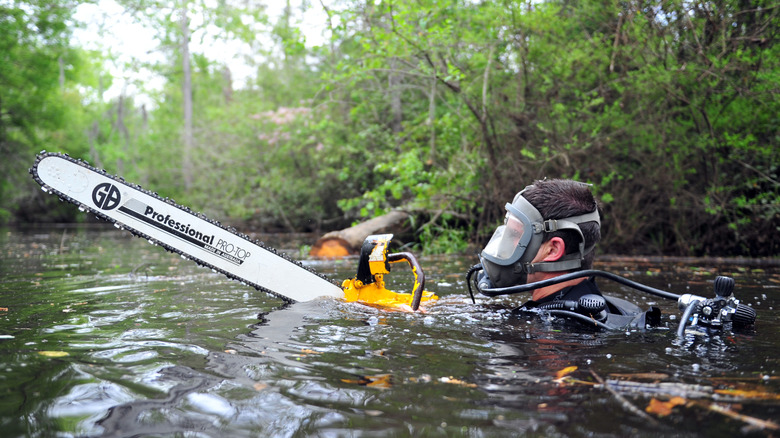
Regardless of their power source, underwater chainsaws work on the same fundamental principle as standard models. A toothed chain rotates around a guide bar, slicing through material on contact. Many aquatic models can handle wood, and some heavy-duty versions are even capable of cutting through concrete, metal, and plastic.
While they may not match the raw ripping power or portability of a gas-powered chainsaw on land, underwater chainsaws are invaluable in marine environments. Their waterproof housings are specifically engineered for wet conditions, and they hold up remarkably well in mud, silt, and corrosive saltwater. Many models feature diamond-grit teeth to prevent kick-backs and binding when cutting through extra-hard materials beneath the surface.
The primary applications for underwater chainsaws include cutting the wooden pilings of docks, severing bridge supports during demolition, and removing submerged structures. Because water serves as a natural coolant and the act of cutting eroded wood generates significant friction, constant blade maintenance is essential for safe and effective operation.
Key Safety Features: Many underwater chainsaws include built-in cooling systems powered by water or oil circulation, hand guards to protect against broken chains, chain brakes to stop the blade instantly if it detaches, and interlocking safety triggers that require deliberate engagement before the saw will operate.
Types of Underwater Chainsaws
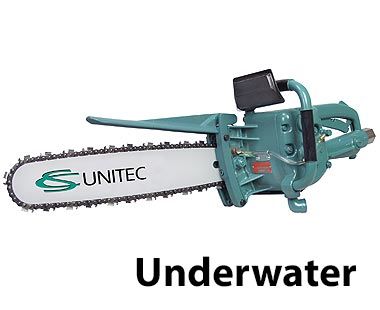
Not all underwater chainsaws are created equal, and not every model is suited for the same tasks. There are several important features — and price points — to weigh before choosing the right one for your needs.
Nearly every underwater chainsaw can handle wood effectively. However, if you need to cut through extra-hard materials like concrete, metal, plastics, or dense composite materials, you'll need a model equipped with a diamond-grit blade. These specialized chains are designed specifically for masonry and hard-surface cutting and come at a premium price.
Blade Length Matters
For wood-only applications, you don't necessarily need the most expensive model on the market. But you do need to pay attention to blade length — specifically, the bar should be longer than the diameter of whatever you're cutting. For thick pilings like those found on bridges, docks, and piers, blade diameter requirements can reach 10 inches or more. Standard models typically range from 15 to 30 inches in bar length, so a 16-inch chainsaw will handle most pilings up to 10 inches in diameter with ease.
Quick Reference — Blade Length Guide
Small pilings (under 6"): 12–15 inch bar
Medium pilings (6–10"): 16–20 inch bar
Large pilings (10"+): 20–30 inch bar
Ultimately, the price you pay for an underwater chainsaw depends entirely on your application. Heavy-duty models built to cut through tough materials are considerably more expensive, while wood-only options remain relatively affordable. No matter which model you select, you can work with confidence knowing your hydraulic power tool is engineered to perform in wet environments. But why exactly are hydraulic underwater chainsaws so expensive? To understand that, let's look at what these tools really are under the hood.
Why Do Underwater Chainsaws Cost So Much?
The price of a hydraulic underwater chainsaw reflects the extreme engineering required to make it function reliably beneath the water's surface. Every component — from the chain to the hydraulic motor to the housing — must be sealed, corrosion-resistant, and rated for prolonged submersion. That level of protection doesn't come cheap.
Hydraulic chainsaws require an external hydraulic power unit to supply pressurized fluid, which adds to both the upfront cost and the maintenance complexity. The hoses, fittings, and couplers that connect the saw to the power pack must withstand high pressures while remaining flexible enough for a diver to maneuver underwater. Replacement parts for these systems are specialized and typically more expensive than standard chainsaw accessories.
Additionally, the niche nature of the underwater chainsaw market means these tools are manufactured in relatively low volumes compared to consumer-grade chainsaws. Limited production runs combined with premium materials and rigorous quality control testing drive the per-unit cost up considerably.
Professional-grade hydraulic underwater chainsaws represent a serious investment — but for marine construction, dock maintenance, and underwater demolition, they are truly irreplaceable tools.
How to Choose the Right Underwater Chainsaw
Selecting the right underwater chainsaw comes down to matching the tool to the task. Start by identifying the materials you'll be cutting most frequently. Wood-only jobs require a simpler, more affordable saw, while projects involving concrete, metal, or composite materials demand a heavy-duty model with diamond-grit chain technology.
Next, consider the working environment. Saltwater environments accelerate corrosion, so look for models with enhanced anti-corrosion coatings. If you're working in murky or silt-heavy water, prioritize saws with robust filtration and sealed housings that keep particulates out of the motor assembly.
Finally, factor in the total cost of ownership. A lower-priced saw with expensive replacement parts may end up costing more over its lifetime than a premium model with readily available and affordable consumables. Evaluate chain replacement costs, hydraulic fluid requirements, and the availability of service support before making your final decision.
Featured Product
Stanley Hydraulics CS06930 Underwater Chainsaw
Stanley CS06930 Underwater Chainsaw
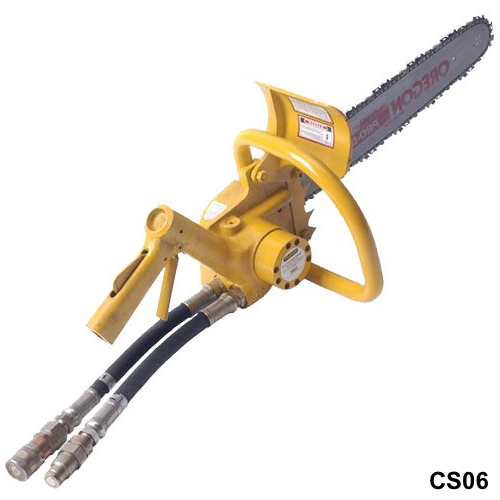
Built for professional marine applications, the Stanley CS06930 delivers the cutting power and durability needed for the toughest underwater jobs.