


 Damage
  Loss
Loss  Theft
Theft 


How To Use a Dolly: A Complete Guide From Professional Movers

Understanding how to operate a dolly correctly can save you significant time, energy, and effort when transporting heavy or bulky items. Whether you are relocating to a new home, rearranging your workspace, or hauling materials across a job site, a dolly is one of the most indispensable tools at your disposal. In this guide, we will walk you through everything you need to know about using a dolly properly — from choosing the right type to executing safe lifting techniques for various kinds of loads.
Types of Moving Dollies
There are several distinct categories of dollies, each engineered for specific tasks and load types. Knowing which dolly to reach for — and how it functions — will make your moving experience far smoother and safer.
Furniture Dolly
A furniture dolly is essentially a low, flat platform — typically constructed from wood or metal — fitted with a padded surface to prevent scratches and scuffs. It features four swivel casters that allow it to roll freely in any direction. These dollies are purpose-built for transporting bulky, heavy items such as dressers, desks, cabinets, and shelving units. Their wide, flat surface distributes weight evenly and keeps objects stable during transit.

Utility Dolly
The utility dolly, also frequently called a hand truck, is a vertical, two-wheeled device equipped with a small ledge at the base and an upright frame for support. This design is ideal for stacking and transporting medium-weight objects such as boxes, crates, small appliances, and bundled materials. Its upright build design makes it easy to maneuver through tight hallways and doorways, and the leverage provided by the handle allows a single person to move surprisingly heavy loads with minimal strain.
Appliance Dolly
An appliance dolly is a more specialized, heavy-duty variant of the hand truck. It comes equipped with a taller frame, integrated straps or ratchet belts for securing large items, and oversized rubber wheels designed to absorb impact and navigate uneven surfaces. This type of dolly is specifically designed for moving large household appliances like refrigerators, washers, dryers, and ovens. The straps ensure these heavy, top-heavy items stay locked in place throughout the move.
Stair Climbing Dolly
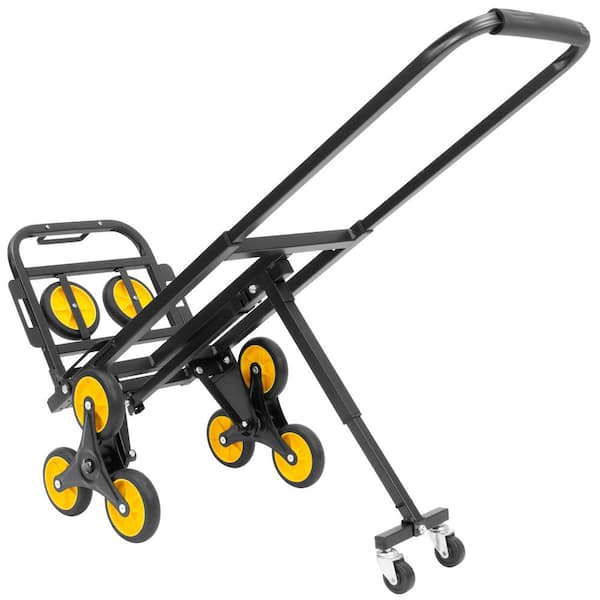
A stair climbing dolly is built similarly to a regular hand truck, but with a critical addition: a set of tri-wheel assemblies or rotating tracks on either side. These enable the dolly to ascend and descend staircases smoothly, distributing the load's weight evenly across each step. If you frequently need to move heavy items between floors, a stair climbing dolly can be an absolute game-changer, dramatically reducing the physical effort required.
What Is the Right Dolly to Use?
Selecting the correct dolly for the job is not just a matter of convenience — it is a matter of safety. Using the wrong type of dolly for your load can lead to damaged goods, personal injury, or both. Here are the key factors to evaluate before you begin.
How to Use a Furniture Dolly
A furniture dolly is your best friend when it comes to relocating large, unwieldy pieces across flat surfaces. Follow these steps to do it safely and efficiently:
Lift the furniture onto the dolly. Position the dolly directly beside or beneath the furniture piece. Tilt the item carefully and slide the dolly underneath, ensuring the load sits centered on the platform. If the item is particularly heavy or awkward, ask a helper to steady it during placement.
Secure the item. Use moving straps, bungee cords, or ratchet ties to fasten the furniture firmly to the dolly. This prevents shifting, sliding, or tipping during transport. For oddly shaped pieces, wrap them first in moving blankets for added grip and protection.
Move slowly and deliberately. Keep the dolly moving at a controlled pace. Avoid sudden turns or fast movements that could upset the load's balance. Push from behind rather than pulling when possible to maintain better visibility and control.
Navigate corners carefully. Slow down well in advance of turns. Swing wide to avoid clipping walls, door frames, or other obstacles. A gentle, sweeping arc is always safer than a sharp pivot.
How to Use a 2-Wheel Dolly
A standard two-wheel dolly, often referred to as a hand truck, is incredibly versatile. It is the ideal tool for stacking and wheeling boxes, small furniture, and various medium-weight items. Here is how to use one effectively:
Slide the base plate under your load. Tilt the item slightly and wedge the dolly's toe plate beneath it. Make sure the bottom edge of the load rests squarely and securely on the plate.
Tilt and balance. Lean the dolly backward toward you until you feel the weight settle into a balanced position. The load should rest against the upright frame without excessive forward lean. You should be supporting the weight with your arms and core, not your back.
Roll steadily. Walk forward at a steady, controlled pace. Keep the dolly tilted at a consistent angle and steer using small adjustments. For tight spaces, you can gently pivot the dolly on its wheels to change direction.
Stack boxes smartly. If moving multiple boxes, stack them with the heaviest on the bottom and lightest on top. Use straps or bungee cords to bundle the stack together. This keeps the center of gravity low and prevents toppling.
How to Use a Dolly to Move Boxes
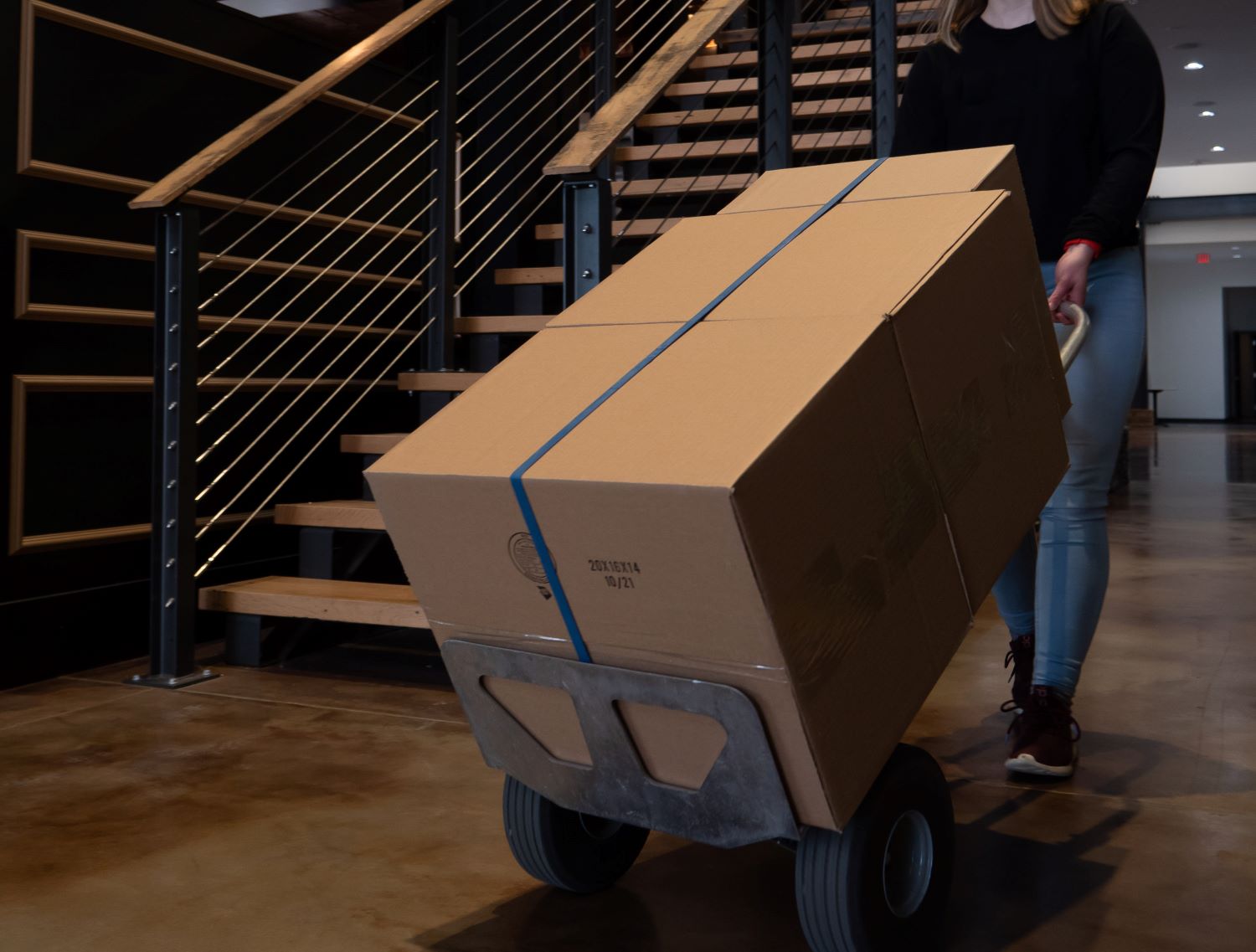
Boxes are among the most common items you will transport with a dolly. Here is a reliable method to move them quickly and safely:
Load from the bottom up. Place the heaviest, sturdiest box on the toe plate first. Then stack progressively lighter boxes on top. Make sure each box sits flush and stable before adding the next.
Secure the stack. Wrap a strap or rope around the entire stack and the dolly frame. This keeps everything consolidated and drastically reduces the chance of boxes sliding off during movement.
Tilt and go. Pull the dolly back to its balancing point and wheel the load forward. Keep a firm grip on both handles and maintain a steady walking pace. Avoid jerky movements.
Unload with care. When you reach your destination, carefully tilt the dolly forward to bring the toe plate back to the ground. Remove boxes starting from the top to maintain balance throughout the process.
How to Use a Dolly to Move Furniture
Moving furniture with a dolly requires a bit more planning and care than moving boxes. Furniture is often heavy, awkward in shape, and easily damaged. Here is how to handle it properly:
Prepare the furniture. Remove any detachable parts — drawers, shelves, legs, cushions, and glass components. This lightens the load and makes the piece easier to balance. Wrap the item in moving blankets or stretch wrap to protect its surfaces.
Position the dolly correctly. For upright pieces like bookshelves or filing cabinets, slide the toe plate underneath and tilt back. For flat or wide items like tables, use a furniture dolly placed beneath the widest section for maximum stability.
Move carefully. Push the dolly slowly, keeping close attention to the item's balance. Take extra caution when passing through doorways, hallways, and around corners. If the path includes ramps or inclines, go slowly and maintain a firm grip.
Avoid obstacles. Make sure your path is completely clear before you start rolling. Move rugs, cords, shoes, and any other tripping hazards out of the way. A clear path is the simplest and most effective safety measure.
How to Use a Dolly to Move Appliances
Major household appliances — refrigerators, washing machines, dryers, and ovens — are some of the heaviest and most unwieldy items you will encounter. An appliance dolly is specifically designed for this challenge:
Prepare the appliance. Unplug the appliance and disconnect any water, gas, or vent lines. Secure all doors and drawers with tape to prevent them from swinging open. Allow refrigerators and freezers to defrost completely before moving.
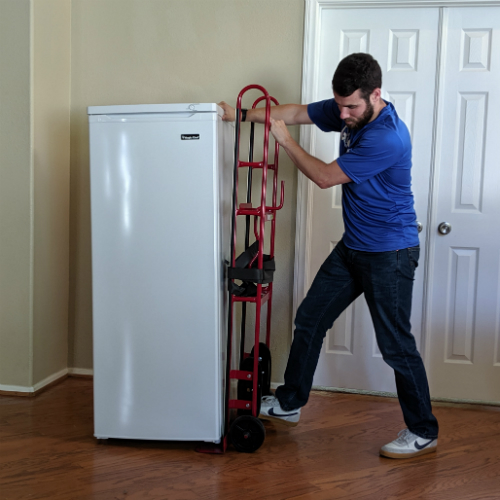
Strap the appliance to the dolly. Slide the toe plate beneath the appliance and use the dolly's built-in straps or ratchet belts to firmly secure the item against the frame. The straps should be tight enough to prevent any shifting but not so tight that they damage the appliance's exterior.
Tilt and transport. Carefully tilt the dolly backward, letting the appliance rest against the frame. Walk slowly and deliberately, keeping your center of gravity aligned. On ramps or inclines, always have a second person spotting from the opposite side.
Move steadily. Push the dolly forward at an even pace, keeping your arms close to your body and your back straight. Focus your attention on the path ahead and communicate with your helper if you have one.
How to Use a Dolly to Move Heavy Objects
For particularly heavy items — safes, large machinery, loaded cabinets, or dense building materials — extra precaution is essential. These loads push both the dolly and the operator to their limits:
Get help. Extremely heavy objects should never be moved solo. Always enlist at least one additional person to assist with loading, balancing, and navigating. Communication between team members is critical throughout the process.
Center the load. Make sure the heavy object is centered on the dolly to maintain proper balance. An off-center load dramatically increases the risk of tipping, which can cause serious injury or property damage.
Keep the path clear. Scout and clear your route before you start moving. Remove any obstacles, secure loose rugs, and prop open doors. With a heavy load, even a small bump or unexpected barrier can cause a loss of control.
Use proper body mechanics. If you need to move the item over a step or onto a ramp, use slow, controlled movements. Never try to muscle through — instead, use leverage and teamwork to guide the load smoothly.
Need a Reliable Dolly for Your Next Job?
Built tough for pipe, tubing, and heavy materials — perfect for professionals who demand durability and precision.
Sumner Cricket Pipe DollyThings to Watch Out For While Using a Dolly
Even with the right equipment and technique, there are common pitfalls that can turn a routine move into a hazardous situation. Keep these warnings in mind every time you use a dolly:
Wrapping Up
A quality dolly can dramatically simplify the process of relocating heavy items, reducing the physical toll on your body and minimizing the risk of injury or property damage. Whether you are moving across town or simply rearranging a room, the key principles remain the same: choose the right dolly for the job, secure your load properly, move at a controlled pace, and always prioritize safety over speed.