


 Damage
  Loss
Loss  Theft
Theft 


The Complete Log Splitter Buying Guide for Canada & North America
 What Is a Log Splitter Used For?
A log splitter does exactly what its name suggests — it breaks logs down into smaller, more manageable pieces ready for whatever task you have in mind. Most homeowners rely on one to produce firewood for fireplaces, wood stoves, fire pits, and backyard cooking setups.
Landscapers and arborists use log splitters to handle the leftover timber from tree removals and yard renovations, while farmers and rural property owners depend on them to clear land and process fallen timber after storms. Heavier commercial-grade splitters are also the workhorse behind large-scale firewood production.
You'll find log splitters powered by gas, electricity, or hydraulics, along with simple manual designs. Manual splitters work, but they ask a lot of your back. Hydraulic log splitters are the favorite by a wide margin because they deliver strong, consistent splitting force with far less effort — particularly when you're dealing with dense or knotty wood.
What Size Log Splitter Do You Need?
Picking the right size comes down to two things: the type of wood you'll be splitting and the diameter of the logs you're working with. Frequency of use matters too. Dense hardwoods such as oak, hickory, maple, and beech demand more splitting force than softer woods like pine or spruce. Splitter power is measured in tonnage — basically the amount of force the ram applies to the log.
Here's a simple rule-of-thumb sizing guide:
| Log Diameter | Recommended Tonnage |
|---|---|
| Up to 6 inches | 5–10 tons |
| 6–12 inches | 10–20 tons |
| 12–20 inches | 20–30 tons |
| Over 20 inches | 30+ tons |
For most North American hardwoods, a 20-ton log splitter hits the sweet spot for homeowners and small-property owners who need real performance without going overboard. If you're regularly handling thicker rounds or seasoned hardwood, stepping up to 25–30 tons gives you plenty of headroom.
Our Top Pick for Homeowners & Small Properties
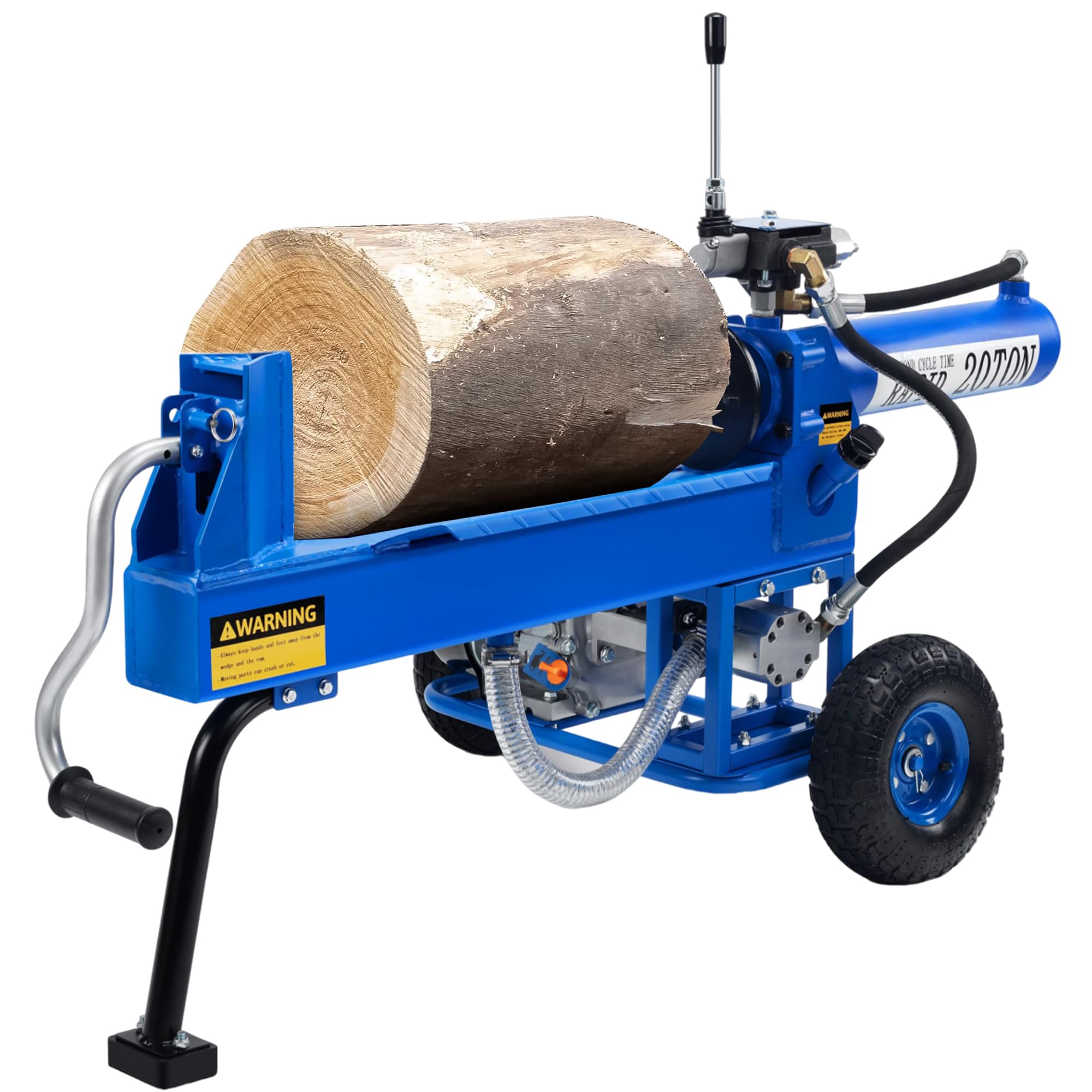
The Super Handy GCAO023 delivers 20 tons of splitting force with a 7HP gas engine — portable, powerful, and built for serious firewood work.
Super Handy GCAO023How to Choose a Hydraulic Log Splitter
When you want the best balance of power and efficiency, hydraulic log splitters are the obvious pick. They handle hardwood without complaint and are equally at home with landscapers, farmers, and professional firewood operations — but they're more than capable for ordinary backyard jobs too.
Here's what to weigh up when shopping for a hydraulic log splitter:
Tonnage
This is the splitting power. The harder the wood or larger the log, the more tonnage you'll want behind it.
Orientation
Horizontal splitters work great for smaller logs you can lift onto the cradle. Vertical models are better for heavier logs you can't easily hoist.
Portability
If you're moving the splitter around a large yard, farm, or property, look for models with wheels and a tow hitch.
Cycle Time
The seconds it takes for the ram to extend and retract. Homeowners can work well with 15–20 seconds; pros tend to want 10–15 for high-volume splitting.
At Backyard Provider, we stock log splitters trusted by both weekend warriors and full-time professionals — so you'll find the right machine no matter how often you split.
Top-Rated Log Splitters
After years of helping customers find the right gear, we've seen which splitters consistently rise to the top. The Super Handy line is a standout for build quality, value, and reliability — particularly when you're dealing with the tough hardwoods common across Canada and the northern U.S.
Our log splitter range covers every scenario:
- Super Handy GCAO023 (20-Ton) — the ideal portable splitter for homeowners and weekend firewood projects.
- 25–30 Ton models — powerful all-rounders for serious property owners and small landscaping crews.
- 40+ Ton heavy-duty splitters — built for commercial use and continuous high-volume work.
Where to Buy a Log Splitter
Once you've picked the right machine, you have a choice between new or used. Second-hand splitters can be tempting, but they're a gamble — you don't always know what mechanical issues are hiding underneath, and those repairs can quickly cost more than the savings.
Buying new from Backyard Provider means you get a fully covered warranty, manufacturer-backed support, and a machine with its full service life still ahead. Our team is also available to help you get the most out of your equipment from day one.
Log Splitter Maintenance Tips
Keeping your splitter in good shape doesn't take much, and a little upkeep pays off in years of extra service. Here's a quick checklist to stay on top of it:
- Check the hydraulic fluid level regularly and top off as needed for steady performance.
- Clear sawdust, bark, and debris off the unit after every use.
- Inspect the wedge for chips, cracks, or dulling — a sharp wedge does the work for you.
- Lubricate moving parts with the recommended oil to keep wear at bay.
The Best Oil & Hydraulic Fluid Guide
Always run the oil and hydraulic fluid your manufacturer recommends — it's the cheapest insurance you can buy against mechanical headaches. Your owner's manual will spell out the exact specs. For hydraulic splitters, regular fluid checks and timely changes are essential. Skipping this is one of the most common causes of pump failure and safety issues.
 How to Use a Hydraulic Log Splitter Safely
Log splitters generate a lot of force, so safe operation isn't optional — it's the difference between a productive afternoon and a serious injury. Stick to these basics:
- Wear the right gear: heavy work clothes, sturdy gloves, safety glasses, and steel-toe boots.
- For horizontal splitters, seat the log firmly in the cradle. For vertical splitters, make sure it's stable and balanced before you start.
- Engage the hydraulics, then keep hands and feet well clear of the wedge during the cycle.
- When you're done, clean the unit and store it somewhere dry and protected.
Extra tip: Never operate a splitter on unstable or sloped ground, and don't overload the cradle — one log at a time, every time.
Frequently Asked Questions
Which is better — gas or electric log splitter?
Gas log splitters bring more raw power and are ideal for heavy use on tough hardwoods, while electric splitters run quieter and suit smaller jobs around the home. If you're plowing through cords of oak or maple each season, gas is usually the better fit.
Do I need a vertical or horizontal log splitter?
Horizontal splitters are easier on the back for smaller logs you can lift comfortably — great for most homeowners. Vertical splitters handle the heavy, large-diameter rounds that you'd struggle to lift, which is why farmers and pros tend to favor them.
What size splitter is best for North American hardwoods?
Hardwoods like oak, hickory, and maple need real splitting force. A 20-ton model like the Super Handy GCAO023 covers the vast majority of homeowner needs. For logs over 12 inches in diameter or commercial volumes, step up to 25–30 tons or higher.
Can one person operate a log splitter safely?
Yes — most splitters are designed for safe one-person use as long as you follow the manufacturer's guidelines. Always set up on level ground, secure the log properly, and keep hands and feet away from the wedge.
What protective gear should I wear?
Heavy-duty gloves, steel-toe boots, safety glasses, and well-fitting outdoor clothing are the basics. Hearing protection is also a smart add when running a gas-powered model.
Can a log splitter be used on wet or green wood?
Yes, splitters can handle green or freshly cut logs, though the wood won't burn as well until it's seasoned. Green hardwoods are tougher to split, so you may want more tonnage than you'd otherwise need.
How often should I change the hydraulic oil?
The first oil change is usually recommended after about 50 hours of use, then every 100–150 hours or once a year after that. Always confirm with your specific owner's manual.
What hydraulic fluid is best for cold climates?
A premium-grade hydraulic fluid with anti-wear additives is the standard recommendation. In warmer weather, a higher viscosity fluid (around ISO 46) works well, while ISO 32 is generally better for cold-climate starts.
How do I sharpen or replace the wedge?
A metal file or angle grinder restores most edges nicely. If the wedge is badly cracked or worn down, it's safer to replace it with a manufacturer-approved part. A sharp wedge means easier splits and less strain on the machine.
Ready to Split Smarter, Not Harder?
The Super Handy GCAO023 is built for the way real homeowners and property owners work — portable, powerful, and ready to go right out of the crate.
Super Handy GCAO023