


 Damage
  Loss
Loss  Theft
Theft 


How to Secure Your Grill Gazebo for Windy Conditions

Cooking outdoors is one of life's great pleasures, but gusty winds and unpredictable weather can quickly turn a relaxing barbecue into a stressful ordeal. A grill gazebo provides valuable overhead protection, yet without the right precautions, even the sturdiest shelter can shift, wobble, or sustain damage. Whether you own a hardtop grill gazebo or a metal-framed model, taking steps to secure your setup is essential for both safety and long-term durability. In this guide, we cover why stabilizing your gazebo matters, how to pick the right type for your climate, and practical strategies for wind-proofing and fireproofing your outdoor cooking station.
In This Article
• Why Securing Your Grill Gazebo Is So Important
• Structure & Function of Grill Gazebos
• Grill Gazebo Types & Their Best Environments
• Why Hardtop Models Excel in Harsh Weather
• Practical Safety & Wind Resistance Measures
• Grilling Safely Under a Gazebo
• Conclusion
Why Securing Your Grill Gazebo Is So Important
Purchasing a hard-top gazebo for your grill is an investment in more than just shade — it is an investment in safety, resilience, and peace of mind. The outdoors can be wildly unpredictable: sudden wind gusts, driving rain, and seasonal storms all threaten to damage an unsecured structure. Without proper anchoring, even a heavy-duty metal grill gazebo can tip, slide, or buckle under pressure. A few proactive measures go a long way toward keeping your shelter rock-solid and your cookouts interruption-free.
Grill gazebos are engineered to handle exposure to the elements, but mother nature can still test their limits. Wind-resistant gazebo designs incorporate reinforced frames and heavy-duty materials to manage strong gusts, yet anchoring the structure to the ground provides a crucial extra line of defense. Whether your setup is a hardtop grill gazebo or another variety, using anchor kits, weighted bases, or tie-down straps will dramatically reduce the risk of unwanted movement.
Beyond protecting the gazebo itself, proper securing safeguards the people around it. A toppled frame near a hot grill is a serious hazard. By investing a little time in stabilization, you protect your family, your equipment, and your investment for years to come. With the importance clearly established, let's explore the practical steps that make your outdoor grill area safer and more dependable.
Structure & Function of Grill Gazebos
What Exactly Is a Grill Gazebo?
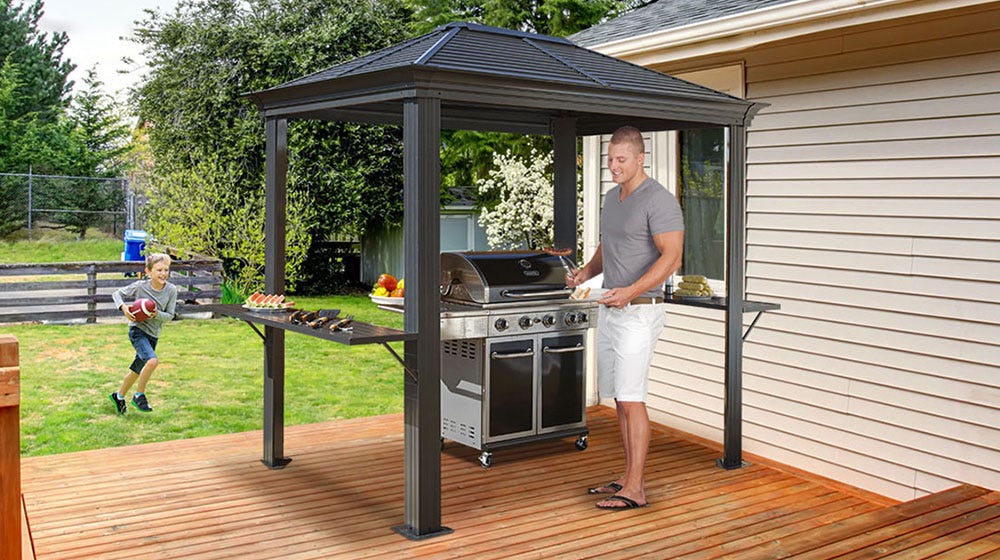
A grill gazebo is a canopy-style shelter built specifically to cover your outdoor grill and cooking space. It functions as a protective overhead shield, keeping sun, rain, and wind away while you cook. Most designs feature an open-sided layout that encourages natural airflow, preventing heat from accumulating around the grill. The roof blocks direct sunlight and precipitation, while the sturdy frame bears the weight of the roofing panels and resists lateral forces from wind.
Safety is baked into the engineering of a quality grill gazebo. Adequate clearance between the grill and the canopy minimizes fire risk and allows proper ventilation. Frames are typically constructed from corrosion-resistant metals such as steel or aluminum, both of which can tolerate the intense heat generated during grilling. A well-designed grill gazebo keeps your cooking zone comfortable and secure, rain or shine.
Grill Gazebo Types & Their Best Environments
Grill gazebos are available in several materials, and each one brings distinct advantages. Selecting the right type for your local climate is one of the smartest decisions you can make for durability and safety.
Metal Grill Gazebo
Constructed from steel or aluminum, metal gazebos deliver outstanding rust resistance and structural integrity. They excel in regions with heavy rain, high winds, or frequent storms and offer the longest service life of any category.
Wooden Grill Gazebo
Wooden models bring a classic, warm aesthetic to any backyard. They work well in temperate climates with moderate weather, though they require more upkeep to guard against warping, rot, and moisture damage over time.
Plastic Grill Gazebo
Lightweight and budget-friendly, plastic gazebos are simple to assemble and maintain. However, they are less durable in extreme conditions and are best reserved for calm, mild-weather environments.
Every type of grill gazebo fits a different set of needs. Think carefully about the weather patterns typical for your area before committing. If strong winds or harsh storms are common, a wind-resistant or hardtop grill gazebo will deliver far greater protection for both you and your grill.
Why Hardtop Grill Gazebos Excel in Harsh Weather
When harsh weather is the norm, hardtop grill gazebos stand head and shoulders above the rest. Their solid roofs — typically crafted from steel, aluminum, or polycarbonate — provide significantly greater stability in windy conditions than fabric canopies, which can tear or catch the wind like a sail. A hard-top gazebo for a grill is essentially a permanent outdoor structure that holds firm through heavy rain, snow, and strong gusts.
Hardtop designs also feature reinforced frames that minimize flexing and reduce movement, even during sustained high winds. Their robust construction makes them a reliable year-round companion for your outdoor grill area. Whether the breeze is gentle or gusts are roaring, the heavy-duty build of a wind-resistant hardtop gazebo keeps everything securely in place, so you can focus on cooking with confidence.
Pro Tip
A hardtop grill gazebo rated for winds up to 70 mph and snow loads up to 2.4 inches offers reliable protection in most North American climates.
Practical Safety & Wind Resistance Measures
1. Foundational Safety Steps
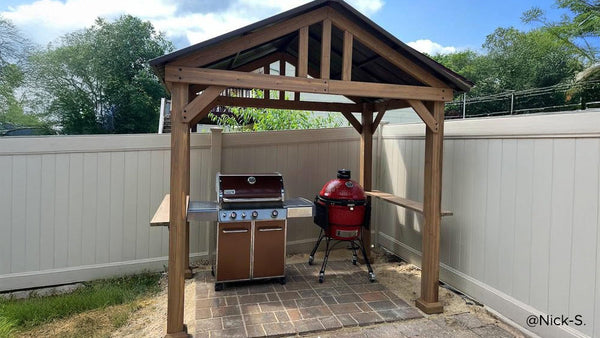
Stability starts from the ground up. Before you ever fire up the grill, make sure the gazebo sits on a level, compact surface. Stay away from areas with loose soil, heavy foot traffic, or uneven terrain that could allow the structure to shift gradually. Hardtop grill gazebos, in particular, need a solid foundation to support the additional roof weight.
Anchor the Gazebo — Most hardtop and metal grill gazebos include anchor kits or pre-drilled holes for staking the frame into the ground. If yours did not come with one, ground anchors and tie-down straps are inexpensive and easy to install. Drive anchors deep for maximum holding strength.
Inspect the Frame Regularly — Screws, bolts, and joints can loosen over time. Perform routine checks to make sure every connection is tight. A quick inspection before each grilling session can prevent the frame from rattling loose when winds pick up.
Add Weight on Hard Surfaces — If the gazebo sits on a patio or deck where staking is not possible, use weighted sandbags or corner weights designed for gazebos. Placing these at each leg adds meaningful resistance against tipping during gusty conditions.
2. Boosting Wind Resistance
Not all gazebos handle high winds equally. Hardtop grill gazebos are built with superior durability in mind, but regardless of which type you own, several upgrades can dramatically improve wind performance.
Opt for a Wind-Resistant Model — Look for a gazebo with a reinforced frame and a solid roof made from steel or polycarbonate. These materials resist deformation and prevent collapse even under significant wind loads. If you live in a storm-prone area, a hardtop gazebo for your grill is the smartest investment.
Use Corner Weights or Sandbags — Placing sandbags or purpose-built corner weights at the base of each leg helps prevent the gazebo from lifting or swaying. This straightforward method works equally well for metal and wooden grill gazebos.
Add Sidewalls or Curtains — Removable sidewalls do double duty: they block wind from reaching the cooking area and help keep warmth in during cooler months. Many outdoor grill gazebos offer compatible curtain kits that attach quickly when conditions deteriorate.
Inspect the Roof Frequently — The roof is the most exposed component. Regularly verify that panels are secure, undamaged, and free of gaps. If bracing seems weak or panels are loose, address the issue before the next windy day.
Skip Grilling in Extreme Weather — Even the toughest wind-resistant gazebo has its limits. When forecasts call for severe storms or dangerously high winds, postpone your cookout. Safety always comes first.
How to Safely Grill Under a Gazebo
Grilling beneath a gazebo combines the best of both worlds — open-air flavor with overhead shelter. You can further elevate the experience with the right accessories such as portable grill tables and outdoor grill carts. But enhancing comfort must never come at the expense of safety. Whether you own a hardtop grill gazebo or a metal-framed model, following proper safety protocols is non-negotiable. Below, we tackle ventilation, fire hazards, and material choices so every cookout stays worry-free.
1. Ventilation & Fire Safety
Proper airflow is the single most important safety factor when cooking under any covered structure. Grills produce heat, smoke, and combustion gases that must dissipate freely to prevent dangerous buildup.
Maintain Ample Clearance — Position your grill so there is generous space between it and the gazebo walls and ceiling. Crowding the grill reduces airflow and can lead to harmful gas accumulation. Hardtop grill gazebos with open sides or mesh panels naturally promote better circulation.
Keep Exhaust Flues Clear — If your grill includes a chimney or exhaust vent, verify that the gazebo structure does not obstruct it. Blocked vents trap smoke and significantly increase fire risk. Always inspect the exhaust path before lighting up.
2. Fire-Resistant Materials & Protective Design
Grilling involves intense heat, and the materials your gazebo is made from can make a decisive difference in safety. Fire-resistant construction is essential for reducing accident risk and ensuring the structure can handle the thermal demands of cooking.
Select Fire-Resistant Materials — When shopping for a metal grill gazebo or hard-top model, prioritize steel and aluminum frames. Both metals withstand extreme temperatures without catching fire, and many hardtop gazebos include additional fireproof coatings. Steer clear of untreated wood or plastic components near the cooking zone, as these can ignite during a flare-up.
Look for Protective Design Features — A wind-resistant gazebo with a solid metal roof doesn't just block rain — it also helps contain sparks. Seek designs with adequate clearance between the grill and the canopy, minimizing the chance of heat transfer to overhead panels.
Consider Heat Shields — If your outdoor grill gazebo has a fabric or composite roof, installing a heat shield between the grill and the ceiling adds a critical safety buffer. Some hardtop models already include built-in heat-resistant panels for exactly this purpose.
Stay on Top of Maintenance — Regularly inspect the gazebo for signs of wear, particularly around the roof area where heat and smoke exposure are greatest. Replace any worn-out fabric panels, loose screws, or damaged roofing material promptly to keep your grill gazebo safe season after season.
Conclusion
Keeping your grill gazebo secure is the foundation of a safe, enjoyable outdoor cooking experience. Whether you rely on a hardtop grill gazebo or a classic metal-framed shelter, the right combination of anchoring, weighted supports, and proper ventilation will keep your structure steady through whatever the weather throws at it. Choose fire-resistant materials, inspect your setup regularly, and never hesitate to postpone a cookout when conditions turn severe. With these straightforward measures in place, every grilling session can be a confident, worry-free affair — no matter what the forecast says. Protect your gazebo, protect your family, and let the good times roll.