


 Damage
  Loss
Loss  Theft
Theft 


Portable Pitching Mounds: Why Every Player Needs One
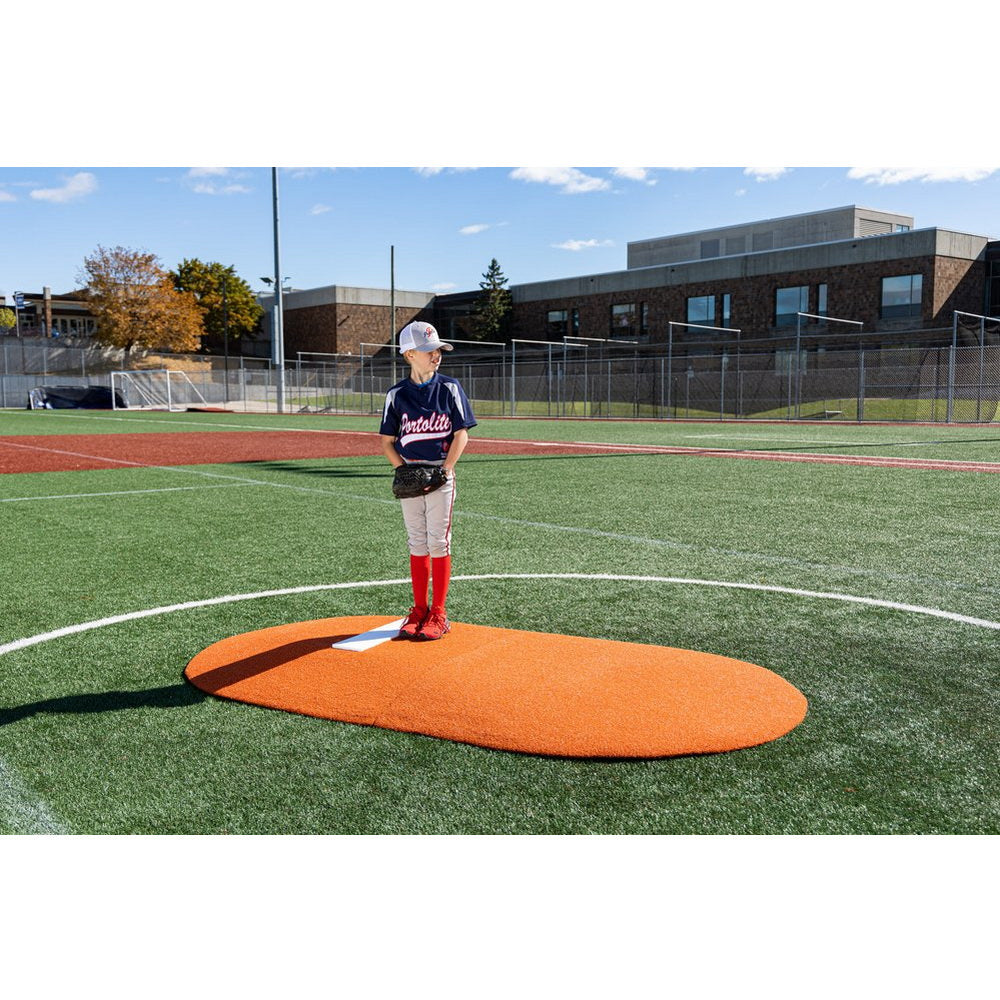
Portable pitching mounds bring game-day conditions to any space — indoors or out — giving pitchers and fielders a consistent, realistic platform for skill development no matter the season or weather.
Who Are They For? Kids, Adults, and Everyone Between
Practice pitching mounds are built for players at every stage. Across both age groups, the standard practice mound diameter is 10 feet, with an 18-inch rubber base. What changes is the mound height — and those specifications matter more than most players realize.
Youth players aged 10 and under should practice on a 6-inch mound. Players between 11 and 13 benefit from an 8-inch height, while adults and serious competitors train on the full 10-inch professional height. Matching mound height to age ensures proper mechanics develop from the start.
Beyond standard pitching, portable mounds serve a clever dual purpose: they instantly transform a softball field into a baseball diamond. Placing a portable mound on a flat softball field creates a genuine raised-mound experience, giving players the exact physical feedback required to develop their release point, stride, and follow-through in a game-realistic setting.
What Are Pitching Mounds Made Of? Are They Like Real Field Dirt?
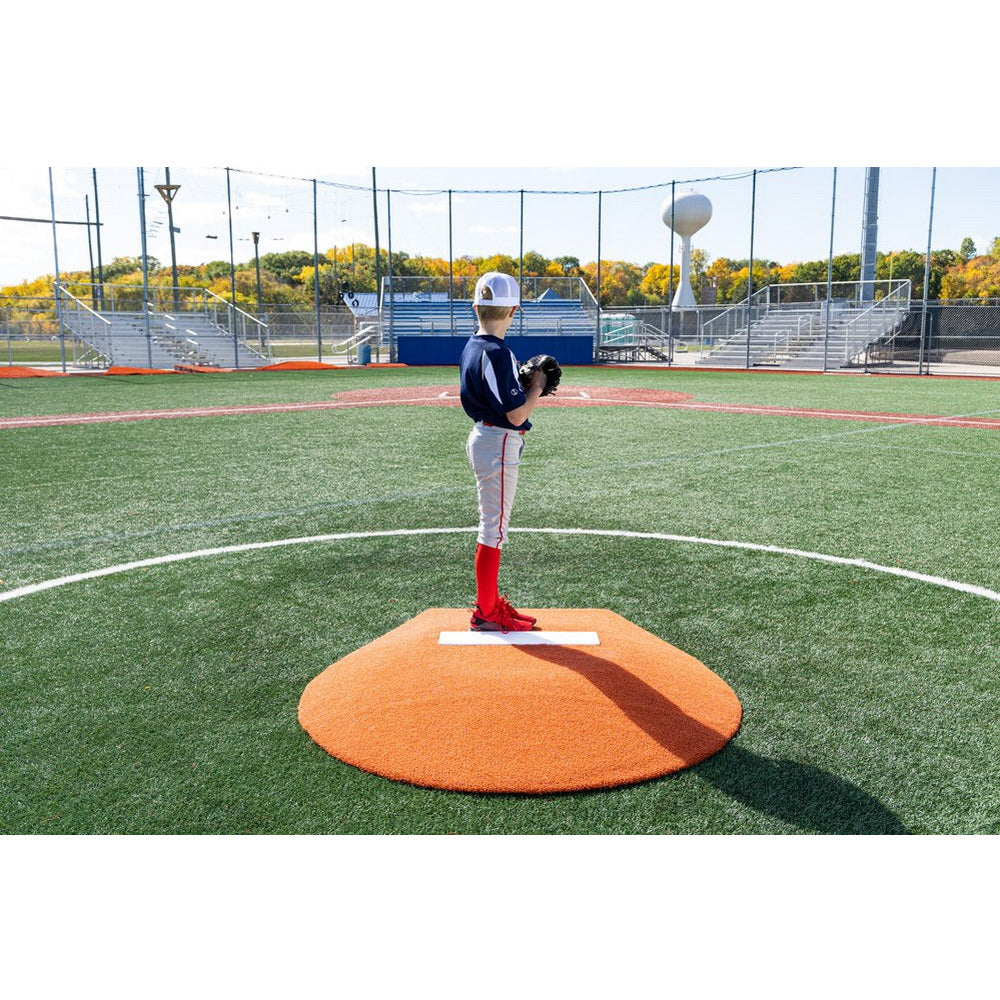
The short answer is: it depends on the model. Heavy-duty portable mounds are typically constructed from fiberglass and artificial turf surfaces that closely replicate the feel of a regulation baseball field. Smaller, youth-focused versions often use high-density foam or rubber cores.
Around the mound itself, mound clay and clay bricks are used to build up the correct height and contour. Clay is the material of choice for a reason — it molds easily, holds its shape under pressure, and compacts firmly enough to withstand repeated use.
Properly compacted mound clay holds up to baseball cleats and spikes — even breaking them in before an official game — while maintaining a consistent, groomed surface that supports safe and repeatable pitch mechanics.
The landing area in front of the mound is just as important as the mound itself. A flat, properly prepared landing zone means consistent pitch release points and dramatically reduced injury risk. Uneven landing surfaces are a leading cause of lower-body strain in pitchers — something a quality portable mound directly addresses.
The Coolest Features of Today's Practice Mounds
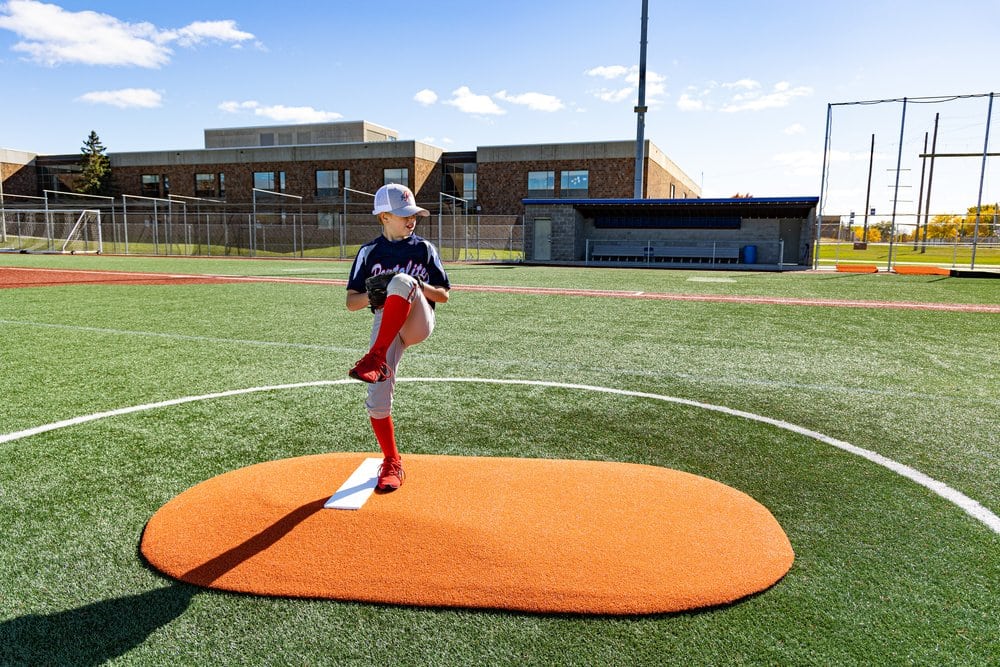
Modern portable mounds have evolved well beyond basic clay and fiberglass. Today's top models are engineered for ease of use, portability, and realistic game simulation — all at the same time.
One standout feature found on premium models is the removable tray system. The drive tray holds a pitching rubber that sits exactly 6 inches from the slope — matching official baseball rules precisely. This tray can be filled with mound clay to keep the surface consistent and game-authentic.
Alongside the drive tray, most quality mounds include a removable landing tray. This tray is engineered to maintain exactly 1 inch per foot of slope — a critical dimension for proper body mechanics. The landing tray also measures 3 feet wide and 3 feet in length, giving pitchers a generous, consistent zone to land in after each delivery.
Why does a consistent landing zone matter so much? The answer lies in body alignment. An ideal pitching motion aligns the throwing arm with the shoulder at a 90-degree angle between the upper arm and torso. When the rubber or landing area is uneven, that alignment is thrown off — raising the pitch release point, increasing elbow and shoulder stress, and compounding injury risk over time. A 2-inch hole in the landing surface alone can reduce the release point angle below the safe 90-degree threshold, placing the entire upper arm and torso chain under dangerous strain.
Portable pitching mounds aren't just training tools — they're injury prevention equipment. A consistent, regulation-height mound with a properly sloped landing area is one of the most effective ways to protect a pitcher's long-term health and performance.
Are Practice Mounds Only for Pitchers?
There's a common assumption that position players have no use for a practice mound. That assumption is wrong — and the numbers prove it. The share of position players who take the mound during games has climbed from fewer than 10 in 2010 to more than 40 in recent seasons.
When a team is facing a blowout, managers routinely turn to a position player to take the mound and absorb innings. That player — without any mound practice experience — is suddenly expected to deliver a controlled, safe pitch from an elevated rubber. Preparation matters enormously in that moment.
Baseball has an unwritten rule about position players pitching in blowout situations, and while the convention exists, the reality is that any player on the roster may be called upon. Practicing on a portable mound, even occasionally, ensures that no player is caught off guard — and more importantly, that no arm gets hurt throwing off an unfamiliar surface without proper form.
Portable pitching mounds are used by more players than most teams realize, and that trend is only growing. Whether you're a weekend rec league pitcher or a varsity starter, consistent mound practice builds the body mechanics and pitch confidence that translate directly to better game performance.
PortoLite 6" Little League Full Length Portable Game Pitching Mound
Official dimensions, removable tray system, and regulation rubber placement — built for youth players, trusted by coaches.