


The Complete Guide to Downdraft Cooktops: How They Work, Advantages & Disadvantages
Modern kitchen design continuously evolves to meet the demands of homeowners seeking both functionality and aesthetic appeal. Downdraft cooktops represent an innovative ventilation solution that challenges traditional overhead range hood designs. These specialized cooking appliances integrate ventilation directly into the cooking surface, offering a streamlined appearance and unique benefits for contemporary kitchen layouts. Whether you're renovating your kitchen or building a new home, understanding how downdraft systems operate and their practical implications will help you make an informed decision about this increasingly popular cooking technology.
.webp)
Understanding Downdraft Cooktop Technology
A downdraft cooktop represents a sophisticated ventilation approach that fundamentally differs from conventional cooking setups. Rather than relying on an overhead exhaust hood to capture cooking fumes, smoke, and steam, downdraft systems utilize a built-in ventilation mechanism positioned directly adjacent to or integrated within the cooking surface itself. This innovative design draws contaminants downward through the cooktop structure, channeling them either through ductwork to the exterior of your home or through a filtration system for recirculation.
The mechanism operates through powerful internal fans that create negative pressure near the cooking surface. When activated, these ventilation units rise from their concealed position within the cooktop or countertop, creating a capture zone that intercepts cooking byproducts before they can disperse throughout your kitchen. This downward airflow pattern contradicts the natural upward movement of hot air and steam, requiring substantial fan power to effectively redirect these elements.
.webp)
The fundamental advantage of this configuration lies in its ability to maintain unobstructed sightlines and preserve open ceiling space. For kitchens with island installations, scenic window views, or architectural features that would be compromised by traditional overhead ventilation, downdraft technology provides an elegant alternative. The ventilation component remains hidden when not in use, emerging only when cooking activities require air management.
Categories of Downdraft Ventilation Systems
Integrated Downdraft Cooktops
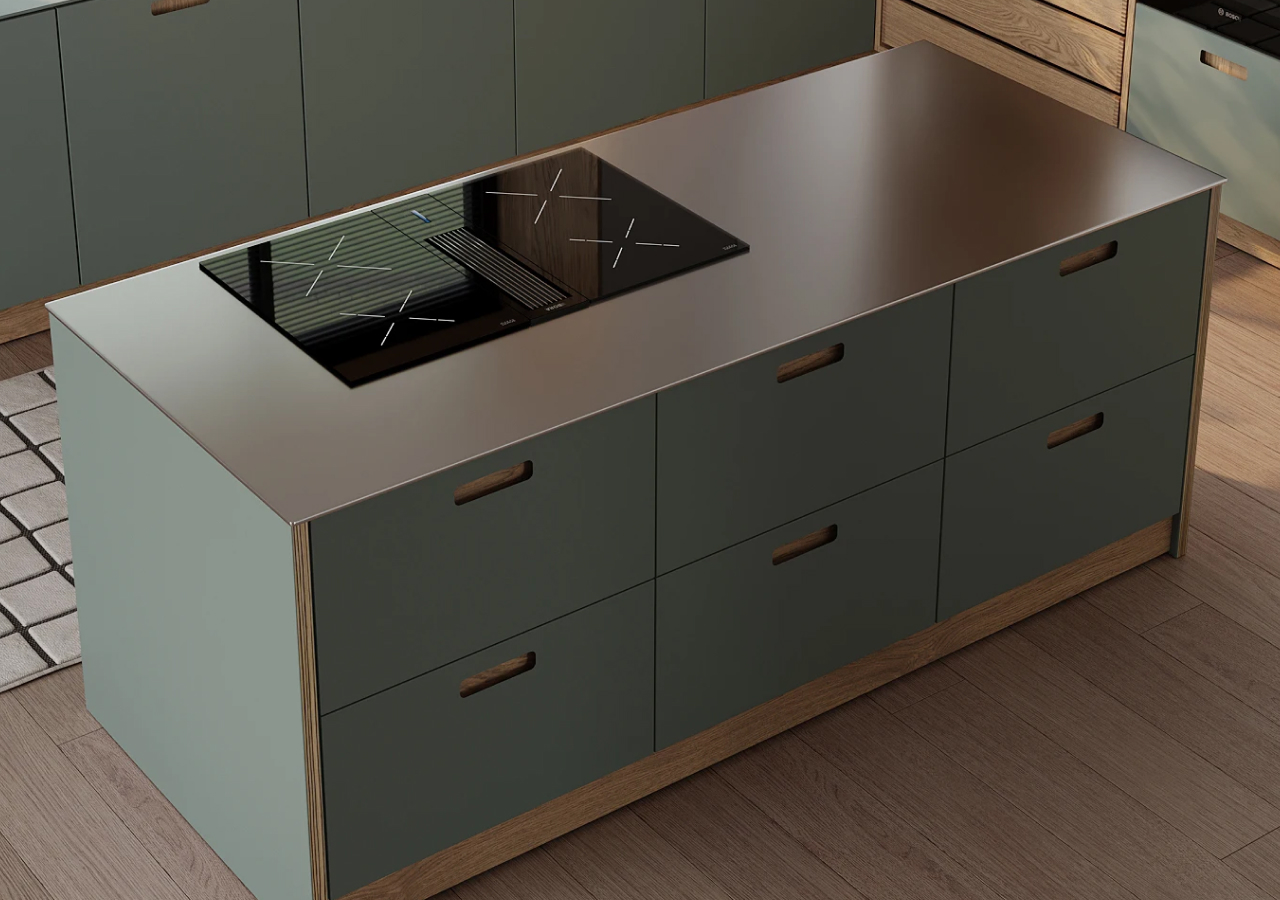
Integrated downdraft cooktops combine the cooking surface and ventilation system into a single unified appliance. The ventilation component typically rises from the rear or center of the cooktop when activated, creating a seamless design that minimizes countertop interruptions. These models offer the most streamlined appearance and are engineered specifically to work together as an optimized system. The ventilation unit is proportioned and positioned to provide maximum effectiveness for the specific cooking surface configuration.
Modular Downdraft Systems
Modular downdraft ventilation units function as separate components installed adjacent to your cooking surface. These standalone systems can be positioned next to conventional cooktops or rangetops, offering flexibility in kitchen design and appliance selection. This configuration allows you to select your preferred cooking technology independently from your ventilation solution, providing greater customization options. Modular systems typically feature telescoping designs that extend upward during cooking operations and retract flush with the countertop when not needed.
The choice between integrated and modular configurations depends largely on your kitchen layout, design preferences, and the specific cooking equipment you prefer. Integrated systems provide the most cohesive appearance, while modular options offer greater flexibility and can be retrofitted into existing kitchen designs more readily.
Premium Downdraft Ventilation Solution
Transform your kitchen with professional-grade downdraft technology that combines powerful performance with sleek, telescopic design.
Thermador 36" Downdraft HoodOperational Mechanics of Downdraft Systems
The engineering behind downdraft ventilation involves sophisticated airflow management to counteract the natural tendency of heat, steam, and cooking vapors to rise. When you begin cooking, activating the downdraft system engages powerful internal blowers that generate substantial negative pressure near the cooking surface. This pressure differential creates a downward airflow pattern that captures contaminants as they're generated.
The captured air and particulates are then directed through one of two pathways. In ducted configurations, the contaminated air travels through ductwork beneath your floor or through your cabinetry to be expelled outdoors. This external venting provides the most effective removal of cooking byproducts, odors, and excess moisture. The ductwork must be properly sized and routed to minimize resistance and maintain adequate airflow velocity.
For installations where external venting is impractical or impossible, recirculating downdraft systems employ sophisticated filtration mechanisms. These systems pass the captured air through multiple filter stages, including grease filters to trap oil particles and activated charcoal filters to neutralize odors, before returning the cleaned air to your kitchen environment. While recirculating systems don't remove heat or moisture as effectively as ducted versions, they provide viable ventilation when external ducting isn't feasible.
The effectiveness of downdraft ventilation depends significantly on fan power, measured in cubic feet per minute (CFM). Higher CFM ratings indicate greater air-moving capacity, which is essential for overcoming the challenge of pulling cooking vapors downward against their natural upward trajectory. Professional-grade downdraft systems typically feature CFM ratings of 600 or higher to ensure adequate capture efficiency, particularly when used with high-BTU burners or multiple cooking zones operating simultaneously.
.webp)
Advantages and Limitations of Downdraft Cooktops
Key Advantages
Aesthetic Flexibility: Downdraft systems eliminate the visual bulk of overhead range hoods, creating clean sightlines and preserving architectural features. This design freedom is particularly valuable in kitchens with island installations, where maintaining open views across the space enhances the room's social functionality and spatial perception.
Design Versatility: The absence of overhead ventilation components provides greater flexibility in cabinet design, lighting placement, and ceiling treatments. You can install decorative fixtures, architectural elements, or simply maintain an uncluttered ceiling plane without compromising cooking ventilation.
Space Optimization: Particularly beneficial in kitchens with limited ceiling height or where overhead obstructions would create clearance issues. Downdraft technology allows for cooking installations beneath windows, preserving natural light and views that would otherwise be blocked by traditional ventilation equipment.
Unobtrusive Operation: When not in use, downdraft systems remain completely hidden, preserving the clean lines of your countertop and cooking surface. This concealment contributes to a minimalist aesthetic that many contemporary kitchen designs prioritize.
Important Considerations
Capture Efficiency Challenges: Downdraft systems must work against the natural upward movement of heat and cooking vapors, potentially resulting in lower capture rates compared to overhead ventilation. Effectiveness diminishes with taller cookware and when using rear burners positioned farther from the ventilation inlet.
Installation Complexity: Downdraft systems require substantial space beneath the cooking surface for the ventilation mechanism and ductwork. This spatial requirement can complicate cabinet design and may not be feasible in all installation scenarios, particularly in homes with concrete slab foundations or limited under-counter clearance.
Maintenance Requirements: The filters in downdraft systems require regular cleaning and periodic replacement to maintain optimal performance. Grease accumulation can significantly reduce airflow efficiency, and accessing these filters may be less convenient than with overhead hood designs.
Performance Limitations: Even high-powered downdraft systems may struggle with particularly intense cooking activities, such as high-heat wok cooking, extensive searing, or operations producing substantial steam. The downward capture mechanism is inherently less efficient than overhead ventilation for these demanding applications.
Cost Considerations: Downdraft technology typically commands premium pricing compared to conventional cooktops and standard range hoods. The specialized engineering, powerful ventilation components, and installation requirements contribute to higher initial investment costs.
Selecting the Right Downdraft System for Your Kitchen
Choosing an appropriate downdraft cooktop requires careful evaluation of multiple factors that will impact both performance and satisfaction. Begin by assessing your cooking habits and typical meal preparation activities. If you frequently engage in high-heat cooking, extensive frying, or techniques that generate substantial smoke and steam, ensure you select a system with sufficient CFM capacity to handle these demands. Professional-grade units with ratings of 600 CFM or higher provide the most robust performance.
Consider your kitchen's structural characteristics and whether external venting is feasible. Ducted systems offer superior performance but require routing exhaust ductwork to an exterior wall or roof penetration. Evaluate the path this ductwork would take, minimizing bends and maintaining adequate duct diameter to reduce airflow resistance. For second-floor kitchens or installations where external ducting isn't practical, high-quality recirculating systems with efficient filtration can provide acceptable ventilation, though with some performance compromises.
Physical dimensions and spatial requirements demand attention during the selection process. Measure the available space beneath your countertop, accounting for drawer clearances, cabinet structures, and any existing utilities or structural elements. Verify that your chosen downdraft system will fit within these constraints while allowing proper installation and future maintenance access.
Compatibility with your cooking surface is essential, whether you're selecting an integrated system or pairing a modular downdraft with a separate cooktop. Ensure the ventilation capacity appropriately matches the heat output and size of your cooking equipment. The downdraft should extend sufficiently to cover the cooking zone effectively, with adequate clearance from burners or heating elements to prevent heat damage to ventilation components.
Noise levels warrant consideration, as powerful ventilation systems can generate substantial operational sound. Review manufacturer specifications for decibel ratings at various speed settings. If possible, experience the system operating at full capacity before making your purchase decision, particularly if your kitchen connects to living areas where noise transmission would be problematic.
Frequently Asked Questions About Downdraft Cooktops
Downdraft systems face inherent challenges in matching the capture efficiency of overhead ventilation due to working against natural convection currents. High-quality downdraft units with adequate CFM ratings (600+) can provide satisfactory performance for typical home cooking activities, though overhead hoods generally offer superior capture rates, particularly for intense cooking operations. The effectiveness gap narrows with proper system sizing, correct installation, and appropriate cooking techniques.
Ducted configurations expel contaminated air outdoors through ductwork, providing the most effective removal of cooking byproducts, moisture, and odors. Recirculating systems filter and return air to the kitchen, offering a solution when external venting isn't feasible but with reduced effectiveness in removing heat and humidity. Ducted systems require professional installation with proper ductwork routing, while recirculating models offer simpler installation but demand regular filter maintenance and replacement.
Downdraft ventilation works effectively for standard residential cooking on gas or electric cooktops, performing best with front burners and moderate cookware heights. Performance diminishes with tall stockpots, large woks, or intensive high-heat cooking that generates substantial smoke and steam. Professional or commercial-style cooking equipment producing extreme heat output may exceed the capture capabilities of residential downdraft systems, making overhead ventilation more appropriate for these demanding applications.
Regular maintenance includes cleaning grease filters every few weeks, depending on cooking frequency and types of food preparation. Remove and wash these filters with hot soapy water or place them in your dishwasher if manufacturer-approved. Charcoal filters in recirculating systems require replacement every three to six months, varying with usage intensity. Periodically inspect the ventilation mechanism for proper operation, ensuring the telescoping unit extends and retracts smoothly. Professional service may be necessary for internal fan cleaning or mechanical adjustments.
Retrofitting downdraft ventilation into existing kitchens is possible but presents significant challenges compared to new construction installations. The primary obstacle involves creating adequate space beneath the cooktop for the ventilation mechanism and routing ductwork through existing floor structures or cabinetry. Homes with basement access below the kitchen offer more feasible retrofit opportunities. Concrete slab foundations or second-floor installations typically require recirculating systems or extensive structural modifications. Professional assessment of your specific situation will determine feasibility and identify the most practical approach for your installation.
Upgrade Your Kitchen Ventilation Today
Experience the perfect blend of performance and design with premium downdraft technology engineered for modern kitchens.
Thermador 36" Downdraft HoodFinal Considerations
Downdraft cooktops represent a sophisticated ventilation solution that prioritizes aesthetic flexibility and design freedom while addressing the practical demands of kitchen air quality management. These systems excel in specific applications where traditional overhead ventilation would compromise architectural features, obstruct views, or create spatial limitations. Understanding both the capabilities and constraints of downdraft technology enables you to make an informed decision aligned with your kitchen design goals and cooking requirements.
Success with downdraft ventilation depends on selecting appropriate equipment with sufficient capacity, ensuring proper installation with correctly sized ductwork or effective filtration, and committing to regular maintenance practices. When these elements align with cooking habits that suit the technology's strengths, downdraft systems deliver satisfying performance while contributing to a streamlined, contemporary kitchen aesthetic. For situations where maximum ventilation effectiveness takes priority over design considerations, or where cooking activities regularly involve high heat and substantial smoke generation, traditional overhead range hoods may remain the more practical choice.