


 Damage
  Loss
Loss  Theft
Theft 


Your Essential Guide to Selecting the Perfect Ice Maker
Transform your beverage service with the ideal ice-making solution for your home
Selecting an ice maker involves careful consideration of numerous elements. Whether you're outfitting a residential kitchen, establishing a dedicated bar space, or upgrading your outdoor entertainment zone, understanding the fundamental features and specifications ensures you make an informed investment that serves your needs for years to come.
This comprehensive resource examines the critical factors that influence your ice maker selection, from spatial requirements to production capabilities, helping you navigate the decision-making process with confidence.
Key Factors When Selecting Your Ice Maker
Before committing to an ice maker purchase, evaluate these essential considerations to ensure optimal performance and satisfaction with your investment.
Dimensional Requirements
Understanding spatial constraints represents the foundational step in ice maker selection. Measure your designated installation area with precision—recording width, depth, and height dimensions. Under-counter models typically require a standard 15-inch width, though variations exist. Premium units may reach 24 inches in width.
Installation clearances prove crucial for proper ventilation and serviceability. Allocate additional space beyond the unit's footprint—consider door swing radius for front-access models. Verify that electrical connections and water supply lines can reach your chosen location without complications.
Remember that compact dimensions don't necessarily indicate reduced ice production. Contemporary engineering allows manufacturers to maximize output efficiency within minimal footprints, delivering substantial daily production from space-conscious designs.
Production Volume
Ice production capacity fluctuates significantly across models, influenced by design sophistication and intended application. Daily output typically spans from 12 pounds for compact residential units to exceeding 80 pounds for high-volume installations.
Evaluate your consumption patterns realistically. Standard household usage averages approximately 3-4 pounds daily, while entertainment-focused installations or frequent gatherings necessitate substantially higher capacity. Commercial specifications may demand 50-80 pounds minimum to maintain adequate supply during peak periods.
Storage bin capacity works in tandem with production rates. A unit producing 50 pounds daily but storing only 25 pounds requires attentive monitoring during high-demand occasions. Optimal configurations balance production velocity with generous storage reserves.
Drainage System Design
Ice makers generate excess water through multiple processes—ice harvesting cycles and natural melting produce continuous drainage requirements. Two primary systems address this necessity: gravity-fed drainage and integrated pump systems.
Gravity drainage demands floor-level drain access positioned below the unit, creating installation limitations in certain environments. Pump-equipped models offer superior flexibility, propelling water vertically or horizontally to distant drainage points—particularly advantageous for island installations or locations lacking convenient floor drains.
Installation Placement
Installation environment profoundly impacts both unit selection and long-term performance. Indoor installations benefit from climate-controlled conditions—consistent ambient temperatures optimize efficiency and extend operational lifespan. Position your ice maker strategically where accessing it remains convenient yet doesn't impede primary kitchen workflows.
Outdoor applications require specialized consideration. Whether installing within covered patios, outdoor kitchens, or poolside entertainment zones, environmental exposure necessitates weather-resistant construction. Temperature fluctuations significantly affect production rates—as ambient heat increases, ice-making efficiency proportionally decreases.
Proximity to water supply lines and electrical infrastructure governs installation feasibility. Extended utility runs increase complexity and expense. Position planning should optimize access to existing infrastructure while maintaining adequate ventilation clearances mandated by manufacturer specifications.
Aesthetic Integration
Contemporary ice makers transcend mere functionality—they contribute significantly to your space's visual character. Premium finishes and thoughtful design elements ensure seamless integration with existing décor schemes.
Stainless steel remains the predominant choice, offering durability alongside sophisticated appearance. Surface treatments vary from mirror-bright polished finishes to subdued brushed textures. Panel-ready models accommodate custom cabinetry facades, disappearing entirely within built-in kitchen designs.
Glass door configurations introduce elegant transparency, showcasing ice reserves while adding visual depth to entertainment spaces. These designs particularly suit home bars and hospitality areas where presentation enhances the overall experience.
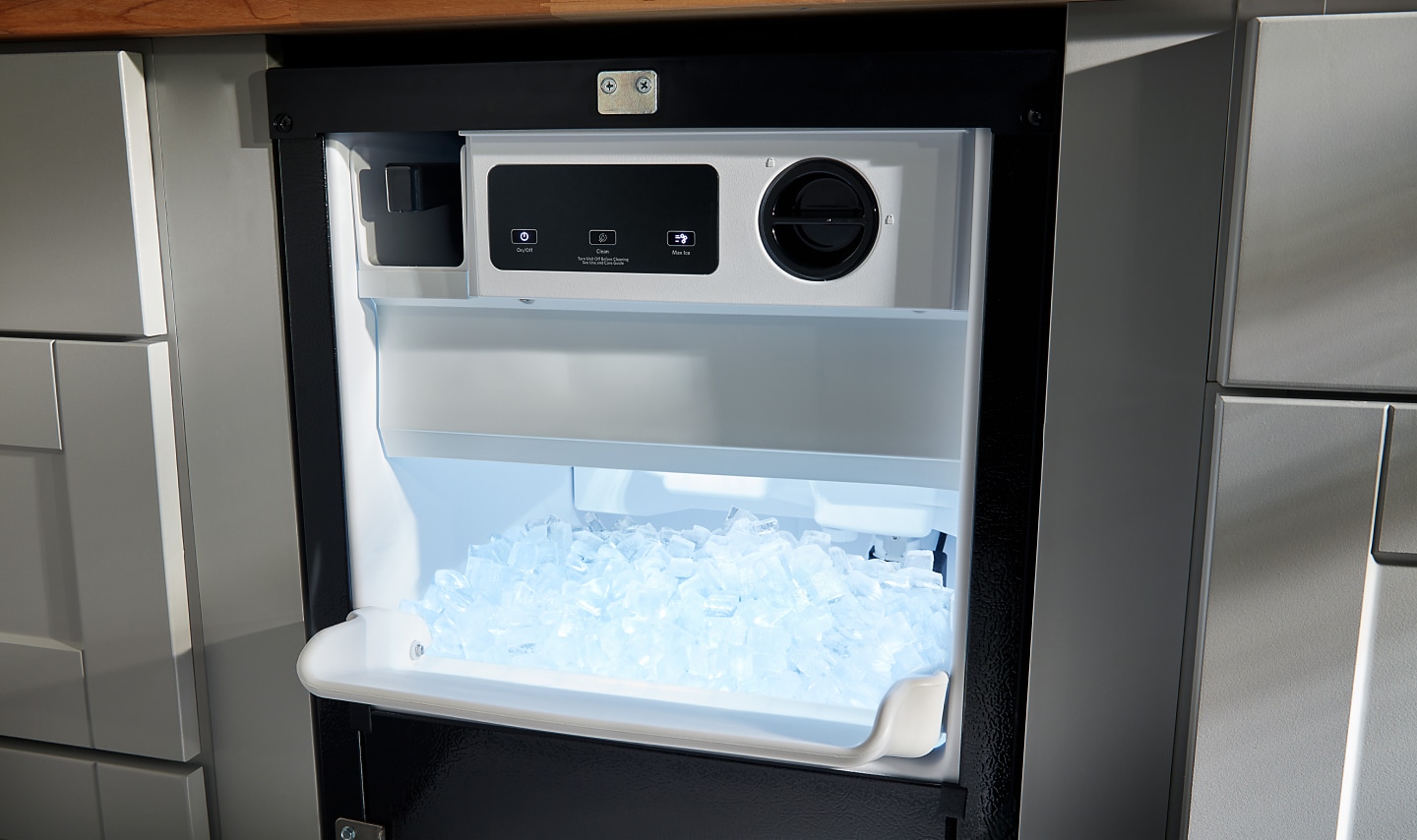
Control interfaces reflect technological advancement—digital displays with intuitive touch controls replace traditional mechanical switches. Illuminated interiors with LED lighting systems provide both practical visibility and atmospheric enhancement, particularly valued in premium installations.
Understanding Ice Maker Categories
Three distinct ice maker configurations serve different installation scenarios and usage requirements—each offering unique advantages suited to specific applications
Under-Counter Ice Makers
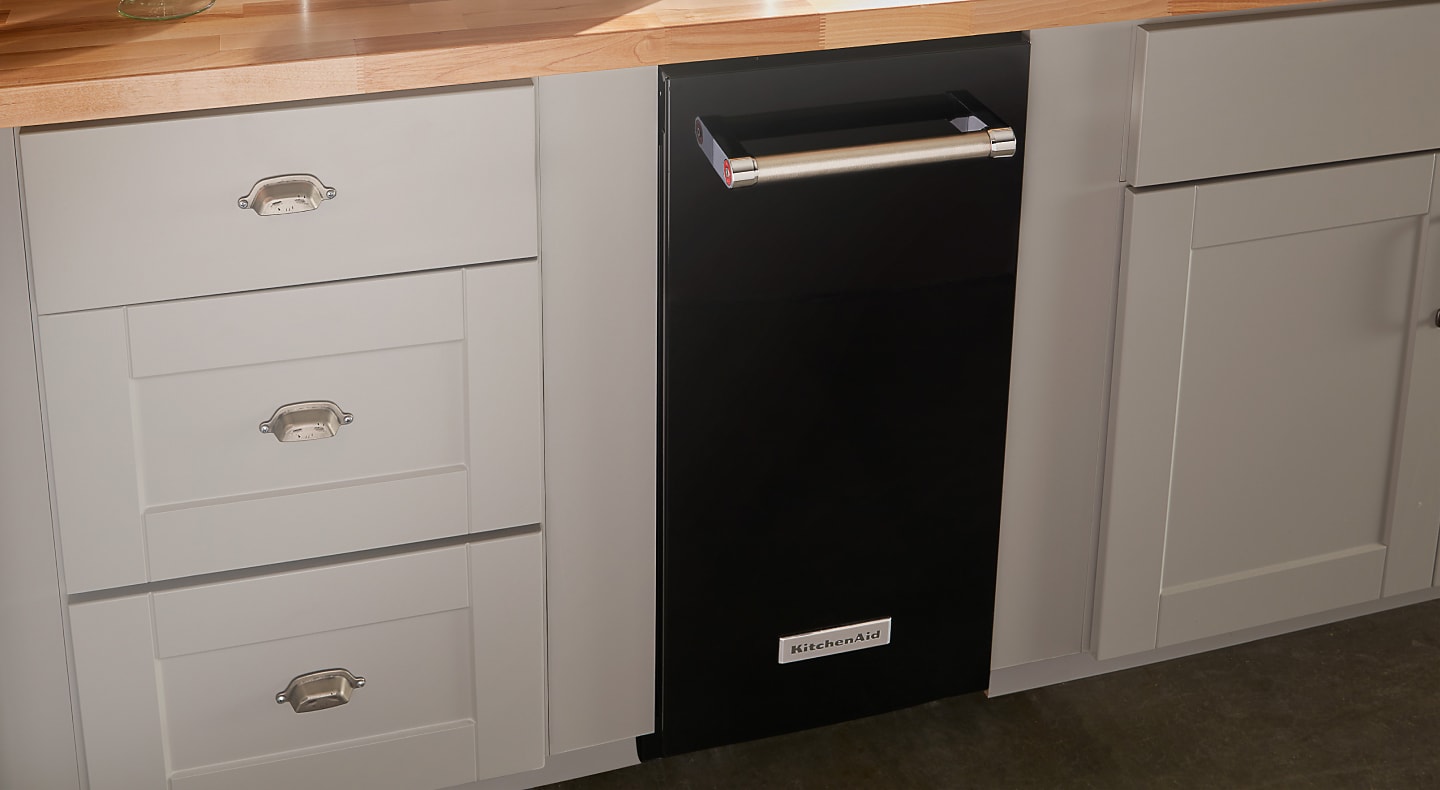
Under-counter installations represent the pinnacle of integrated kitchen design—these units nestle seamlessly beneath countertops at standard cabinet height (typically 34 inches), maintaining flush alignment with surrounding cabinetry for sophisticated, streamlined appearance.
This category excels in space optimization while delivering substantial production capacity. Front-ventilation engineering enables installation within enclosed cabinetry without airflow restrictions—critical for maintaining efficiency and preventing premature component failure.
Built-in models integrate permanently within cabinetry frameworks, often accepting custom panel overlays for complete visual continuity. Reversible door hinges accommodate varied kitchen layouts, while adjustable leveling mechanisms ensure precise alignment despite irregular flooring. Premium specifications frequently include advanced filtration systems and programmable production cycles.
Freestanding Ice Makers
Freestanding configurations prioritize installation flexibility—these self-contained units function independently anywhere adequate utility connections exist. Unlike built-in counterparts requiring cabinetry integration, freestanding models feature finished side panels and rear-ventilation systems permitting placement against walls or within open floor plans.
This versatility makes freestanding ice makers ideal for evolving spaces—basement entertainment rooms, auxiliary kitchens, temporary event venues, or seasonal outdoor cooking areas. Mobility remains limited despite the freestanding designation; permanent water supply and drainage connections typically secure these units in semi-permanent positions. However, relocation remains substantially simpler compared to fully integrated installations, offering long-term adaptability as spatial requirements evolve.
Countertop Ice Makers
Countertop models deliver maximum portability and installation simplicity within compact footprints. These appliances require only standard electrical outlets and manual water filling—no permanent plumbing connections necessary, enabling true mobility between locations.
Production capacity necessarily remains modest—typically 26-35 pounds daily with storage bins holding 2-3 pounds maximum. Rapid production cycles partially compensate for limited storage, generating fresh batches within 6-15 minutes. Countertop ice makers suit supplemental applications—office break rooms, recreational vehicles, small gatherings, or backup capacity during peak entertainment periods. Their portability and minimal infrastructure requirements make them perfect for temporary installations where permanent solutions prove impractical.
Ice Formation Varieties
Ice makers produce diverse crystal formations—each style serving distinct functional purposes and aesthetic preferences. Understanding these variations enables precise matching between your requirements and equipment capabilities.
Nugget Ice (Pellet/Chewable)
Nugget ice achieves cult-like devotion among ice enthusiasts—these soft, porous pellets form through compressed ice flakes, creating uniquely chewable texture. The irregular surface structure absorbs beverage flavors rapidly while remaining gentle on dental work. This formation style cools drinks efficiently due to increased surface area contact. Nugget ice particularly suits blended beverages, carbonated drinks, and healthcare applications where patient comfort and rapid cooling prove paramount. Commercial establishments—especially those serving fountain beverages—frequently specify nugget ice makers to replicate the distinctive "good ice" texture customers prefer.
Cubed Ice (Standard/Gourmet)
Cubed ice represents the universal standard—clear, dense formations with defined geometric shapes providing consistent performance across applications. Standard cubes measure approximately 7/8 inch to 1.25 inches, offering optimal balance between cooling efficiency and melting resistance. Gourmet cube variations feature larger dimensions—often exceeding 1.5 inches—with crystal-clear appearance achieved through specialized freezing processes that eliminate internal cloudiness. These premium formations melt considerably slower than standard cubes, maintaining beverage integrity without excessive dilution. The substantial size and elegant clarity make gourmet cubes especially appropriate for premium spirits, craft cocktails, and upscale entertaining where presentation enhances the overall experience.
Crushed Ice (Shaved/Flaked)
Crushed ice prioritizes rapid beverage chilling through maximized surface area exposure—irregular fragments cool liquids almost instantaneously upon contact. This formation suits blended drinks, frozen cocktails, and any application where immediate temperature reduction outweighs dilution concerns. Many ice makers produce crushed ice by mechanically processing cubed output through integrated crushing mechanisms. The resulting texture varies from coarse chips to snow-like consistency depending on crusher settings. Healthcare facilities frequently utilize crushed ice for therapeutic applications and patient hydration. The soft texture proves easier to consume while its rapid melting characteristic facilitates quick beverage preparation in high-volume service environments.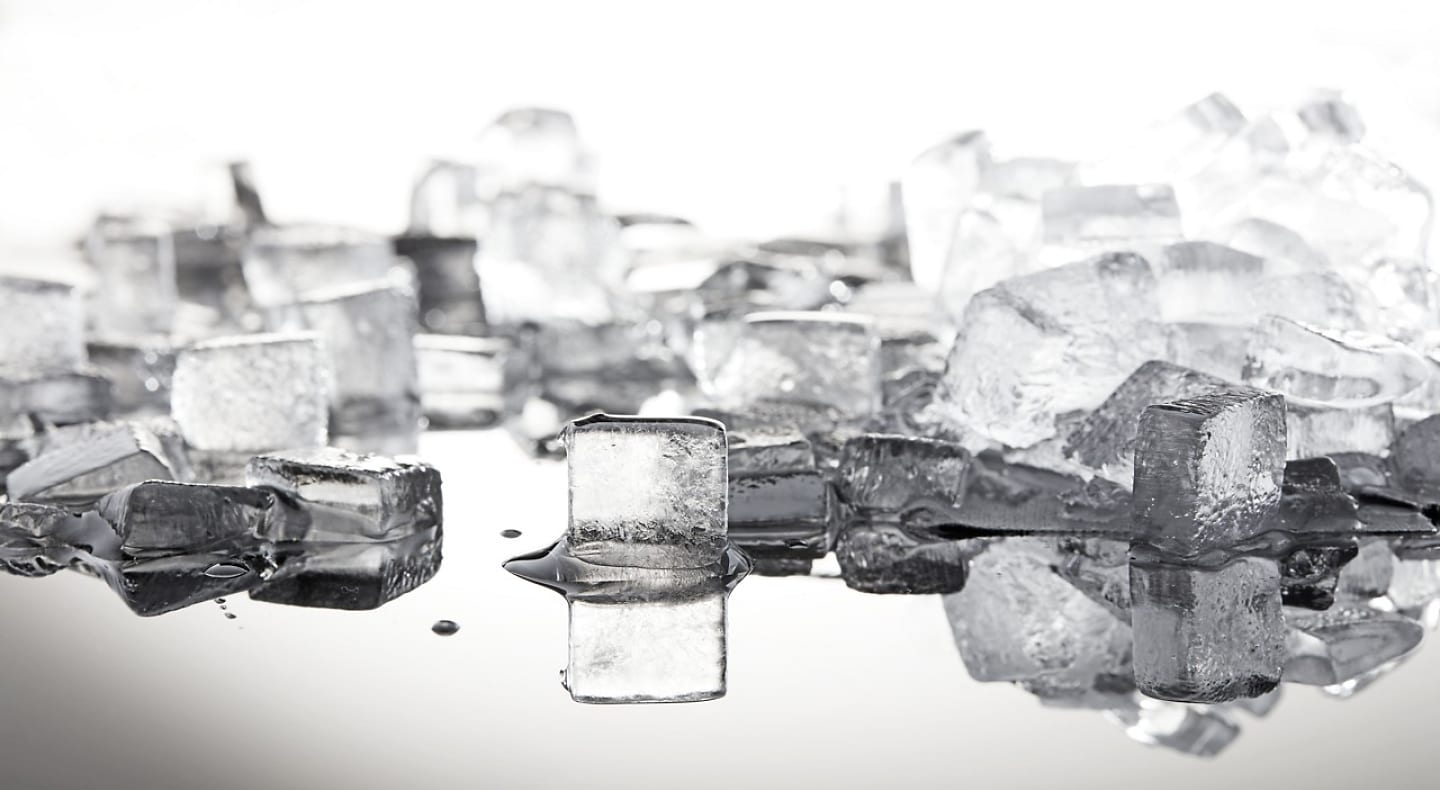
Self-Installation Considerations
Ice maker installation presents moderate complexity—achievable for individuals possessing fundamental plumbing and electrical competencies, though professional installation often proves advisable for optimal results and warranty protection.
Self-installation demands careful attention to water supply connections—typically requiring copper or braided stainless steel supply lines with proper shut-off valves. Drainage systems must accommodate continuous water flow with adequate slope for gravity-fed configurations or correctly positioned pumps for mechanical systems.
Electrical requirements vary—most residential units operate on standard 115-volt circuits, though verification remains essential. Dedicated circuit installation enhances safety and prevents nuisance breaker trips during high-demand periods. Ground-fault circuit interrupter (GFCI) protection may be mandated by local electrical codes, particularly for outdoor installations.
Professional installation eliminates uncertainty—licensed technicians verify proper utility connections, ensure adequate ventilation clearances, test drainage functionality, and confirm operational parameters meet manufacturer specifications. This investment protects warranty coverage while delivering immediate, trouble-free operation.
Premium Ice-Making Solution
Experience professional-grade ice production with the Thor Kitchen Built-In Ice Maker—engineered for exceptional performance and seamless integration into your entertainment space
Thor Kitchen Ice MakerMaking Your Final Selection
Selecting the ideal ice maker requires balancing multiple considerations—spatial constraints, production requirements, installation environment, and aesthetic preferences all influence your optimal choice. Begin by honestly assessing your typical ice consumption patterns and peak-demand scenarios. Account for both daily baseline needs and occasional entertainment requirements.
Installation location dictates numerous technical specifications—indoor versus outdoor placement, available utility connections, ventilation requirements, and drainage options all narrow your selection criteria. Measure precisely and account for clearance requirements beyond the unit's physical dimensions.
Quality ice makers represent significant investments that deliver years of reliable service when properly specified and maintained. Prioritize reputable manufacturers offering comprehensive warranty coverage and accessible service networks. Research user experiences and professional reviews to verify performance claims and identify potential concerns before committing to purchase. The ideal ice maker disappears into your lifestyle—providing abundant, crystal-clear ice exactly when needed without demanding excessive attention or maintenance, enhancing your entertaining capabilities and daily convenience for years to come.