


 Damage
  Loss
Loss  Theft
Theft 


Baseball Field Size, Layout & How to Line One
Baseball Field Size
A regulation baseball field does not have a single fixed size — it varies depending on the level of play, the age group, and the governing body. What remains constant is the infield diamond layout, while outfield fencing distances shift considerably from league to league. Whether you're designing a community ballpark or optimizing a youth training facility, understanding these measurements is the foundation.
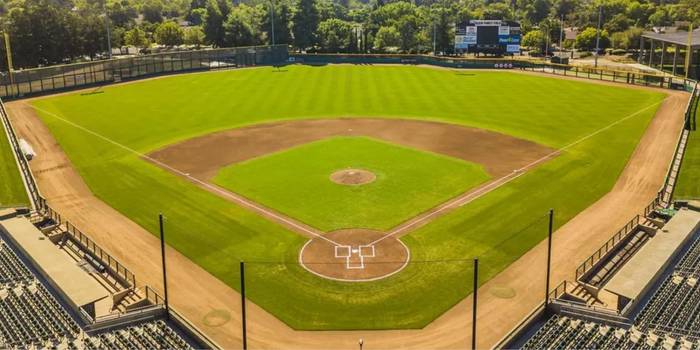
Field Size in Meters
For international reference, the standard MLB infield features 90-foot basepaths, which translate to approximately 27.4 meters. The pitching rubber sits 60 feet 6 inches (18.4 m) from home plate, while outfield walls typically range from 99 to 125 meters deep at the foul poles.
Field Dimensions in Feet
In the United States, all official measurements are given in feet and inches. MLB requires base paths of exactly 90 feet, a pitcher's mound 60 feet 6 inches from home plate, and outfield distances that, while not universally fixed, must meet minimum standards. Many historic parks have unique fence configurations that add character to the game.
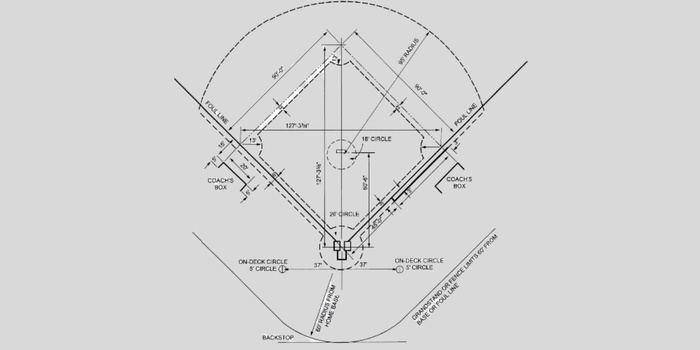
Baseball Infield Dimensions
The infield is the most rigorously regulated section of a baseball diamond. Every measurement must conform to official standards, ensuring consistent play at each competitive level. Below is a breakdown of each infield component.
Diamond Zone
The infield diamond consists of four bases arranged in a perfect square, each 90 feet apart at the professional level. First, second, and third base are positioned at the corners, with home plate anchoring the hitter's end. The entire infield skin area — the dirt portion — is typically maintained in a circular or arc shape radiating from the pitcher's mound.
Coaches' Box
The coaches' boxes sit in foul territory along the first and third base lines. Each box measures approximately 20 feet long and 15 feet wide, positioned about 8 feet from the foul line. Coaches must remain within these boundaries while the ball is in play, though modern rules allow some flexibility.
On-Deck Circle
The on-deck circle is where the next batter warms up, just outside the dugout along the foul line. At the professional level, each circle is 5 feet in diameter. These circles are typically painted, chalked, or applied as turf markings. A well-defined on-deck circle keeps play organized and is a standard feature on all regulation fields.
🟢 Looking for a professional on-deck circle solution? The Trigon Sports 6 ft. Custom Color On Deck Circle is a durable, field-ready option for competitive installations.
Base Lines
Base lines run from home plate to first base, first to second, second to third, and third back to home. In professional baseball, each line spans exactly 90 feet. At youth and recreational levels, this distance is reduced proportionally — typically 60 feet for younger age groups.
Running Lane
The running lane is a 3-foot-wide corridor in foul territory extending from halfway down the first base line to first base itself. This lane directs the batter-runner and helps umpires determine interference calls. It is typically chalked before each game and is essential for proper officiating.
Home Plate
Home plate is a five-sided white rubber slab embedded flush with the ground. It measures 17 inches wide across the front edge, 8.5 inches along each side, and tapers to a pointed rear edge. The strike zone is determined relative to the batter's stance above this plate, making its precise positioning critical.
Batter's Box
There are two batter's boxes — one on each side of home plate. Each box measures 4 feet wide by 6 feet long and is chalked directly onto the infield skin. The batter must remain within this rectangle when making contact with the ball. Proper maintenance of the batter's box is a responsibility of the home groundskeeping crew.
Pitcher's Box
The pitcher's mound rises to a maximum height of 10 inches above home plate in professional play. The rubber slab on top measures 24 inches by 6 inches and is positioned 60 feet 6 inches from the front edge of home plate. At youth levels, both the rubber dimensions and pitching distance are reduced to accommodate developing players.
Pitching Rubber
The pitching rubber is a white rubber rectangle set into the top of the mound. Pitchers must maintain contact with the rubber at the start of each delivery. Youth fields use a rubber that is 18 inches by 4 inches, while the MLB-standard rubber measures 24 inches by 6 inches.
Catcher's Box
The catcher's box extends 8 feet behind home plate and is 43 inches wide. The catcher must remain inside this box until the pitcher delivers the ball. While it is often a visible chalk line on game day, it is among the first markings to fade under heavy traffic during play.
Baseball Outfield Dimensions
Unlike the infield, outfield dimensions are not fully standardized even at the MLB level. Each ballpark can have unique fence distances and configurations, contributing to the distinctive character of different venues. However, minimum distances are enforced to ensure fair play.
Foul Lines & Boundaries
The foul lines extend from home plate through first and third base and continue to the outfield fence. At the major league level, the foul poles — which mark the boundary between fair and foul territory — must be at least 325 feet from home plate. Many classic stadiums exceed this minimum, with some surpassing 340 feet or more.
Outfield Wall/Fence
Outfield walls vary widely in height and material. Standard outfield fences are between 8 and 10 feet tall in professional parks. Center field — the deepest part of any diamond — typically stretches between 390 and 435 feet from home plate. At recreational and youth levels, fences are set much closer to accommodate smaller fields and younger athletes.
Baseball Center Field Depth
Center field depth is one of the most discussed dimensions in baseball. The MLB average sits around 404 feet, though parks like Minute Maid Park in Houston (409 ft.) and Oracle Park in San Francisco (399 ft.) reflect the diversity in design philosophy. These differences affect gameplay strategy and statistical outcomes significantly.
Baseball Field Layouts by League
From Major League Baseball to community Little Leagues, every level of organized play has its own set of recommended field dimensions. These standards are designed to match the physical development and skill level of the players involved.
Major League Baseball Field Dimensions
| Measurement | Distance |
|---|---|
| Base Path | 90 ft |
| Pitching Distance | 60 ft 6 in |
| Foul Line (min.) | 325 ft |
| Center Field (avg.) | ~404 ft |
| Mound Height | 10 in |
High School Baseball Field Dimensions
| Measurement | Distance |
|---|---|
| Base Path | 90 ft |
| Pitching Distance | 60 ft 6 in |
| Outfield Fence | 300–400 ft |
| Mound Height | 10 in |
Middle School Baseball Field Dimensions
| Measurement | Distance |
|---|---|
| Base Path | 70–80 ft |
| Pitching Distance | 50–54 ft |
| Outfield Fence | 200–300 ft |

Little League Baseball Field Dimensions
| Measurement | Standard Distance |
|---|---|
| Base Path | 60 ft |
| Pitching Distance | 46 ft |
| Outfield Fence | 200 ft |
| Mound Height | 6 in |
Bronco Baseball Field Dimensions
The Bronco division (typically ages 11–12) uses a 50-foot pitching distance and 70-foot base paths. This intermediate sizing helps players transition smoothly between Little League and full-size fields, building confidence and mechanical consistency without overwhelming developing athletes.
Baseball Field Sizes by Age
Age-appropriate field sizing is one of the most critical factors in player development. Placing young athletes on oversized fields increases injury risk, reduces skill acquisition, and diminishes enjoyment of the game. Below is a summary of recommended dimensions across common youth age groups.
8U Baseball Field Dimensions
| Feature | Dimension |
|---|---|
| Base Path | 50 ft |
| Pitching Distance | 38 ft |
| Outfield Fence | 150 ft |
9U Baseball Field Dimensions
| Feature | Dimension |
|---|---|
| Base Path | 60 ft |
| Pitching Distance | 46 ft |
| Outfield Fence | 175–200 ft |
10U / 11U / 12U Baseball Field Dimensions
| Age Group | Base Path | Pitching Distance | Outfield |
|---|---|---|---|
| 10U | 60 ft | 46 ft | 200 ft |
| 11U | 60–70 ft | 46–50 ft | 200–225 ft |
| 12U | 70 ft | 50 ft | 225–250 ft |
13U / 14U Baseball Field Dimensions
| Age Group | Base Path | Pitching Distance | Outfield |
|---|---|---|---|
| 13U | 80–90 ft | 54–60 ft | 275–300 ft |
| 14U | 90 ft | 60 ft 6 in | 300–350 ft |
How to Line a Baseball Field?
Properly lining a baseball field is both a science and a craft. Clean, accurate lines ensure compliance with the rules of the game and contribute to a professional appearance that players and fans appreciate. Here's a step-by-step overview:
Step 1 — Establish the Layout. Begin with home plate as your anchor point. Using a measuring tape or field layout tool, mark out the 90-foot base paths (or the appropriate distance for your level of play). Ensure each base is positioned at a true right angle using the 3-4-5 triangle method or a dedicated field compass.
Step 2 — Mark the Foul Lines. Stretch a chalk string from the back corner of home plate through the corner of first base, and extend it toward the right-field foul pole. Repeat for the third base line. These lines define fair and foul territory throughout the game.
Step 3 — Chalk the Batter's and Catcher's Boxes. Using a field chalker loaded with dry-line chalk, apply crisp, straight lines for each box. The batter's boxes sit 6 inches from each side of home plate and measure 4 × 6 feet. The catcher's box extends 8 feet behind the plate.
Step 4 — Place the On-Deck Circles. The on-deck circles are positioned just outside each dugout in foul territory, roughly 5 feet in diameter. These can be chalked or applied using a professional molded mat system for a more permanent, polished result.
Step 5 — Mark the Coach's Boxes and Running Lane. Complete the field by chalking the coach's boxes near first and third base, and the running lane from the midpoint of the first base line to the bag itself.

💡 Pro Tip: For permanent or semi-permanent on-deck circles, consider the Trigon Sports 6 ft. Custom Color On Deck Circle — durable, field-tested, and easy to position precisely every time.
People Also Ask
Build Your Best Field
Whether you're setting up a professional training diamond or a weekend backyard game, understanding the right dimensions makes all the difference. From the pitcher's mound to the outfield fence, every measurement shapes how the game is played — and how it's enjoyed. Equip your field with the right gear and play with confidence.