


 Damage
  Loss
Loss  Theft
Theft 


Smart Toilet with Air Dryer: Who Should Buy and Who Should Skip
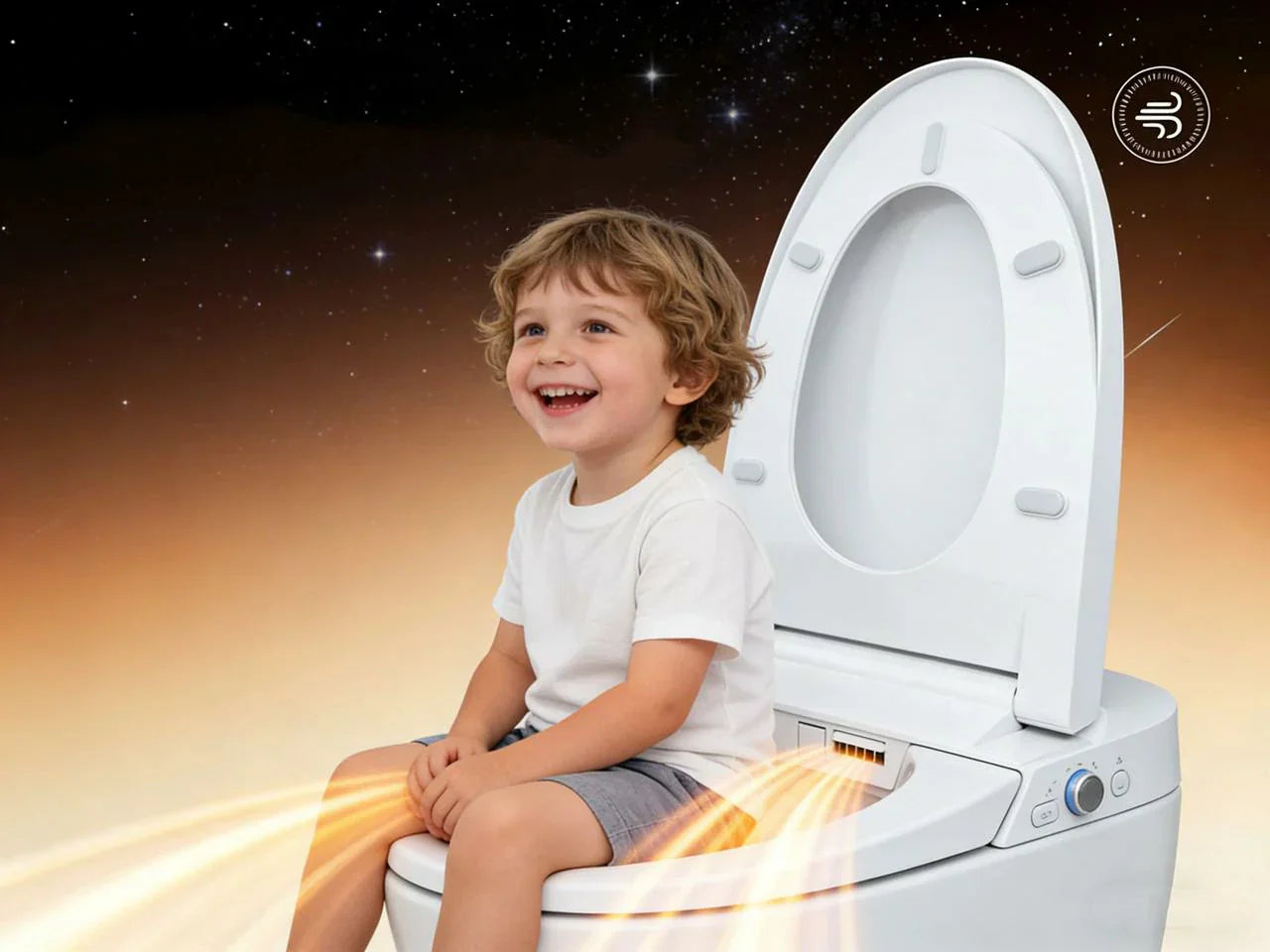
A smart toilet equipped with an air dryer can represent a significant quality-of-life enhancement: warm water cleansing, heated seat comfort, gentle warm air drying, and reduced toilet paper consumption. However, it can also become a source of daily frustration if your bathroom configuration, plumbing system, or household habits don't align with what these advanced fixtures require.
Here's an honest look at where these toilets excel in real-world homes — and where they frequently fall short.
Is a Smart Toilet with Air Dryer Right for Your Household?
Certain households embrace a wash-and-dry toilet because it transforms the bathroom routine: less wiping, greater comfort, and an enhanced sense of cleanliness throughout the day. Others discover that the additional time requirements, operational sounds, or learning curve simply don't justify the investment. The "fit" typically depends on patience levels, bathroom layout, and how much value the family places on comfort over efficiency.
This guide concentrates specifically on the air dryer functionality of smart toilets. Overall wash performance and cleaning effectiveness depend on the bidet system itself, not the dryer, so it's important to evaluate comfort features separately from core cleaning capabilities.
✓ Usually a Good Fit If You:
- Desire a cleaner "wash then dry" routine and will genuinely use it daily
- Have a bathroom with a nearby GFCI outlet and adequate water pressure
- Don't mind extending your bathroom routine (drying requires additional time)
- Are comfortable with modest, regular maintenance (cleaning sensors/nozzles, refilling reservoirs if applicable)
- Understand that warm air drying primarily reduces toilet paper usage rather than eliminating it completely
✗ Usually Best to Skip If You:
- Expect truly "paperless toilet" results every single time (most users still need to dab)
- Have light sleepers and a bathroom sharing a wall with bedrooms (these fixtures can be noisy at night)
- Experience low or inconsistent water pressure, or have a toilet that already clogs frequently
- Prefer avoiding electrical or plumbing surprises (short cords, tight clearances, unusual water line placement)
- Feel impatient with drying cycles or want instant "dry and go" convenience — this is the most common dealbreaker
Is It Worth It for a Cleaner, Japanese-Style Bidet Experience?
For many homeowners, the value proposition is straightforward: warm water provides superior cleaning compared to dry paper alone, and the dryer minimizes paper consumption. People who experienced bidet toilets while traveling abroad often purchase one for their home to recreate that same refreshing sensation.
Where the air dryer delivers the most benefit is in comfort and confidence. Following a wash cycle, you're not immediately reaching for cold paper. The dryer can also minimize irritation for individuals who experience sensitivity from excessive wiping.
However, it's not a miracle solution. The wash-and-dry routine represents a different rhythm than using a standard toilet. If your household prioritizes "same speed, same quiet, same simplicity," this may feel more like a complicated appliance than a bathroom fixture.
Who Tends to Regret the Purchase
Regret frequently has less to do with cleaning performance and more to do with daily friction:
- Someone anticipates it will "just work," but installation takes longer than expected due to tight mounting, awkward hose angles, or problematic outlet locations
- The bathroom is positioned near bedrooms, and the toilet's wash, dry, and flush sounds become disruptive at night
- It's a shared bathroom where different family members prefer varying spray pressures, drying durations, and automation settings
When the people using the fixture aren't willing to learn the controls and tolerate some additional sounds, the feature frequently goes unused — making the cost difficult to justify.

Will the "Paperless Toilet" Promise Match Real-World Results?
The "paperless toilet" concept represents one of the most heavily marketed promises surrounding smart bidet dryers. In practice, the dryer functions more as a comfort enhancement than a complete toilet paper replacement. Understanding this distinction helps establish realistic expectations for actual daily usage.
Do You Still Need Toilet Paper to Finish Drying?
This represents the most significant expectation gap: most warm air dryer bidet configurations don't completely replace toilet paper for the majority of users.
The dryer is typically gentle in operation. While pleasant for comfort, this also means you may still want a small dab to finish or a quick check for complete dryness. Standard drying requires 1–3 minutes depending on airflow and temperature settings. Most users still need a brief finishing dab, making "paperless" more accurately described as "paper-light."
The Comfort vs. Time-to-Dry Trade-Off
A frequent misconception involves expecting the dryer to perform like a public restroom hand dryer. It doesn't operate that way.
In actual use:
- Drying can take long enough that some people lose patience and reach for paper regardless
- The warm air feels pleasant, but it's not always powerful enough for quick completion
- For those wanting to be in and out quickly, the dryer can feel like waiting for a slow appliance cycle
Key Insight: Drying adds an additional 1–3 minutes per use, which frustrates those seeking a fast bathroom routine. The feature benefits comfort-focused users but tests patience for speed-driven households. The dryer is fundamentally a comfort feature rather than a speed feature.
The Hidden Learning Curve
Even straightforward remotes involve a learning curve. Most households experience a short "calibration period" that includes:
- Finding a spray pressure that cleans effectively without feeling harsh
- Adjusting spray positioning for optimal coverage
- Determining the ideal wash duration and dry time for each user
This sounds minor, but it matters significantly in a shared bathroom. When one person adjusts settings upward and the next person gets surprised, the experience can feel inconsistent or frustrating.
Can Your Bathroom Actually Support the Installation?
Smart bidet toilets perform optimally when the bathroom can properly support them — including power, plumbing, space, and especially water pressure. These factors don't appear in attractive product photos, but they determine whether the wash feature feels strong and consistent or weak and disappointing. Small mismatches in these areas create most installation regrets.
Water Pressure Considerations
Bidet performance depends directly on water flow and pressure. If your home has low pressure, or pressure that fluctuates when someone runs a sink or shower, you may experience:
- Weaker spray than anticipated
- Longer wash times required to feel clean
- Inconsistent performance that reduces overall satisfaction
Some users end up frustrated because the "smart" components work properly, but the bidet function feels underpowered. In worst-case scenarios, people regret the purchase because the core wash feature cannot perform adequately under their plumbing conditions.
Self-Check Tip: Run the shower or a sink while testing the bidet spray. If flow noticeably weakens or spray pulses, pressure is inconsistent. Low pressure directly reduces cleaning effectiveness and drying satisfaction.
Power Cord and Electrical Requirements
A smart toilet with air dryer requires electrical power, and many homes lack an outlet positioned close enough behind the toilet. According to building codes, GFCI-protected outlets are required for bathroom installations to minimize electrical shock risk. Two common surprises include:
- The power cord can be shorter than anticipated
- An outlet may exist but not in a practical location (wrong side, blocked by the toilet, not GFCI type, or positioned too far away)
If the outlet isn't nearby, you might need to add a proper bathroom outlet. That's not a "maybe later" consideration — it's a before-installation requirement.
⚠️ Safety Warning: Never use extension cords in bathrooms. Water exposure creates serious electrocution risks for smart toilet features.
| Current Situation | What It Means |
|---|---|
| Outlet already near toilet and GFCI-protected | Easier installation, fewer surprises |
| Outlet across the room | Cord may not reach; avoid extension cords in bathrooms |
| No outlet near the toilet | Electrical work becomes necessary |
Clearance and Hookup Alignment Checklist
Use this quick fit assessment before committing:
- Back wall to toilet: Is there sufficient room for a tankless design plus connections without crimping hoses?
- Side space: Will your knees and elbows have room if the bowl sits differently than your current one?
- Water shutoff location: Can the hose route cleanly without sharp bends?
- Outlet location: Can the plug reach without crossing a walkway or getting pinched?
- Seat/lid movement: If it auto-opens, will it contact a wall, vanity, or grab bar?
If any of these are uncertain, measure first. Many installation headaches stem from "it should fit" assumptions.
Hard Stop Conditions:
- No nearby GFCI outlet and cannot add one
- Bathroom water pressure is unreliable or dips frequently
- Clearance conflicts prevent proper hose or bowl placement
- Limited side/rear space blocks lid or seat movement

Will Noise and Automation Become Daily Annoyances?
Smart toilets alter the sensory experience of a bathroom — not just how you clean and dry, but how much sound and automation enters the routine. In quiet homes or layouts with shared walls, those additional sounds and actions can matter more than anticipated.
Nighttime Noise Considerations
Smart toilets can generate a surprising variety of sounds:
- A dryer fan operating
- Pump or valve sounds during washing
- Different or louder flush sounds
- Additional feature sounds (like foaming) that add to the noise profile
In a quiet home, especially with bedrooms nearby, this matters. People who are sensitive sleepers often notice these sounds more than expected — a standard toilet produces mostly a single flush sound, not a multi-step sequence.
"Seamless" vs "Automated": Managing Expectations
Automation can prove helpful or irritating, depending on your layout and habits. In actual use, sensors may:
- Open the lid when someone walks past (or when you don't want it to)
- Trigger actions at inconvenient moments
- Make the toilet feel "busy" instead of straightforward
If you prefer quiet, predictable fixtures, excessive automation can feel like living with a motion-activated appliance.
Upkeep and Reliability: What Are You Signing Up For?
A smart bidet toilet adds comfort features, but it also adds moving parts, consumables, and appliance-like complexity. The experience can be excellent when everything operates smoothly; when it doesn't, upkeep and reliability become part of the equation.
Reservoir Maintenance
Some smart toilets include reservoir-based features (often described as foaming). In practice, this can add a maintenance task you didn't anticipate:
- Refills can take longer than expected
- The filling process may be fiddly
- Overfilling can occur easily if the reservoir doesn't guide the pour well
If you prefer "set it and forget it," anything requiring refills can become the feature you stop using first.
Clogging Sensitivity
Some owners report more clogs than expected, even in newer homes. This can occur because some smart designs are more sensitive to:
- How the bowl and trapway are configured
- How much water is used per flush cycle
- How well your plumbing handles waste and paper
If your current toilet clogs even occasionally, treat that as a warning sign. A less forgiving toilet can transform a minor annoyance into a recurring problem.
Power Outage Considerations
A smart toilet with air dryer is partially an appliance. During a power outage, you may lose:
- The heated seat
- Bidet washing functionality
- Warm air drying
- Sensor-based features
- Sometimes even normal flushing if the flush mechanism is powered
Some models include manual backup options while others don't. The practical question is: if the power fails, can everyone in the home still use the toilet without difficulty? If your area experiences outages, this matters more than you might expect.
Important: Verify manual-flush capability before purchase. Most smart toilets lose wash, dry, and sometimes flush power during outages. If the model lacks backup functionality, the toilet may not flush — confirm before committing.

Smart Bidet Fit Check — What to Confirm Before You Buy
Not every bathroom or household naturally suits a smart bidet toilet with warm wash and air-dry features. Performance and satisfaction depend less on impressive specifications and more on day-to-day reality: pressure, power, layout, routine, and tolerance for maintenance. A five-minute pre-check can prevent most "it works but I kind of regret it" scenarios.
Key Questions That Matter
Drying Expectation
Am I okay if I still need a small amount of toilet paper to finish? Warm air drying usually reduces wiping rather than eliminating it entirely. If your goal is truly "paperless," assume you'll still keep some paper nearby.
Outlet Reality
Do I have a nearby GFCI bathroom outlet without using an extension cord? Most models have short power cords and require a proper GFCI outlet. If the outlet is across the room, behind a vanity, or on the wrong side, electrical work is likely necessary.
Noise Tolerance
Will wash, dry, and flush noises bother sleepers or neighbors through shared walls? Smart toilets add a sequence of sounds instead of a single flush. In quiet homes, sensitive sleepers notice more than expected, especially during nighttime use.
Water Pressure
Is my bathroom's water pressure steady enough for a strong, consistent wash? If pressure dips when someone showers or runs a sink, the bidet spray may feel weak, underpowered, or slow to clean effectively.
Maintenance Mood
Am I willing to clean around sensors and nozzles and refill anything the unit requires? Smart toilets are partially appliances, not just ceramic fixtures. Small upkeep tasks maintain consistent performance, but not every household has patience for them.
Ready to Upgrade Your Bathroom?
Explore our selection of premium smart toilets designed for comfort, hygiene, and modern living.
Trone Nobelet Smart Bidet ToiletFrequently Asked Questions
1. Does the air dryer completely replace toilet paper?
On most smart toilets with air dryer systems, warm air drying gets you close but not 100% paperless. Many users treat it as a "mostly paperless toilet" where paper becomes optional rather than required. The warm air dryer handles the bulk of the job, particularly after the wash cycle, but people often still do a quick final dab when in a hurry or wanting extra dryness.
2. How long does the drying cycle take?
Typically about 1–3 minutes depending on airflow and temperature settings. Higher-end models dry noticeably faster, while basic bidet seats operate more gently and take longer. If you expect a "dry and go" experience comparable to toilet paper, the timing feels slower initially. However, many users simply let the warm air cycle run while scrolling their phone — it becomes part of the routine shift.
3. Is the air temperature adjustable?
Most premium models offer multiple temperature levels — typically 3 to 5 settings — ranging from cool to pleasantly warm. Adjustability makes a significant difference across seasons: warm in winter, cooler in summer. Some advanced systems also allow fine-tuning of airflow speed for more customized drying, while entry-level bidets are usually simply "on" or "off."
4. Is the dryer loud during operation?
There's definitely some sound, but think bathroom fan rather than hair dryer. On medium settings, the smart toilet with air dryer produces more of a steady whoosh than a disruptive mechanical noise. If the bathroom is near bedrooms, it's generally not loud enough to wake someone, especially compared to flush noise or deodorizing fans.
5. Is warm air drying more hygienic?
Warm air drying can feel more hygienic because it eliminates the hands-on wiping step and reduces irritation from friction and paper fibers. The primary hygiene upgrade actually comes from the water wash — the dryer serves as the hands-free finishing step. For users with sensitive skin, seniors, children, and post-surgery cases, a warm air dryer bidet can be notably gentler and cleaner than regular toilet paper.