


 Damage
  Loss
Loss  Theft
Theft 


Canoe or Kayak: Which One Should You Choose for Fishing?

After attending my yearly trip to the boat expo, I found myself captivated by the impressive array of fishing kayaks on display. I'll be the first to confess that I'm a devoted canoe enthusiast, and I catch just as many fish from my trusty canoe as I do from any boat. While I've tested countless kayaks over the years and they keep calling me back, I inevitably return to my beloved canoe. With full transparency about my personal preference, let me walk you through the advantages and disadvantages of each option.
Comfort Considerations
Comfort stands as my primary consideration when choosing between watercraft. The majority of fishing kayaks feature a sit-on-top configuration, which positions you lower to the water and provides excellent stability. You'll find yourself seated with either bent or extended legs in a flat position. Your forward-facing view is clear, but turning to survey your surroundings proves challenging. In a canoe, you're seated higher, which offers somewhat less stability, but your legs remain bent and you can shift positions much more easily. This flexibility matters tremendously to me. My back protests when forced into the rigid leg position that kayaks demand. When paddling a canoe, I have the freedom to squirm, shift, crouch, kneel, or even stand to relieve the strain on my lower back. I've even installed a modified seat with PVC pipe risers to create additional space. This setup gives me the comfort of a stadium chair that supports my back without disrupting my balance.
Movement and Propulsion
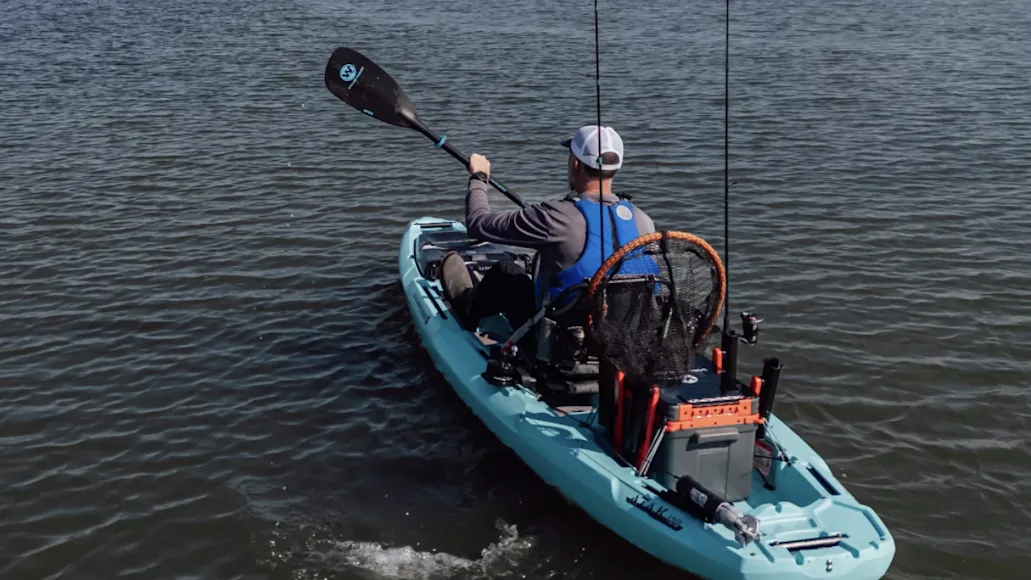
The propulsion methods differ significantly between these two craft types. Kayaks utilize a double-bladed paddle, and when it's not actively in use, it typically rests balanced across the cockpit or gets secured along the deck. To advance forward, you'll need to stow your pole and retrieve your paddle. Using a paddle leash ensures you won't lose it overboard. Canoes employ a single-blade paddle that can be conveniently dropped to the deck when not in use, providing quick access. I maintain both a long and short paddle, along with a double-bladed kayak paddle in reserve. The extended paddle helps with covering distance between fishing spots, while the compact one enables precise single-handed control. Canoes also accommodate trolling motors nicely, giving you motorized assistance when desired. The latest trend in kayak design involves pedal-driven propulsion systems, which free your hands entirely for fishing while your feet handle the movement.
Weight and Hauling Capacity
Weight becomes a crucial factor when you're loading and transporting your vessel. A typical 12-foot canoe tips the scales at around 23 pounds, while its two-person 15-foot sibling reaches 50 pounds. A comparable 12-foot fishing kayak weighs approximately 50 pounds and can stretch up to 100 pounds. Those innovative pedal-powered kayaks start around 85 pounds and can exceed 100. Once you surpass the 40-pound mark, getting the craft onto a vehicle roof without assistance becomes problematic. I rely on a Reese hitch-mounted carrier system, and various assist devices like ratchet systems or hydraulic lifts exist to help manage roof-loading a kayak. However, if you're considering a pedal-drive model, you'll likely need a dedicated truck bed or trailer solution.
Storage and Carrying Capacity
Both watercraft offer ample storage, though they differ dramatically in how gear is stowed. Kayaks feature covered wells and elastic cord systems to secure equipment. Maintain dry conditions for these compartments and swap out the hatch cover with each use. I find the kayak's enclosed nature restrictive—with a canoe, I can simply toss items toward the deck quickly when needed. For either option, verify that everything is properly secured to prevent loss. I utilize spring-loaded retractor clips for items like knives and scissors. A canoe accommodates considerably more bulk, yet items beyond arm's reach become difficult to access, so the additional room doesn't always translate to practical advantage. Canoes feature bags designed to attach to the crossbeams and slide beneath your seat, keeping the contents elevated and dry as water inevitably accumulates in the hull.
Essential Equipment
A flexible grabber tool measuring around 24 inches proves invaluable for both craft types, particularly kayaks where items frequently roll just beyond reach. Nothing frustrates more than watching gear drift away after slipping overboard. I wear an Extrasport Osprey Baja personal flotation device specifically designed for kayakers, featuring reduced foam in the lower back region for comfortable seated positioning.
Rod holders prove essential for either vessel type. Select models that adjust smoothly between horizontal and vertical positions. Most kayaks include these as standard equipment. I prefer Plusinno screw-mount rod holders that accommodate both spinning and casting setups with an adaptable C-clamp design for angle adjustments.
Fishing Gear Essentials
When it comes to tackle and supplies, restraint is key. You simply cannot bring everything, and you shouldn't try to pack it all in. I carry two thwart bags plus one tucked under my seat. The crossbeam bags hold three plastic boxes containing necessities like snacks, emergency supplies, additional glasses, and beverages along with my midday meal. Most fishing kayaks feature single-person designs, though inflatable two-person versions exist as well. My 12-foot canoe easily accommodates a second passenger when needed.
Staying Put: Anchoring Methods
Anchoring presents challenges regardless of which craft you choose, with numerous anchor styles available. I favor mushroom-shaped anchors over grapple-style options because they're less prone to snagging. My preferred anchor resembles a milk container filled with sand—it's weight can be easily adjusted and it rarely catches on underwater obstacles. For both vessel types, you'll either haul the anchor by hand (being careful not to tip when raising it) or employ a pulley mechanism to lift it from the bow or stern position.
Fishing Techniques from Small Craft
Standing and casting from any small watercraft engages your entire body—far more so than when battling a fish aboard a larger vessel. When seated in a canoe or kayak, only your arms and shoulders perform the work. Kayaks require a modified casting approach since you're positioned closer to the water's surface with less available body leverage. American Rodsmiths, Baidarka, and similar manufacturers produce kayak-specific spinning rods, though any rod featuring a slightly longer handle serves well. The extended grip positions the reel farther from the rod tip, making it simpler to set the hook when a fish strikes. I personally favor shorter rods around 6 feet or less. The fundamental philosophy behind canoe and kayak fishing is that close proximity to the water allows for accurate placement without needing lengthy casts. Consequently, a more compact rod serves better for making precise presentations targeting crappie or panfish.
Ready to Hit the Water?
Check out our premium fishing kayak for your next adventure
Making Your Final Decision
The most reliable way to decide is personal experience—try both options for yourself. Canoecopia and similar outdoor expos provide excellent starting points since you'll encounter virtually every self-propelled watercraft style imaginable. Price ranges for either a canoe or kayak span from budget-friendly to premium, varying based on construction materials, dimensions, and included features. A basic kayak represents a smaller initial investment, but you'll eventually want to customize with various accessories tailored to your needs. As far as I know, there's no dedicated "fishing" canoe available—you'll need to outfit a standard canoe yourself. I lean toward canoes primarily for the comfort factor, but fishing kayaks offer single-use convenience as well. With a canoe, I can strip out the fishing gear and enjoy a leisurely day floating down a river. Whichever path you choose, there's nothing quite as exhilarating as using yourself as a drag when landing that trophy northern pike.
Happyfishing frm the BACKYARD PROVIDER team!