


 Damage
  Loss
Loss  Theft
Theft 


The Low-Down on Downdraft and Pop-up Vents
Every kitchen enthusiast knows how essential proper airflow is to a working cooking space. Strong aromas can quickly fill the room, and certain cooking sessions generate fumes that are best not left lingering. Whether you're sizzling, grilling, or simply keeping your cooking zone fresh, good ventilation goes a long way in keeping both surfaces and air free of smoke, steam, grease, and debris. The usual route to a cleaner kitchen is an overhead range hood. But what happens when those aren't a fit for your space? That's where downdraft systems and pop-up vents step in.
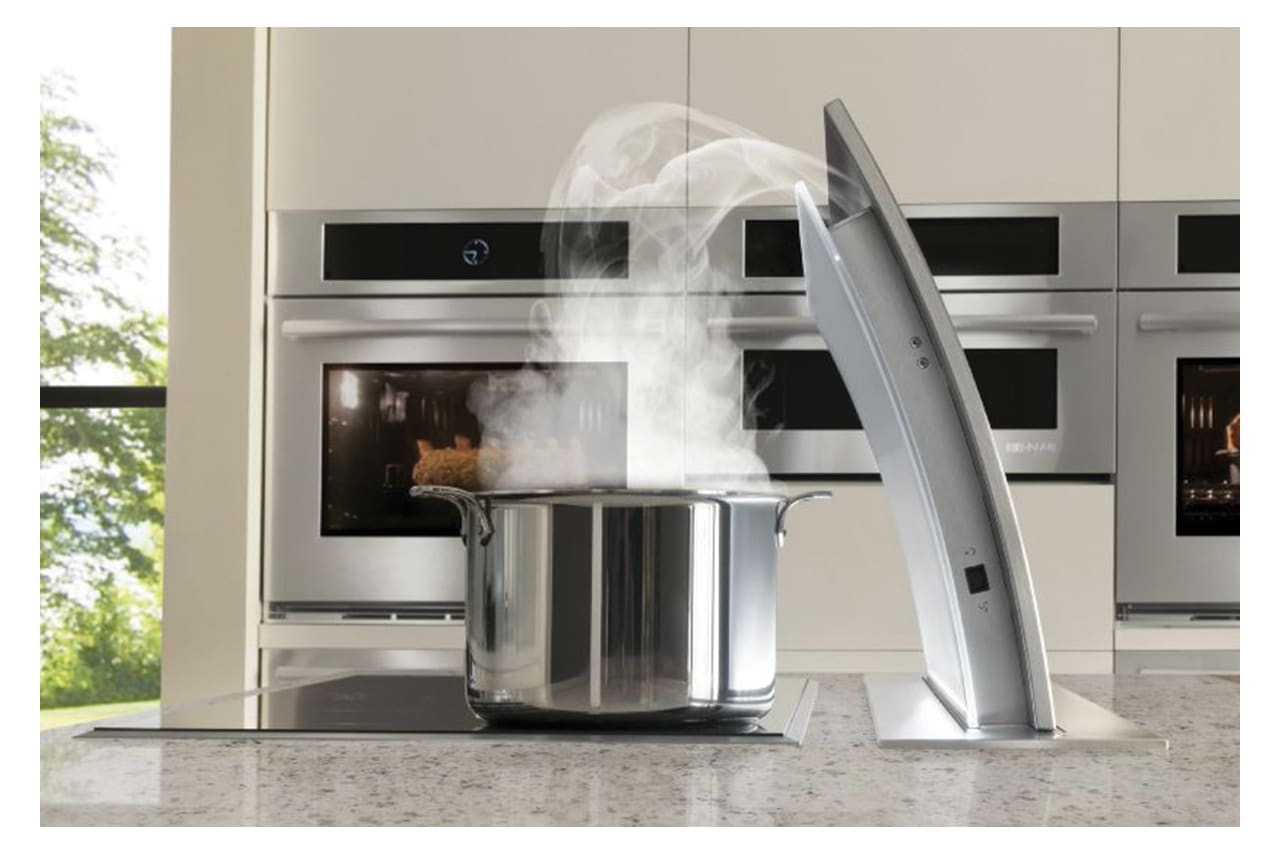 What is a Range Hood?
A range hood is a ventilation fixture mounted at eye-level or above the cooktop, designed to pull smoke, steam, and airborne particles safely away from the stove surface. The cooking vapors are drawn upward into a duct and either filtered or vented outside, keeping the rest of the kitchen clean and breathable.
Range hoods tend to be a natural choice because they're typically as wide as the area they're covering — or even slightly wider. This broader coverage zone allows them to capture a larger volume of cooking fumes and grease particles. Hoods come in all kinds of materials, from classic stainless steel to copper accents, and they take on a variety of design forms. That said, they can be quite prominent in a kitchen, whether in terms of island canopies or along the wall over the stove. For some homes, particularly those with lower ceilings or tighter filtration footprints, an overhead hood can feel like it's taking up more room than it's worth.
 What is a Downdraft Vent?
A downdraft vent is a ventilation system built to pull smoke, airborne grease, and odor particles downward and away from the cooking zone, rather than up and overhead like a traditional hood. The key difference here is that downdraft vents sit beside or behind the cooking area — typically flush with or just above the countertop surface. Instead of rising into a canopy, the fumes travel horizontally through ductwork before being vented to the outdoors. This allows these ventilation systems to gather cooking particles in the zone immediately surrounding the burners, usually within 10 to 20 inches of the stovetop, before they have a chance to spread through the kitchen.
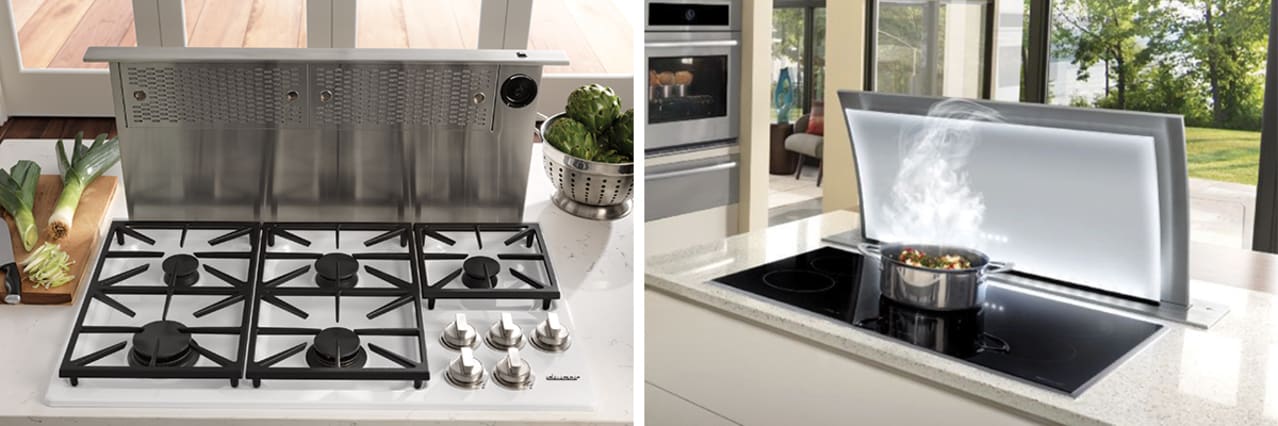
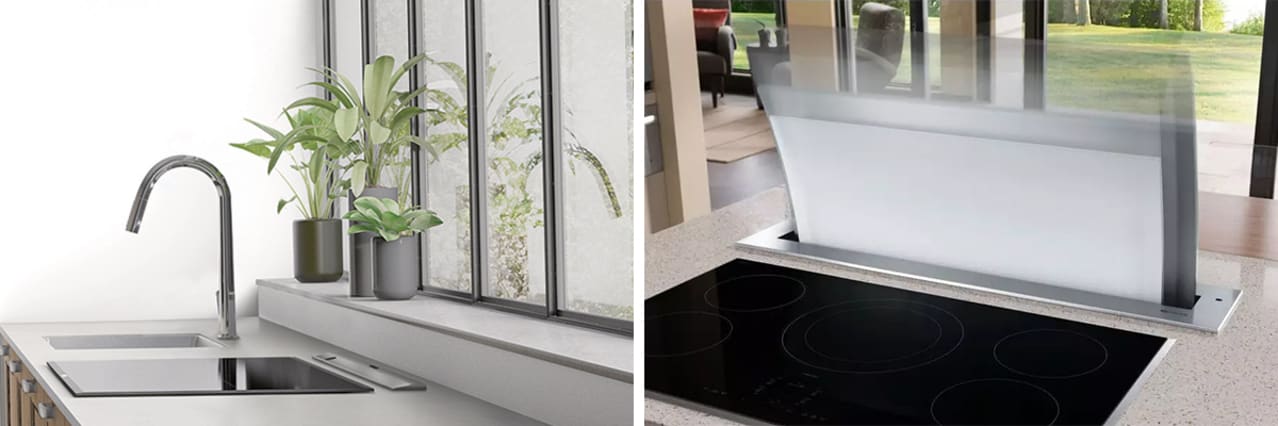
These pop-up models get their name from their standout mechanical feature: the downdraft vent sits mounted on telescoping rails that stay hidden under the countertop until you're ready to cook. When called upon, it quietly rises several inches above the stove surface when not in use. Some are built with this travel on top of the mechanism, while others rely on a bulky range hood once cooking wraps. In either scenario, the pop-up design keeps sightlines clean even across open-layout kitchens, making the ventilation system a purely practical tool.
These are great for minimalist, open-floor kitchens, and for cooks on islands. Pop-up vents work beautifully within cooking islands because they don't interfere with sightlines across the room or the open-concept feel most homeowners prize. They can also be tucked away out of the line of sight, keeping the visual aesthetic of your kitchen because they can be hidden when not in use, making the ventilation system a purely functional detail.
Which Ventilation Works Best?
There are many variables to consider when choosing between a range hood and a downdraft vent, but it ultimately comes down to your home's cooking behavior. For regular meals, without a lot of open flame or frying grease, downdraft vents are quiet and efficient solutions. They're made to work with smaller kitchens, multi-family dwellings like apartments where extensive ductwork can't be used to vent the hood outdoors.
In commercial or professional kitchens, you'll find a range hood. In those scenarios, the design considerations come second to the performance of the vent. Downdraft vents are not designed to work with heavier, more demanding cooking projects, like indoor grilling. While they have strong circulation systems, some with a comparable CFM to a range hood, pop-up vents just don't have the advantage of surface area and physics on their side to capture the same amount of smoke, steam, and food particles.
Because of their position, behind the stovetop where they pull air across the burners, downdraft vents that create too much airflow could extinguish the flames of a gas stovetop, or cool the pans and play havoc with the cooking temperatures. This places obvious limits on the capabilities of the pop-up vent, as opposed to a range hood which is installed much further from the flame source and can catch everything that rises.
Where a range hood can work with physics and collect the hot air that rises, filter it, and expel heat out of the house, a downdraft has to work against the natural air flow to pull the air from hot surfaces, all at an angle and down through the ductwork to pull it from the working area. This can limit the power to do more than siphon, and the pop-up vent can get overwhelmed with too much smoke, steam, or grease. Many installations work best with a blower installed in the ductwork to help move the air out.
However, where a downdraft vent excels is in providing ventilation in those homes where it's not possible to duct through the ceiling or wall. Instead, downdrafts can be routed through the floor, or along the underside of the kitchen cabinetry. Some models have recirculation kits that can filter the air to remove the fumes, with no external exhaust vent necessary. Even those vents that pull the air down through the stovetop help keep cooking smells and moisture out of the air, making life a little easier for the home chef. They provide alternatives to homes that otherwise would have limited or no ventilation, and they can complement overhead ventilation systems that could use a little extra help in more demanding kitchens.
What to Look for in a Downdraft Ventilation System
To get the most out of a pop-up vent, there are a few common features and traits among the vents to be aware of before you buy. These tips will help you narrow down the best fit for your needs.
Height
Check the height of your pots and pans before purchasing a downdraft vent. Whatever is released into the air above the level of the pop-up vent will be more likely to stay in the air, so you want to find a vent that is a few inches taller than the tallest pot.
Control Panel
Look for a control panel that is well lit and readable, with easy to understand icons. Many models are touch-screen and easily cleaned.
Filters
Charcoal and other filters help control odors as well as harmful chemicals. Some models offer reminder lights when it's time for filter replacement or maintenance. Note what kind of filters the system requires when considering purchases; look for filters that are easy to clean and replace as needed.
LED Lighting
Many pop-up vents will now include LED lighting on their vents to help illuminate the cooking surface below. This feature is gaining popularity as low-cost LED becomes more common, and it can serve many purposes, from cooking prep to safety.
Power Levels
The power capacity of the downdraft vent is determined by the CFM, or Cubic Feet per Minute, which measures how much air it can circulate. A higher CFM will move more air, but be sure to consider the different settings available with the unit. Distinct low-to-high settings allow you to customize the fan use depending on what's needed at the time.
Noise
Slow ratings measure how much noise a fan or blower makes. The lower the number, the quieter the appliance. Look for pop-ups with a low sone rating to keep the slim profile fan from interfering in conversations.
Recirculation Air
No ducting is required with a recirculation kit. The exhaust is instead filtered and sent back down to the kick space beneath the cabinet edge, along the floor.
Of course, the features that work best for you will depend on the kind of cooking you do and how often, but this can give you a head start on what to look for. Every manufacturer has their own offerings, so consider the features you want against the prospect and installation availability in your space.
Downdraft vents are not ideal in every home. They have their limitations and won't easily meet the airflow demands of large-scale cooking projects. What they do well is provide powerful, slim-profile ventilation in designing both large and small spaces, and quiet, effective performance for the average home chef.