


 Damage
  Loss
Loss  Theft
Theft 


How to Choose the Best Wine Fridge
Whether you own a restaurant, bar, tasting room, or event space, a quality wine fridge is essential for preserving the integrity and flavor of your wine collection. Unlike standard household refrigerators, wine coolers are purpose-built to maintain ideal temperature and humidity levels, helping your wines age properly and taste their best. In this guide, we explore every key aspect of wine refrigeration — from the different types of wine fridges to the most important features — so you can make the most informed choice for your establishment.
In This Guide
1. How to Choose a Wine Refrigerator
2. Types of Wine Fridges
3. Wine Fridge vs Standard Refrigerator
4. Dual-Zone Wine Fridges
5. Wine Fridge Features
6. Wine Storage Accessories
7. How Long Does Wine Last in the Fridge?
How to Choose a Wine Refrigerator
Shopping for a wine fridge for your restaurant, bar, tasting room, or venue doesn't have to be complicated. Selecting the right unit comes down to a handful of important questions. Let's walk through them.
How Much Wine Are You Storing?
The volume of wine you plan to store is the first factor to consider. Different wine refrigerators offer varying capacities and shelving configurations that determine how many bottles they can hold. Storage duration matters too — if you intend to age large quantities of wine over months or years, investing in a full wine cellar setup may be more practical than relying on multiple smaller fridges.
Bottle Capacity: Wine fridges come in sizes that range from just a dozen bottles to nearly 300. When choosing a unit for your business, plan not only for your current needs but also for growth over the coming years.
Shelving Type: Certain wine fridges hold bottles horizontally, which is ideal for wines sealed with natural corks that need long-term aging. If your collection primarily features metal caps or synthetic closures, horizontal storage is less critical.
What Types of Wine Are You Storing?
Each variety of wine has its own ideal storage temperature, which means you need to ensure your chosen unit can accommodate the specific wines you serve. If your selection is small or your business only stocks a few bottles, a consistent 55°F will generally work for most types of wine.
Number of Zones: Consider whether you need the flexibility of multiple temperature zones or if a single-zone unit meets your requirements.
Temperature Range: Verify that the unit's temperature range is compatible with the wines in your inventory.
Cooling System: Premium wine fridges may use quiet thermoelectric cooling that eliminates vibrations. Most models use compressor-based refrigeration. Your preference will depend on noise tolerance and budget.
Types of Wine Fridges
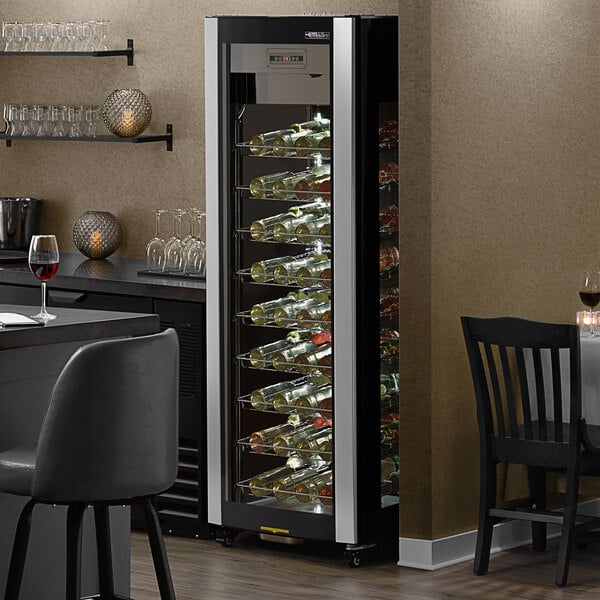
Choosing a wine fridge for commercial use means understanding the different styles available and matching one to your specific needs. Commercial wine refrigerators come in a range of designs, each serving a distinct purpose. Here's a breakdown of the most common types.
Wine Merchandisers
Merchandising wine fridges are built to showcase a large inventory of bottles, making them perfect for retail environments where customers browse and select wine. They typically come with glass doors and integrated interior lighting to present bottles attractively.
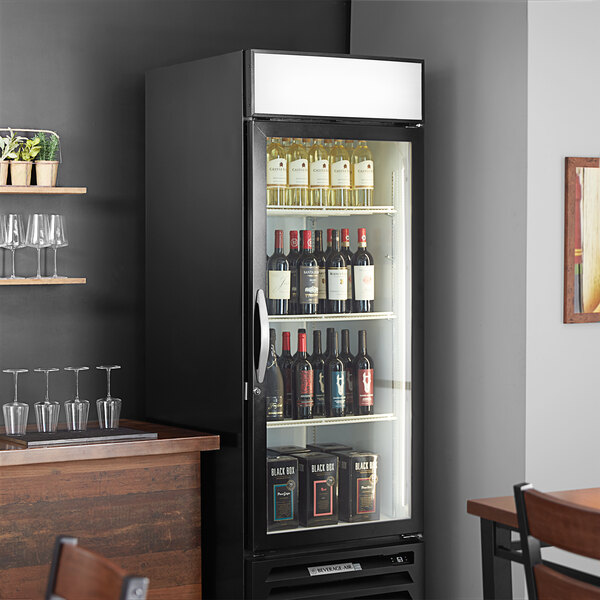
Perfect for wine shops, grocery stores, and retail settings
Offered in multiple sizes to suit various storage capacities
Wine Dispensers
Draft wine dispensers, sometimes called wine-on-tap systems, resemble beer dispensers but are engineered specifically for wine. They feature refrigeration tuned to wine-appropriate temperatures, and all internal components — including lines and taps — are designed to handle wine's acidity.
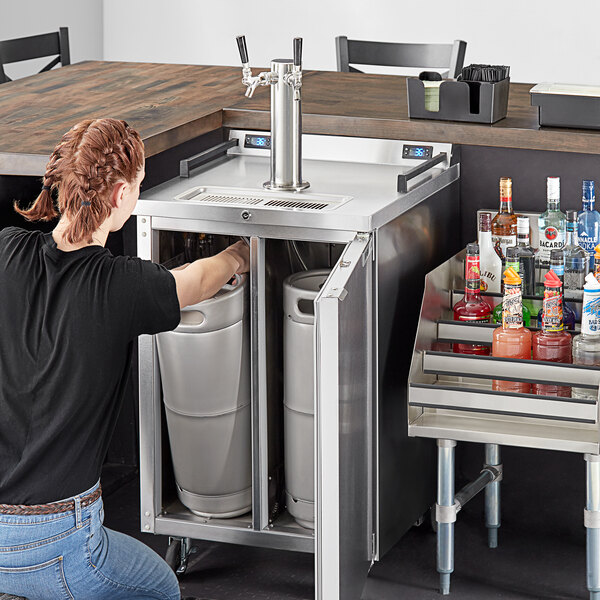
Ideal for high-volume venues like stadiums and event halls
Pours quickly for fast, efficient service
Undercounter Wine Fridges
Undercounter wine fridges are compact units designed to slide beneath countertops or fit into tight spaces. Available in various sizes and finishes, they're a great solution for establishments with limited floor space.
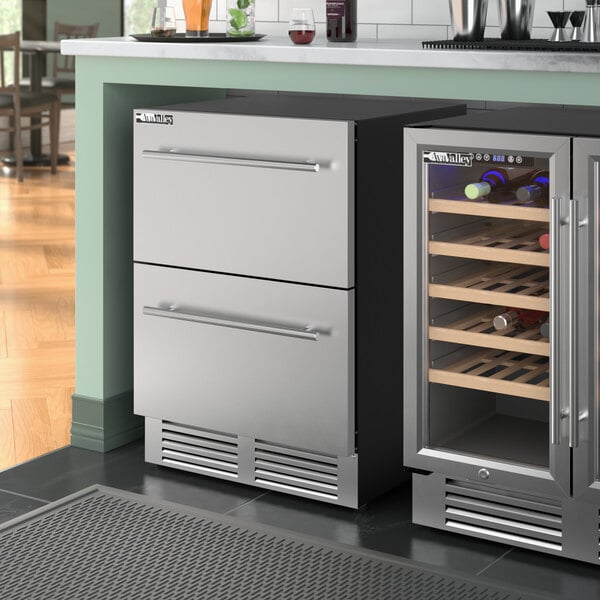
Best for smaller bars, bistros, and compact restaurants
Keeps bottles within easy reach of staff behind the bar
What Makes a Wine Fridge Different from a Standard Refrigerator?
A dedicated wine cooler may seem like an unnecessary expense, but the reality is that standard refrigerators can actually damage your wine over time. A wine fridge, on the other hand, creates a controlled environment that protects your collection and allows it to mature at the proper pace. Here are the key differences:
✔ Temperature
Standard refrigerators cool rapidly below 41°F, which is too cold for wine. Wine fridges maintain gentler temperatures between 40°F and 65°F, allowing bottles to age correctly.
✔ Humidity
Regular refrigerators produce dry air that can shrink corks and damage labels. Wine refrigerators maintain humidity between 50% and 80%, keeping corks supple and seals intact.
✔ Vibration
Excessive vibration disturbs sediment and harms wine. Standard fridge compressors cycle on and off with considerable vibration, while wine fridges use thermoelectric cooling or anti-vibration systems to keep bottles still.
Wine Fridge vs Wine Cooler
Wine fridges are purpose-built for long-term storage. They feature precise temperature controls and humidity regulation that let wine age gradually while keeping corks from drying out. If your goal is to cellar bottles over months or years, a wine fridge is the right tool.
Wine coolers, by contrast, are geared toward short-term chilling and serving. They quickly bring wines down to ideal drinking temperatures, making them a popular choice for restaurants and bars that want whites and rosés ready to pour at a moment's notice.
Dual-Zone Wine Fridges
If your collection spans more than one variety, a dual-zone wine fridge could be exactly what you need.
What Is a Dual-Zone Wine Fridge?
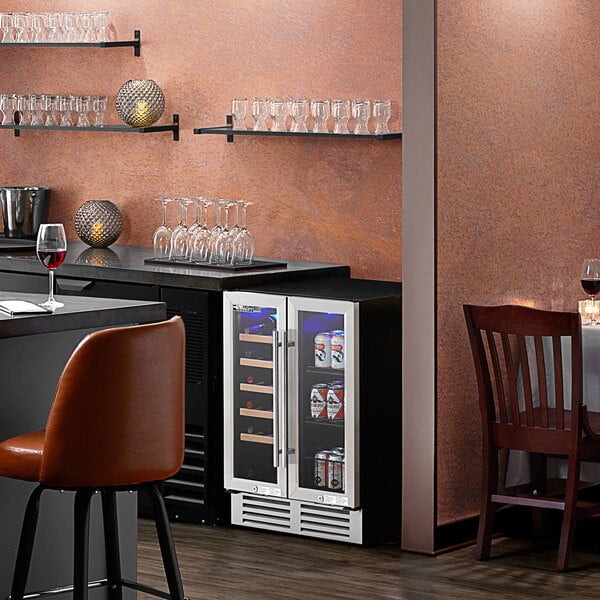
A dual-zone wine fridge divides the interior into two independently controlled compartments, each with its own temperature and humidity settings. You can keep reds at one temperature and whites at another. If your wine list spans a variety of vintages, styles, and quality levels, the flexibility of dual-zone storage is invaluable.
Dual-Zone vs Single-Zone
A dual-zone fridge lets you store multiple wine varieties in one appliance without compromise. However, if you primarily serve one type of wine or keep only a small stock, a single-zone unit at a consistent 55°F can handle most varieties effectively — and it tends to cost less.
Ideal Temperature Settings
In a typical dual-zone setup, the upper compartment is designed for whites and sparkling wines at 45°F–55°F, while the lower zone is ideal for reds at 55°F–65°F. Red wines benefit from slightly warmer conditions, which help bring out their full depth of flavor.
Wine Fridge Features
Choosing a wine fridge for your commercial space involves evaluating several features that impact usability, security, and efficiency. Here are the most important ones to keep in mind:
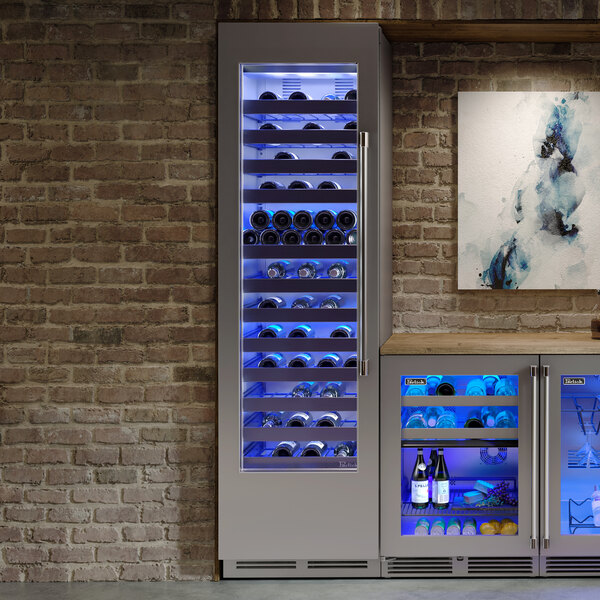
LED Lighting
LED lights produce minimal heat, helping maintain consistent internal temperatures. They're also energy-efficient and provide attractive illumination to show off your wine collection.
Locking Cabinet
For businesses that need to secure their wine inventory, a locking cabinet is essential. It prevents unauthorized access and tampering, giving you peace of mind that your valuable bottles are protected.
Field-Reversible Doors
Reversible doors let you customize the swing direction to suit your space and workflow, making it easier to access and organize bottles based on your establishment's layout.
Energy Star Qualified
An energy-efficient wine fridge lowers operational costs and reduces your establishment's environmental impact. Look for Energy Star certified models that deliver strong performance while consuming less power.
 Wine Storage Accessories
Beyond choosing the right wine fridge, the right accessories can take your wine preservation and presentation to the next level. These tools are designed to maintain quality and flavor so that every bottle reaches its full potential.
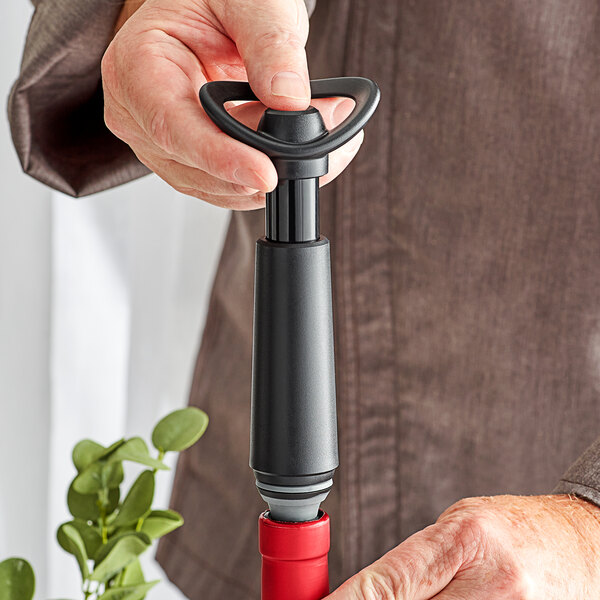
Vacuum Stopper Systems
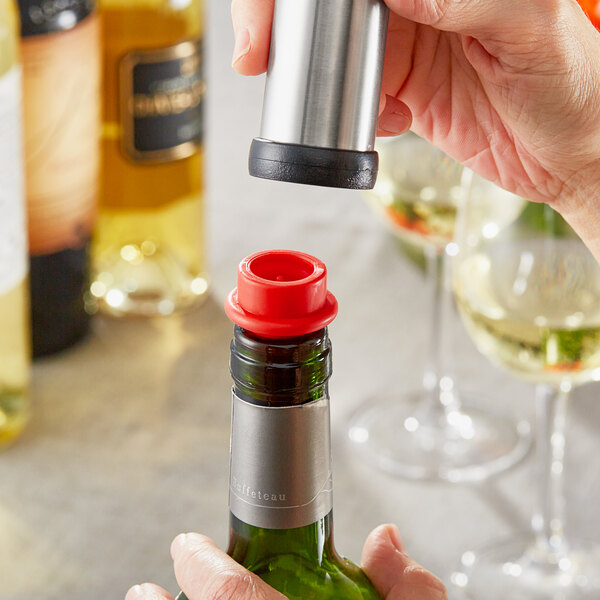
Vacuum stoppers use a pump mechanism to extract air from opened bottles, significantly slowing oxidation and keeping wine fresh for longer. They're simple to use and an excellent investment for any establishment that regularly opens bottles.
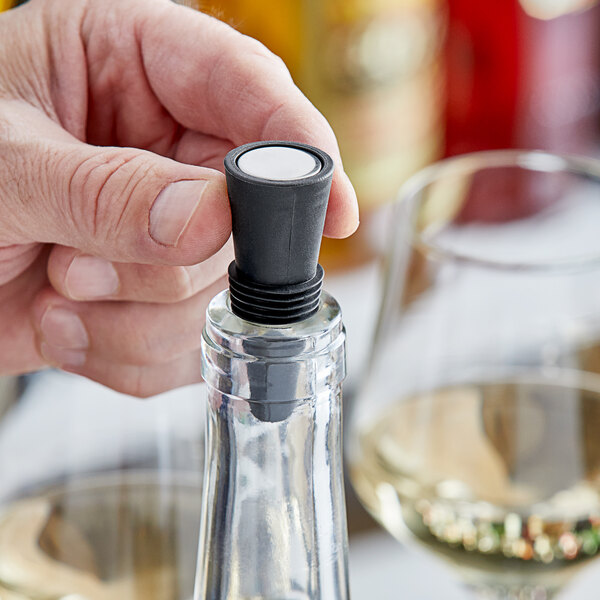
Reusable Wine Stoppers
Crafted from silicone or stainless steel, reusable stoppers create a tight seal over the bottle opening to block air and preserve aroma. They replace the original cork and keep wine drinkable for several days after opening.
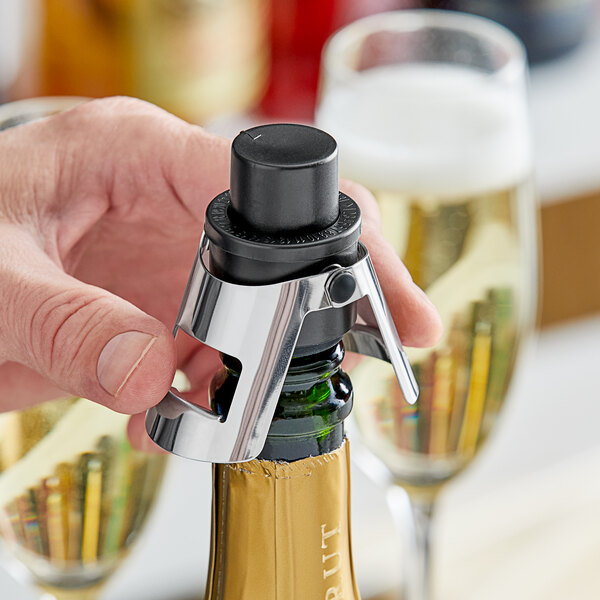
Champagne Stoppers
Champagne stoppers are specially engineered to preserve the effervescence of sparkling wines and champagnes. They lock onto the bottle with a secure seal that maintains carbonation, preventing the wine from going flat so every pour stays lively and refreshing.
Wine Preservation Systems
These advanced systems use inert gases like argon to form a protective layer between the wine and oxygen, blocking oxidation entirely. They're ideal for establishments that serve wine by the glass, extending the shelf life of opened bottles and minimizing waste.
How Long Does Wine Last in the Fridge?
Once a bottle of wine has been opened, it will generally stay drinkable for 2 to 5 days depending on the variety and storage conditions. For all types, make sure bottles are sealed tightly and stored at a stable temperature. Temperature fluctuations speed up the aging process and can ruin the wine's flavor.
3–5
Days
White Wine
Re-cork tightly and refrigerate immediately after opening to slow oxidation and maintain freshness.
~5
Days
Red Wine
Exact shelf life varies by the type of red and how it's stored. Seal the bottle and keep it in a cool, dark spot.
1–3
Days
Sparkling Wine
Champagne and Prosecco are more sensitive to oxidation due to their carbonation, so drink them sooner for the best experience.
Ready to Elevate Your Wine Storage?
Explore our premium commercial wine coolers built for serious establishments.
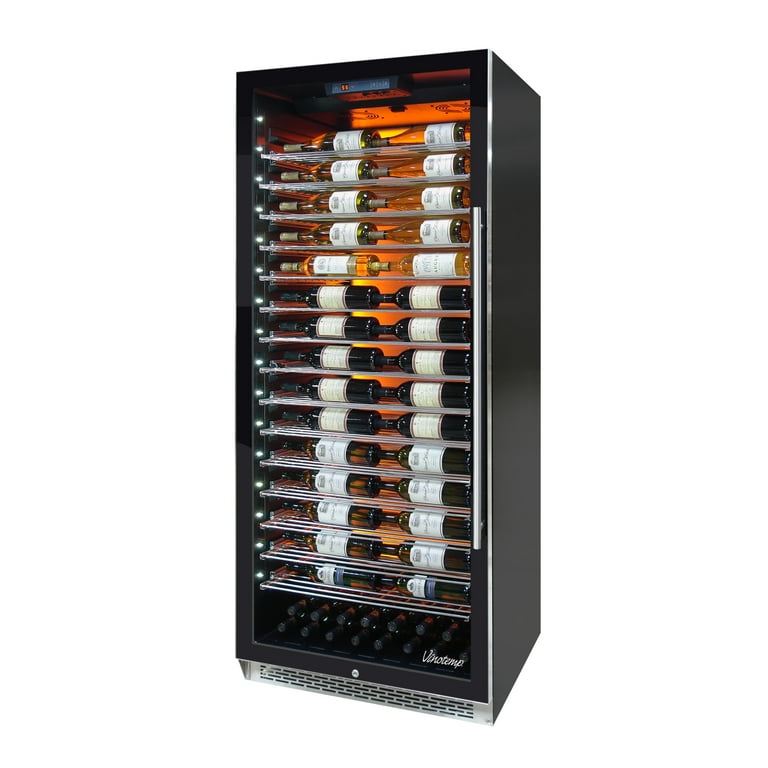
Vinotemp 188-Bottle Wine Cooler