


 Damage
  Loss
Loss  Theft
Theft 


Best Commercial Wine Coolers
Were you aware that the right wine storage solution can boost wine sales by as much as 20% in commercial settings? For restaurant owners, bar managers, and sommeliers, choosing the ideal commercial wine cooler goes far beyond simple storage. It is about safeguarding your investment and taking your wine program to the next level.
In this in-depth guide, we will walk you through everything you need to know about selecting the best commercial wine coolers on the market. From temperature precision and build quality to long-term reliability, we have covered every angle to help you make a confident, informed decision.
Welcome to Backyard Provider, and cheers to smarter wine storage!
Important Notice: The information in this article is intended for general and informational purposes only. It reflects the opinions of the Backyard Provider editorial team, and no responsibility can be assumed for errors or omissions. Please review our Disclaimer at the bottom of the homepage for full details.

Key Takeaways
Dual-zone temperature management is essential for storing diverse wine varieties at their ideal conditions
Commercial-grade units deliver superior durability and consistent temperature stability
Energy efficiency plays a significant role in controlling long-term operational expenses
Selecting the correct size based on bottle capacity and available space is absolutely critical
UV shielding and humidity regulation are key to preserving wine quality over time
Routine maintenance dramatically extends cooler lifespan and overall performance
Understanding Commercial Wine Cooler Requirements
One of the most important things to understand is the fundamental difference between residential and commercial wine coolers. It can be a real eye-opener once you start looking at what commercial environments actually demand from their equipment.
Commercial units are workhorses designed for heavy use. Imagine a busy steakhouse trying to get by with a residential cooler — the temperature would fluctuate wildly every time the door was opened during a hectic dinner rush. That is a recipe for ruined wine and wasted money.
Commercial wine coolers are engineered with powerful compressors that hold temperature steady even under constant use. The recovery rate matters enormously — your unit needs to bounce back to the correct temperature within minutes, even after being opened dozens of times during peak service hours.
Health department regulations are another factor that many business owners overlook. In most jurisdictions, commercial-grade equipment must carry NSF certification, and you will need to keep detailed temperature logs on file.
When it comes to capacity planning, a smart approach is to calculate your maximum inventory and then add about 30% on top of that for growth and seasonal demand spikes. Trust us — you will be grateful during the holiday season when wine sales surge.
Commercial Wine Cooler Essentials
Temperature Stability
Frequent door openings • Rapid recovery rate
Compressor Robustness
Heavy-duty design • Quick temperature recovery
Capacity Planning
Max inventory calculation • 30% growth allowance
Health Compliance
NSF certification • Temperature logs
Affiliate Disclaimer: This page may include affiliate links, which means we may earn a commission if you purchase through this site at no additional cost to you. Please see our Disclaimer for more information.
Top Commercial Wine Coolers Comparison
After evaluating dozens of commercial wine coolers across the years, we have developed a dependable framework for comparison. Here are some of our top recommendations — each chosen for quality, reliability, and real-world performance.
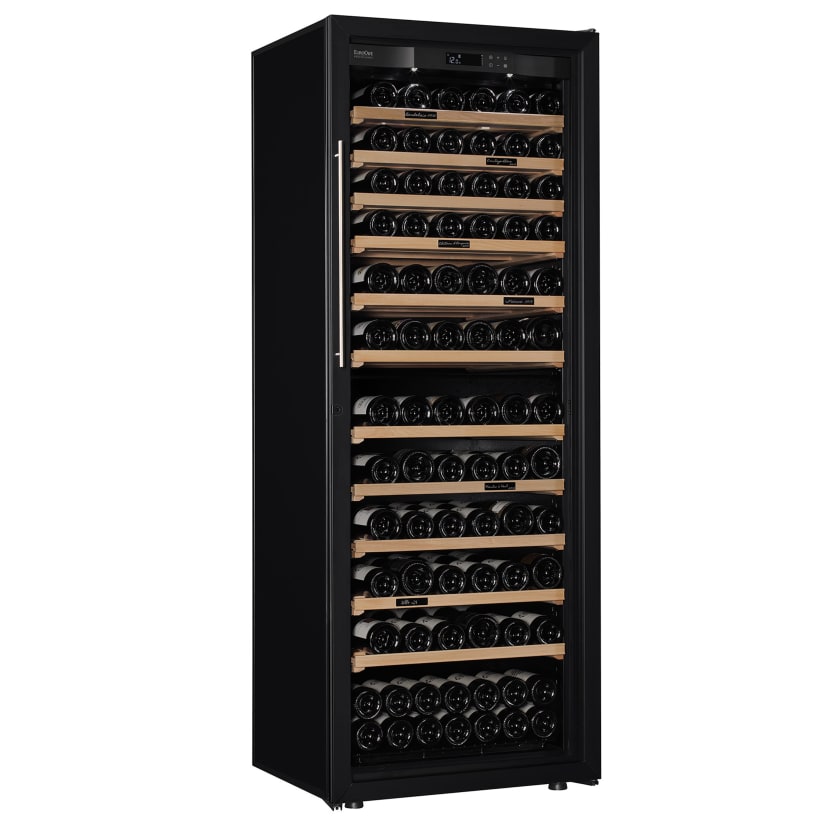
EuroCave Professional 4000 Series
A top-tier recommendation for mid-sized restaurants, the EuroCave Professional 4000 Series boasts an impressive capacity of up to 230 bottles. It creates optimal conditions for storing, aging, and serving reds, whites, and sparkling wines, and is available in single- or multi-zone configurations.
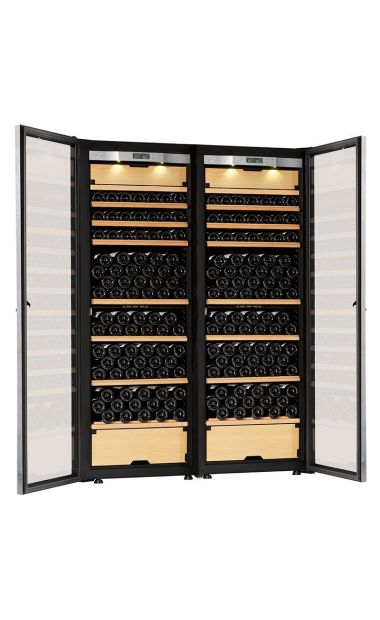
Transtherm Double Castel Glass Brushed Aluminum Full Shelf
For larger-scale operations, the Transtherm Double Castel offers a capacity ranging from 330 to 418 bottles with three independent temperature zones. This allows you to store reds at their ideal warmth while simultaneously cooling whites and sparkling wines to perfection.
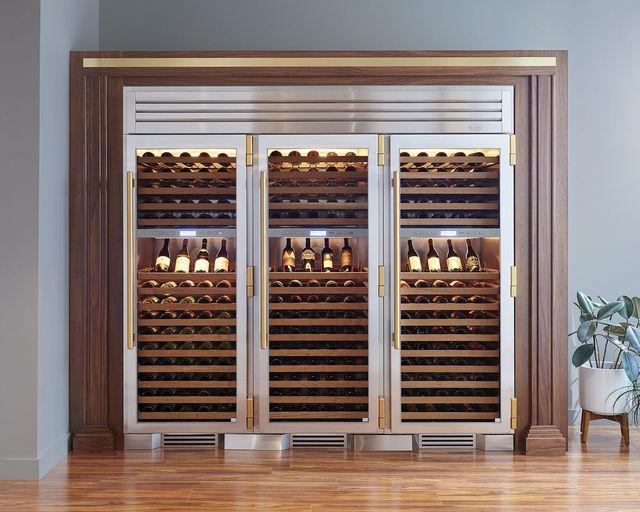
True Manufacturing – Dual Zone Wine Column
Energy efficiency is a major consideration for any commercial setting. The latest models from True Manufacturing feature enhanced insulation and Energy Star ratings, which can translate into hundreds of dollars in annual savings on operating costs.
Price Range
When it comes to cost, anticipate spending anywhere from $3,000 for entry-level commercial units up to $15,000 for premium models. The sweet spot for most restaurants and bars tends to fall in the $5,000–$7,000 range, which typically delivers excellent build quality and all the essential features without overextending your budget.
Features That Matter Most
After years of helping businesses set up their wine programs, we have identified the features that genuinely matter in everyday operations. Here is what you should prioritize.
Temperature Control
Temperature management is non-negotiable. You need a system with precise digital controls and multiple temperature zones. We have seen cases where a client lost thousands of dollars in inventory because their single-zone cooler malfunctioned. Redundant temperature sensors and alarm systems are always a worthwhile investment.
Humidity Management
Humidity control is equally vital. Look for units that offer active humidity management, maintaining a relative humidity of 60–70%. This range prevents corks from drying out and protects wine integrity over long storage periods.
Vibration Reduction
Vibration reduction may sound like a luxury feature, but it is essential for long-term wine storage. Modern compressor mounting systems and vibration-dampening shelves make a meaningful difference in overall wine preservation quality.
UV Protection
UV protection is another must-have feature. LED interior lighting looks fantastic for display purposes and, unlike traditional bulbs, does not generate heat or produce harmful UV rays that can degrade wine over time.
Security
When it comes to security, prioritize units with tamper-proof controls and lockable doors. Unfortunately, inventory shrinkage in the wine and beverage industry is a well-known issue, and the right security features can help prevent unnecessary losses.
Installation and Space Planning
Proper installation and space planning are among the most overlooked aspects of purchasing a commercial wine cooler. Getting this right from the start can save you costly headaches down the line.
We have seen situations where a gorgeous built-in unit was installed only for the owner to discover that the heat could not dissipate properly due to inadequate ventilation. As a rule, always ensure at least four inches of clearance around the unit for proper airflow.
Power requirements are another crucial consideration. Most commercial units need dedicated 20-amp circuits, and some larger models may require 220V power supplies.
Location selection is critical as well — always avoid placing units near heat-generating appliances or in areas that receive direct sunlight throughout the day.
The choice between built-in and freestanding models depends largely on your space constraints and design preferences. Built-in units deliver a sleek, integrated look, while freestanding coolers offer greater flexibility if you ever need to rearrange your layout.
We always recommend hiring a professional for installation. The cost is well worth it to avoid potential issues with ventilation, power supply, and warranty coverage.
Wine Cooler Installation Considerations
Professional Install
Hire experts to prevent installation issues
Ventilation Needs
Ensure adequate airflow around the unit
Power Requirements
Meet the electrical demands of the unit
Location Selection
Choose the right spot away from heat
Built-in vs Free
Integrated look vs flexible placement
Maintenance and Longevity
Having overseen maintenance for numerous commercial wine programs, we cannot emphasize enough how critical proper care is for extending the life of your investment.

Maintenance Schedule
Build a consistent maintenance schedule that includes monthly condenser coil cleaning, weekly door seal inspections, and daily temperature monitoring. The most common problems we encounter are clogged condensers, worn door gaskets, and gradual calibration drift — all preventable with routine attention.
Warranty Coverage
A solid warranty is indispensable. Look for coverage that includes both parts and labor for at least two to three years. Extended warranty options are well worth considering for added peace of mind.
Cleaning Best Practices
When cleaning, always use non-abrasive cleaners on both interior and exterior surfaces. Harsh chemicals can damage finishes, seals, and sensitive internal components.
Professional Service Checks
We strongly recommend scheduling professional service checks twice a year. It is far cheaper than dealing with emergency repairs during peak service hours. We have seen cases where businesses that skipped regular maintenance ended up replacing their entire unit after just three years.
Expected Longevity
With proper care and maintenance, a quality commercial wine cooler should reliably serve you for 10 to 15 years.
Maximizing Your Investment
After years of optimizing wine storage setups for businesses, we have uncovered several game-changing strategies for getting the most out of your investment and maximizing ROI.
Energy efficiency begins with smart loading practices — maintain proper spacing between bottles and never block air circulation vents. These small habits can significantly reduce energy consumption over time.
Installing a digital temperature monitoring system may seem like an unnecessary expense upfront, but it has saved countless clients from catastrophic inventory losses by flagging problems before they become critical.
Staff training is absolutely essential. Develop simple checklists for daily operations and maintenance procedures. Make sure your team knows how to handle inventory rotation correctly and how to spot potential issues early.
Track your ROI by monitoring energy costs, maintenance expenses, and wine preservation rates. We have worked with clients who reduced wine spoilage by 85% after implementing these best practices, saving thousands of dollars annually.
Remember, a well-maintained wine cooler is not just about storage — it is about protecting your investment and enhancing your entire wine service program.
Strategies for Wine Storage ROI
ROI Calculation
Track savings and preservation rates
Energy Efficiency
Optimize energy use through smart practices
Staff Training
Ensure proper handling and maintenance
Digital Monitoring
Prevent losses with digital alerts
FAQ – Best Commercial Wine Coolers
What size commercial wine cooler do I need for my restaurant?
Calculate your maximum inventory and add 20% for growth capacity. As a general guideline, a 100-seat restaurant typically needs storage for 200 to 300 bottles at minimum.
How much do commercial wine coolers cost?
Commercial wine coolers generally range from $2,000 to $15,000, depending on capacity and features.
What is the difference between commercial and residential wine coolers?
Commercial units feature more powerful cooling systems, faster temperature recovery, and are built to withstand frequent access and heavier daily usage.
Should I choose a single or dual-zone wine cooler?
Dual-zone coolers are recommended for restaurants that serve both red and white wines, allowing each to be stored at their optimal temperatures.
What temperature ranges are important for commercial wine storage?
Red wines thrive at 55–65°F, white wines at 45–55°F, and sparkling wines at 40–45°F.
How long do commercial wine coolers typically last?
With proper maintenance, commercial wine coolers can reliably last 10 to 15 years.
What maintenance is required for commercial wine coolers?
Regular cleaning, condenser maintenance, seal inspection, and consistent temperature monitoring are all essential.
Are commercial wine coolers energy efficient?
Modern commercial units are increasingly efficient, with Energy Star ratings available on many models.
What warranty should I look for?
Look for a minimum of 2–3 years of parts and labor coverage, with extended warranty options available.
Can I install a commercial wine cooler myself?
Professional installation is strongly recommended to ensure proper ventilation and that all electrical requirements are met.
How important is humidity control?
Extremely important — ideal humidity should be maintained between 60–70% to prevent cork damage and wine degradation.
What security features should I consider?
Look for lockable doors, inventory tracking systems, and tamper-proof controls to protect your stock.
How often should temperature be monitored?
Daily monitoring is recommended, with automated systems providing continuous oversight for maximum protection.
What is the ideal location for a commercial wine cooler?
Place it away from heat sources, direct sunlight, and high-traffic areas that could cause vibration disturbance.
How can I maximize energy efficiency?
Regular maintenance, proper loading, minimizing door openings, and keeping the surrounding area at a stable ambient temperature all help.
Conclusion
Choosing the right commercial wine cooler is a critical decision for any business that takes its wine program seriously. By carefully weighing factors like capacity, temperature control, and long-term maintenance needs, you can select a unit that not only preserves your wine investment but also enhances the quality of your wine service.
At the end of the day, the best commercial wine cooler is the one that meets your specific needs while delivering reliable, efficient service for years to come.
We wish you the best of luck in finding the perfect commercial wine cooler for your business. Cheers!