


 Damage
  Loss
Loss  Theft
Theft 


Wood Stove Safety in Your Canvas Tent
Plenty of campers write off winter as too cold to enjoy, but the chill is usually what makes a trip unforgettable, not what ruins it. A properly set up tent with a reliable wood stove turns brisk nights into some of the most comfortable hours you'll spend outside. Learning how to run that stove safely is what makes the whole thing possible.
One of the best ways to extend your camping season into the colder months is by setting up a heated canvas tent. It takes a little more preparation than a three-season setup, but the payoff is huge: a warm shelter, dry gear, and a place where you can actually cook, dry out clothes, and sleep soundly when the temperature drops. A wood stove becomes the center of that experience, and choosing the right tent for it matters just as much as the stove itself.
Good four-season tents are built with stove jacks, reinforced openings, and canvas that can handle a hot flue without warping or scorching. Once the right tent is dialed in, you can run a wood stove through a dedicated pipe with confidence. The benefits stack up fast: steady warmth, faster drying times after snow or rain, the ability to cook full meals indoors, and a genuine reason to look forward to winter camping instead of dreading it.

What to Watch For When Running a Wood Stove in Your Tent
Running a stove inside fabric walls isn't something to improvise. There are a handful of core risks you need to plan around: fire, excess heat, carbon monoxide, and pipe failure. Think through each one before you light the first match and you'll avoid almost every problem campers run into with hot tents.
Start With a Proper Stove Jack Lining
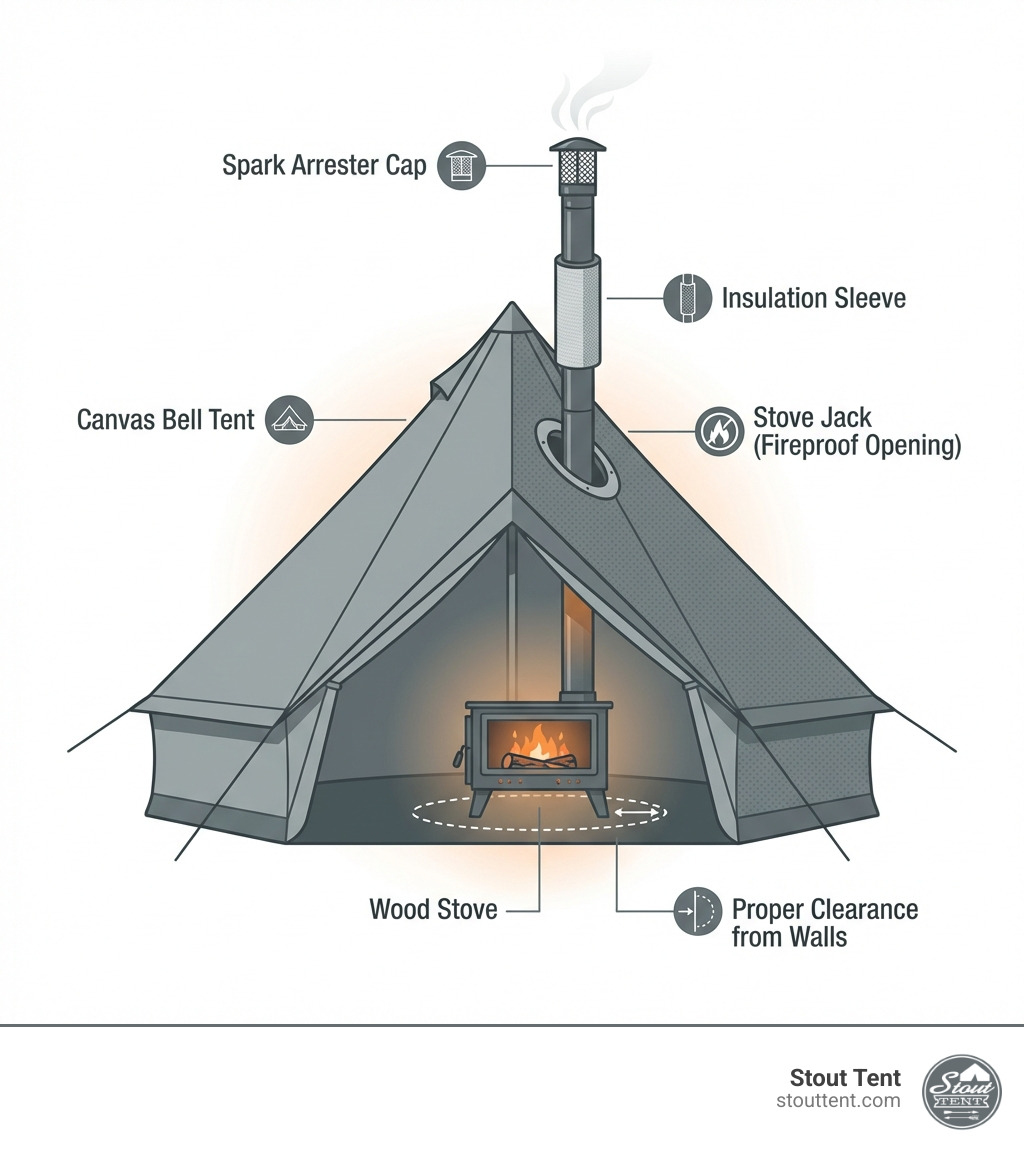
The most important detail on any hot tent is the stove jack, the opening where your flue passes through the canvas. A quality jack uses a heat-rated material, usually silicone-coated fiberglass or a similar high-temperature fabric, sealed tightly to the surrounding canvas. If that seal isn't solid, hot embers can work their way into fabric, gaps can let in smoke, and the pipe can shift during a gust of wind. Before every trip, inspect the jack for burns, loose stitching, or any signs of melting. Replace it at the first hint of damage rather than hoping it'll last one more outing.
Use the Right Pipe and Secure It Well
Stove pipes come in more variety than most new hot-tent campers expect. Some are solid stainless, others are rolled or telescoping sections you stack as you go. When picking a pipe, think about weight in your pack, ease of setup, and how the sections lock together. Inside the tent, the pipe should run straight up through the stove jack with minimal lean, and outside it should clear the peak of the tent by enough to push smoke, sparks, and ash up and away rather than blowing back into the fabric. A pipe that wobbles in the wind is a fire waiting to happen, so take the time to guy it out or brace it against something stable.
Match the Stove to the Tent Material
Not all tents handle radiant heat the same way. Canvas built for stove use shrugs off stray sparks and hot air much better than thinner synthetic fabrics, which can melt or ignite from embers that would barely singe canvas. If you're using a tent that wasn't specifically designed for stove use, don't force it. Even with a stove jack installed, the fabric around the pipe can still fail under sustained heat. Picking a purpose-built hot tent is one of those decisions that pays off every time you use it.
Keep Flammables Well Clear
A Simple Safety Rule
Maintain a 1-to-2-foot clearance around the stove at all times. That includes sleeping bags, dry bags, spare clothing, firewood, cooking oil, fuel canisters, and anything else that can burn, melt, or release fumes when heated. Treat this zone as a no-go area and you eliminate one of the most common hot tent accidents.
Sleeping placement matters too. Lay out pads and bags so nobody rolls toward the stove in their sleep. If the tent is crowded, rearrange gear instead of squeezing it closer to the heat. A few extra minutes spent setting the interior up properly is worth a lot more than a damaged sleeping bag or a late-night scare.
Mind the Sparks and Install an Arrestor
A spark arrestor is a small mesh cap that fits over the top of your flue and catches embers before they can drift onto the tent or surrounding ground. Check it every day or two on longer trips, since the mesh can clog with creosote and soot from wet or resinous wood. A blocked arrestor means poor draft, more smoke inside the tent, and a hotter pipe than you want. Clean it out, knock off the buildup, and you're ready to go again.
Watch Interior Temperature
It's easy to overfire a small stove, especially early in the evening when everyone's cold and the fire feels great. The problem is that an overloaded firebox pushes the pipe, the jack, and the canvas harder than any of them should be pushed. Use smaller, well-seasoned splits, load the stove in modest amounts, and let coals build a steady heat rather than chasing a roaring flame. You'll use less wood, keep the tent comfortable instead of sweltering, and put far less stress on every component of the system.
Cooking on the Stove
One of the quiet luxuries of a hot tent is cooking right on top of the stove. Most wood stoves built for tent use have a flat top surface that doubles as a cooktop, which means you can boil water, simmer a stew, or warm up breakfast without stepping into the cold. That said, meat and anything with strong cooking smells is better handled outside. Food odors inside a tent can attract animals, and grease splatter on hot pipes or canvas adds a fire risk you don't need. Save the smoked elk or bacon for the outdoor fire ring.
Winnerwell Nomad Double View Plus External Air Stove — Large
A proven hot-tent stove built for serious winter use. Double-door viewing, external air intake for cleaner combustion, and a flat cooktop make it a reliable centerpiece for any canvas tent setup.
Shop Nomad Double View PlusOne Last Thing: Protect Your Hands
A final habit that separates experienced hot-tent campers from new ones is the simple use of heat-resistant gloves. Whenever you're feeding the stove, adjusting the damper, or moving the pipe, keep a pair of welding or stove gloves within arm's reach. Metal stays hot long after the fire dies down, and burns from a flue or door handle are one of the most avoidable injuries on the trail. Keep a carbon monoxide detector running inside the tent, crack a vent for airflow, and make sure the stove is fully cooled before you pack anything near it.
Wood stove camping opens up the entire winter season for anyone willing to learn the fundamentals. Pick the right tent, pair it with a stove built for the job, and respect the small routines that keep the whole setup safe. Do that, and you'll have the kind of warm, comfortable cold-weather camping experience most people don't believe is possible until they've lived it.