


 Damage
  Loss
Loss  Theft
Theft 


We Tested Solar Generators for Months: Here Are the Results That Matter
When it comes to disaster preparedness and off-grid living, having a dependable backup power source is no longer optional — it is essential. Solar generators, which pair a high-capacity rechargeable power station with portable solar panels, offer a safer, quieter, and more sustainable alternative to traditional gas-powered generators. They require virtually no maintenance, produce zero emissions, and can be recharged endlessly using nothing but sunlight.
These units come in a wide range of sizes and capacities, from compact models that can keep a phone and a few LED lights running during a brief outage, to full-scale power stations capable of running refrigerators, fans, medical equipment, and even power tools for extended periods. Whether you are camping in the backcountry, tailgating before the big game, powering a backyard project, or sheltering through a hurricane, there is a solar generator sized for your needs.
After spending several months putting numerous solar generators through rigorous real-world testing, evaluating everything from battery capacity and solar charging speed to portability, build quality, and app experience, one power station rose clearly above the rest for those who want serious, reliable performance in a single unit.
Our Top Recommendation
BLUETTI AC200MAX — Expandable Portable Power Station
2,200W Output · 2,048Wh Capacity · LiFePO₄ Battery · Expandable Design

Why the BLUETTI AC200MAX Stands Out
The BLUETTI AC200MAX is a beast of a power station wrapped in a surprisingly compact and well-designed package. With 2,048 watt-hours of usable capacity and a 2,200-watt pure sine wave inverter, this unit can comfortably run a full-sized refrigerator, multiple fans, LED lighting, laptops, phones, and even small power tools simultaneously. It is built around lithium iron phosphate (LiFePO₄) battery cells, which are widely regarded as the gold standard in portable power for their longevity, stability, and safety.
What truly sets the AC200MAX apart from the competition is its expandable architecture. Unlike many standalone power stations that limit you to whatever capacity comes out of the box, the AC200MAX can be paired with up to two BLUETTI B230 or B300 expansion batteries, pushing total capacity well beyond 8,000 watt-hours. That kind of scalability means this single unit can grow with your needs — from weekend camping trips today to whole-home emergency backup tomorrow.
The unit features an impressive array of output ports: four standard AC outlets, a dedicated 30-amp RV plug, multiple USB-A and USB-C ports for device charging, a wireless charging pad on top, and a 12-volt car outlet. During testing, we appreciated the large, clear LCD display that shows real-time input and output wattage, remaining battery percentage, and estimated run time at the current draw. The companion BLUETTI smartphone app connects via Bluetooth and provides additional controls including the ability to toggle outlets, adjust charging speeds, and monitor performance remotely.

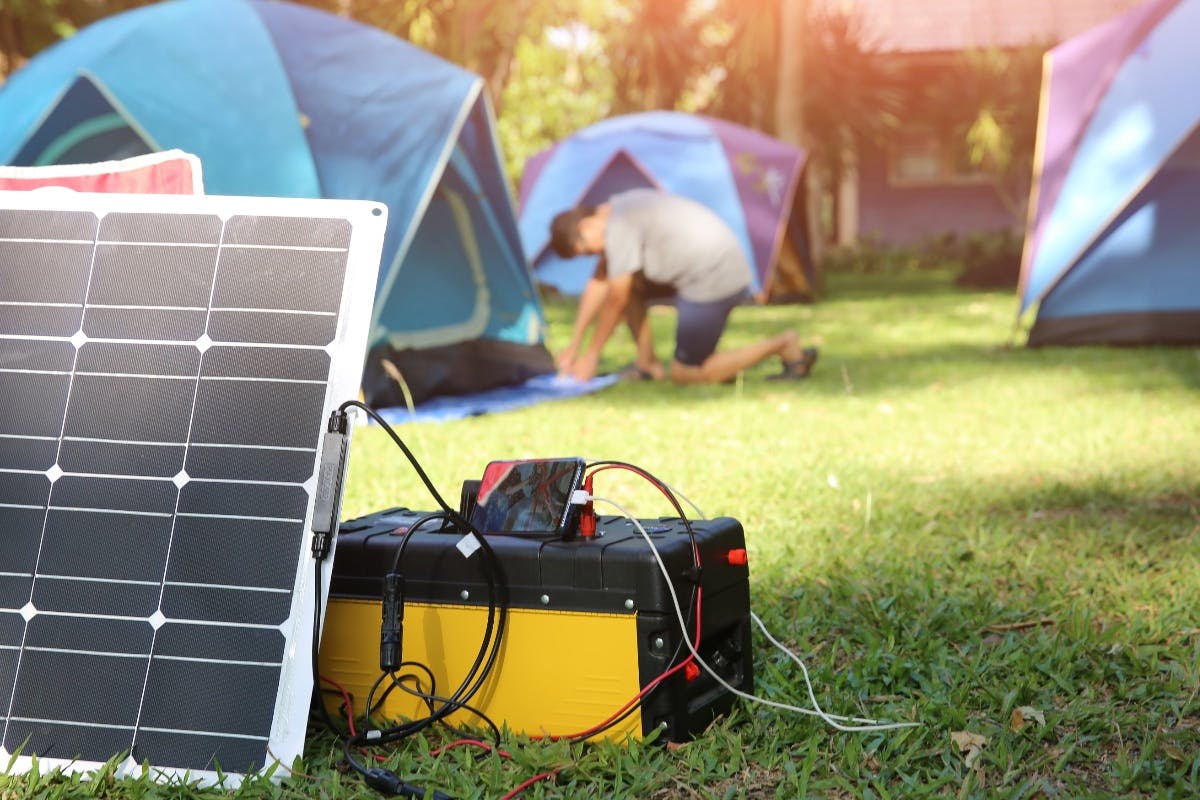
Solar charging performance was excellent. When paired with compatible 200-watt solar panels, the AC200MAX pulled in consistent power even in partially cloudy conditions, and on clear days with optimal panel positioning, we recorded charging rates that could bring the unit from empty to full within a reasonable window. The unit accepts up to 900 watts of solar input, which means you can daisy-chain multiple panels for faster recharge times — a critical advantage during extended power outages where every hour of sunlight matters.
Build quality is reassuringly solid. The housing feels rugged and durable, the handles are comfortable for carrying despite the unit weighing in at around 62 pounds, and every port cover and button has a satisfying, quality feel. The fan noise during heavy loads is present but far from intrusive — certainly quieter than any gas generator, and low enough to use indoors or in a tent without disturbance.
On the downside, the weight does make this a two-hands-required situation for most people, so if ultra-portability is your top priority, a smaller model might serve you better for backpacking. Additionally, while AC wall charging is fast and efficient, you will want to invest in quality solar panels to get the most out of the solar input capability. The included cables and adapters are adequate, but upgrading to longer extension cables is recommended for optimal panel-to-generator placement flexibility.
Strengths
✔ Expandable capacity up to 8,192Wh with add-on batteries
✔ LiFePO₄ cells rated for 3,500+ charge cycles
✔ Extensive port selection including 30A RV outlet
✔ Up to 900W solar input for rapid off-grid recharging
✔ Clear LCD display and intuitive app control
Considerations
✦ Weighs approximately 62 lbs — not easily carried solo over long distances
✦ Solar panels sold separately for most configurations
✦ Premium price point reflects premium build and capability
How We Evaluated These Solar Generators
Our testing process spanned several months and was designed to simulate the real-world conditions that matter most to homeowners, outdoor enthusiasts, and emergency preparedness planners. Every unit was subjected to the same battery of tests to ensure a fair and consistent comparison across the board.

Ease of Use
From the moment we unboxed each unit, we evaluated how intuitive the setup process was. We examined control panel layouts, the clarity and readability of digital displays, and whether icons and menus felt logical or confusing. We also tested each unit's companion smartphone app, rating the connection process, interface design, and the usefulness of the information and controls provided.
Performance Under Load
Each generator was tested with a standardized appliance load that included stand fans, a compact refrigerator-freezer running at maximum cooling, and LED lighting. We measured how long each unit could sustain this combined draw on a full charge, tracked voltage stability over time, and noted whether output wattage remained consistent or degraded as battery levels dropped. Units were also tested with higher-wattage devices like power tools to evaluate surge handling.
Solar Charging Efficiency
All units were tested outdoors with solar panels in a variety of sun conditions ranging from clear skies to overcast and partially cloudy days. Panels were positioned optimally and connected using extension cables to keep the generators in shade while the panels sat in direct sunlight. We measured charge rates at multiple points throughout the day and noted how well each unit's charge controller managed variable input from passing clouds and shifting sun angles.
Portability
We hauled every unit around the house, in and out of vehicles, up stairs, and across uneven terrain to assess real-world portability. Handle comfort, weight distribution, overall dimensions, and the ability to carry or move each unit solo were all factored into our evaluation. While heavier units are not inherently worse, portability is a critical factor for anyone who plans to transport their generator regularly for camping, road trips, or emergency relocation.
Build Quality and Design
We inspected each unit's overall construction, materials, hinge and latch quality, port covers, and general fit and finish. We also assessed fan noise at various load levels and evaluated how well the cooling systems performed without becoming obnoxious. Industrial design elements — including button placement, screen visibility in direct sunlight, and cable management — were also considered.
Extra Features and Value
Beyond core performance, we considered additional features such as wireless charging pads, UPS (uninterruptible power supply) functionality, expansion battery support, emergency lighting, and the overall quality and reliability of companion apps. Warranty length, customer support reputation, and long-term value relative to price were also weighed in our final assessments.
What to Look for When Choosing a Solar Generator
Shopping for a solar generator can feel overwhelming given the sheer number of options available. Understanding a few key specifications and features will help you narrow down the field and find a unit that matches your specific needs and budget.
Battery Capacity
Measured in watt-hours (Wh), this tells you how much total energy the unit can store on a full charge. A 500Wh unit can theoretically run a 50-watt device for 10 hours, though real-world efficiency losses mean actual run times will be somewhat shorter. For home backup during outages, look for units with at least 1,000Wh. For powering major appliances like refrigerators, fans, and medical equipment for extended periods, 2,000Wh or more is ideal. If you anticipate needing even more capacity, choose a model that supports expansion batteries so you can scale up over time.
Power Output
Measured in watts (W), this determines what devices and appliances you can run simultaneously. A unit rated at 1,000 watts can handle most small electronics, chargers, and LED lights without issue, but will struggle with heavy-draw appliances like space heaters, hair dryers, or power tools. For versatile home and outdoor use, aim for at least 1,500 to 2,000 watts of continuous output. Pay attention to the surge or peak wattage rating as well — this tells you how much the unit can handle briefly when an appliance motor kicks on.
Battery Chemistry
Most modern solar generators use one of two lithium-based battery chemistries. Lithium-ion NMC (nickel manganese cobalt) cells are lighter and more energy-dense but have a shorter cycle life, typically around 500 to 800 full charge cycles. Lithium iron phosphate (LiFePO₄ or LFP) cells are heavier but far more durable, often rated for 2,500 to 6,000+ cycles while retaining at least 80 percent of their original capacity. LFP batteries also handle heat better and are considered inherently safer. For long-term value and reliability, LFP is the clear winner.
Solar Input and Recharge Speed
The solar input rating, measured in watts, tells you the maximum rate at which the generator can absorb power from connected solar panels. Higher input means faster solar recharging. A unit that accepts 400 watts of solar input will recharge roughly twice as fast as one limited to 200 watts, assuming you have panels to match. Look for units that support multiple panel connections and offer MPPT (Maximum Power Point Tracking) charge controllers, which optimize energy harvest even when sunlight conditions are less than perfect.
Portability and Weight
There is always a trade-off between capacity and portability. Larger units with more battery capacity inevitably weigh more — many high-capacity models exceed 50 pounds. If you plan to move your generator frequently between your home, vehicle, and campsite, weight and handle design become critical. Some manufacturers offer wheeled cart accessories or integrated wheels for their heavier models. For hiking or backpacking, a smaller unit in the 300 to 600 watt-hour range may be more practical even if it sacrifices run time.
Port Selection and Expandability
Consider what you need to plug in and how many devices you will be running simultaneously. At minimum, look for multiple AC outlets, USB-A and USB-C ports, and a 12-volt DC outlet. If you have an RV, a dedicated 30-amp RV plug is a valuable bonus. Expandability is another important consideration — some models allow you to connect additional battery modules to significantly increase total capacity without buying an entirely new system. This modular approach can save money and provide flexibility as your power needs evolve.

Essential Tips for Getting the Most from Your Solar Generator
Owning a solar generator is only half the equation — using it correctly ensures you get maximum performance, longevity, and safety from your investment. Here are the most important practices we learned during months of testing.
First, always keep your generator shielded from the elements. While many solar panels are rated for outdoor use and can handle rain and wind, the generator unit itself should never be exposed to water, extreme heat, or direct prolonged sunlight during operation. Place it behind a door, on a covered patio, inside a garage, or in a vehicle while running extension cables out to your solar panels positioned in direct sun. We recommend using 25-foot extension cables at minimum to give yourself flexibility in panel-to-generator placement.
Second, maintain your battery between uses. LiFePO₄ batteries are remarkably low maintenance, but they do best when stored at 40 to 60 percent charge in a cool, dry location. Avoid leaving the unit fully charged or fully depleted for extended periods. Most manufacturers recommend topping it off every three to six months during storage to maintain cell health and maximize the total number of charge cycles over the battery's lifetime.
Third, invest in quality solar panels and do not undersize them. If your generator supports 900 watts of solar input, pairing it with a single 100-watt panel will result in painfully slow recharge times. Aim to get as close to the unit's maximum solar input as your budget allows. Multiple smaller panels can be daisy-chained together to reach the desired input wattage, and rigid or semi-rigid panels generally provide more consistent output than their flexible counterparts.
Finally, understand your power consumption before an emergency strikes. Run a test weekend where you use only your solar generator to power essential items and track how quickly the battery depletes. This exercise gives you an accurate picture of how long your unit will last under real conditions and helps you prioritize which appliances and devices are truly essential when the grid goes down.
Ready to Power Your Backyard and Beyond?
Explore the BLUETTI AC200MAX — 2,200W of expandable portable power built for the long haul.
Shop BLUETTI AC200MAX →This article is intended for informational purposes and reflects our independent assessment. Product specifications and availability are subject to change. Always verify details directly with the manufacturer or retailer before purchasing.