


 Damage
  Loss
Loss  Theft
Theft 


Flexible Solar Panels vs. Rigid Solar Panels: Which One Should You Choose?
The world of solar energy has expanded significantly in recent years, offering consumers more options than ever before. Two of the most widely discussed categories are flexible solar panels and rigid solar panels. Each type brings its own set of strengths and trade-offs to the table, and selecting the right one depends entirely on your unique circumstances.
Whether you are outfitting an RV for a cross-country road trip, adding power to a boat, setting up an off-grid cabin, or simply looking for reliable energy solutions for your backyard, understanding the real differences between these two panel types is essential. This comprehensive guide will walk you through the advantages, disadvantages, weight considerations, lifespan, heat management, mounting techniques, and best applications so you can make a confident, well-informed purchase.
What This Article Covers
- Flexible vs. Rigid Solar Panels — The Core Difference
- Advantages of Flexible Solar Panels Over Rigid
- Disadvantages of Flexible Solar Panels Compared to Rigid
- Weight Comparison: Flexible vs. Rigid
- How Long Do They Last?
- Do Flexible Solar Panels Overheat?
- Mounting Flexible Solar Panels vs. Rigid
- Flexible vs. Rigid Solar Panels for RV Use
- The Best Applications for Each Type
- How to Decide Between Flexible and Rigid
- Frequently Asked Questions
Flexible vs. Rigid Solar Panels — The Core Differ

At their core, both panel types convert sunlight into usable electricity. However, the way they are constructed and the materials used set them apart dramatically.
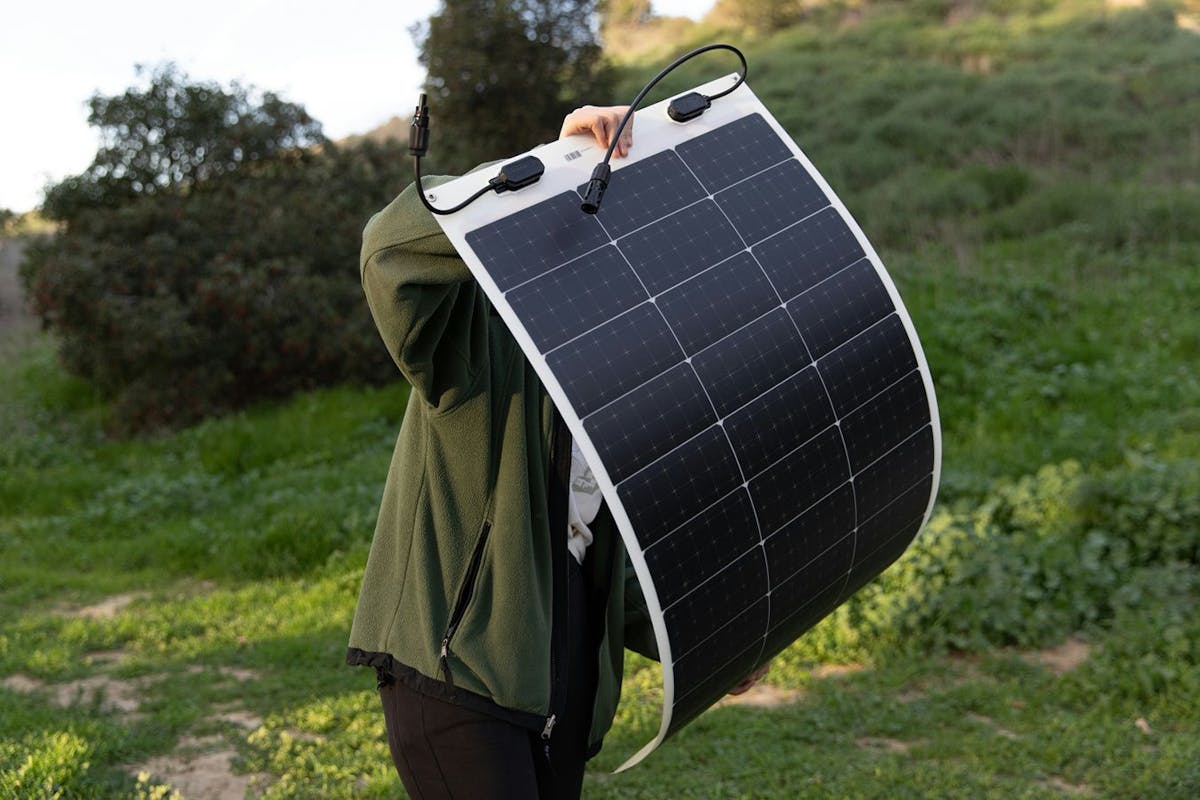
Flexible solar panels are built using thin-film photovoltaic cells layered onto a bendable substrate. This construction allows them to curve, flex, and conform to non-flat surfaces. They are often protected by durable coatings like ETFE rather than traditional tempered glass. Because of this lightweight, pliable design, they can be installed on surfaces where rigid panels simply would not fit.
Rigid solar panels, on the other hand, represent the more traditional approach. They consist of monocrystalline or polycrystalline solar cells encased within an aluminum frame and covered with tempered glass. This robust construction gives them superior durability and typically higher energy conversion efficiency, but it also makes them heavier and less adaptable in terms of where they can be placed.
In short: Flexible panels prioritize adaptability and portability. Rigid panels prioritize raw efficiency and long-term durability. Your ideal choice depends on how and where you plan to use them.
Advantages of Flexible Solar Panels Over Rigid
🔄 Versatile Installation
Flexible panels can bend to match curved rooftops, boat decks, RV caps, and other irregular surfaces that rigid panels cannot accommodate. This opens up far more installation possibilities.
🪶 Ultra-Lightweight
Weighing roughly 70–80% less than rigid panels of similar wattage, flexible panels are perfect for weight-sensitive applications like recreational vehicles and marine setups.
⚡ Simple Setup
Most flexible panels can be installed using adhesive tape, Velcro, or simple fasteners. There is no need for heavy mounting brackets, drilling, or professional installation in many cases.
🚐 Portability
Their thin, bendable profile means flexible panels can be rolled or folded for easy storage and transport, making them ideal for camping trips and on-the-go power needs.
In addition, advances in solar cell technology — including CIGS (Copper Indium Gallium Selenide) cells — have improved the performance of flexible panels considerably. Many modern flexible panels now achieve conversion efficiencies between 18% and 23%, narrowing the gap with their rigid counterparts.

Disadvantages of Flexible Solar Panels Compared to Rigid

While flexible panels offer excellent versatility, they do come with several notable drawbacks that are important to weigh before purchasing.
Lower Efficiency in Some Models: Although the efficiency gap has narrowed, many flexible panels still convert slightly less sunlight into electricity than premium rigid panels. If you need maximum power output per square foot, rigid panels may still hold an edge.
Shorter Warranty Periods: Flexible panels often come with warranties in the 5- to 15-year range, whereas rigid panels frequently carry guarantees of 25 years or more. The thinner materials and plastic coatings used in flexible panels can degrade faster under sustained UV exposure and thermal cycling.
Higher Cost Per Watt: Due to the advanced materials and specialized manufacturing processes involved, flexible solar panels tend to cost more per watt than comparable rigid models. If budget is a primary concern, rigid panels often deliver better value over the long term.
Susceptibility to Physical Damage: Without the protection of an aluminum frame and tempered glass, flexible panels are more vulnerable to scratches, punctures, and surface wear from debris, hail, or foot traffic.
Weight Comparison: Flexible vs. Rigid
Weight is one of the most significant differentiating factors between these two panel types, and it plays a major role in installation decisions.
A typical 100W flexible solar panel weighs somewhere between 4 and 6 pounds. By comparison, a rigid panel with the same power output generally weighs between 15 and 25 pounds — and larger rigid panels can exceed 40 or even 50 pounds.
This dramatic weight difference matters most in mobile applications. On an RV, every extra pound adds to your fuel consumption. On a boat, excessive weight affects stability and performance. For portable setups — where you might carry your panel from a vehicle to a campsite — lightweight construction is not merely a convenience; it is a necessity.
Quick Comparison: Flexible panels typically weigh 70–80% less than rigid panels of equivalent wattage, making them the clear choice when weight restrictions are a primary concern.
How Long Do Flexible Solar Panels Last vs. Rigid?
Longevity is a critical consideration, especially when calculating the true cost of your solar investment over time.
Rigid solar panels are engineered to last. With their aluminum frames, tempered glass covers, and robust cell construction, most rigid panels continue operating at 80–90% of their original capacity even after 25 years. Many manufacturers back this up with performance warranties of 25 to 30 years.
Flexible solar panels, while impressive in their portability and adaptability, generally have a shorter operational lifespan. Most flexible panels are expected to perform reliably for 10 to 15 years, though high-quality models with advanced coatings and cell technologies can push closer to 20 years with proper care.
The primary factors that affect a flexible panel's lifespan include UV degradation of the protective coating, thermal stress from constant heating and cooling cycles, and micro-cracking of the thin cells over time. Regular cleaning, careful handling, and avoiding extreme bending beyond the panel's rated tolerance will help maximize its service life.
Do Flexible Solar Panels Overheat?
Overheating is a legitimate concern with flexible solar panels, and it deserves honest discussion.
When a rigid solar panel is installed using traditional mounting brackets or a racking system, there is a natural air gap between the panel and the roof surface beneath it. This gap allows air to circulate freely, carrying heat away from the panel's underside. Cooler panels operate more efficiently, so this ventilation provides a real performance benefit.
Flexible panels, by contrast, are often adhered directly to a surface — pressed flat against an RV roof or boat deck with little or no air space underneath. This means they absorb and retain significantly more heat, which can reduce power output by 10–25% on especially hot days.
Higher operating temperatures also accelerate material degradation over time, which is one of the reasons flexible panels tend to have shorter lifespans. However, this issue can be mitigated by choosing panels with a favorable temperature coefficient rating, or by using mounting techniques that leave a small air gap beneath the panel.
Pro Tip: If you live in a particularly hot climate, consider installing spacers or standoffs beneath your flexible panels to promote airflow and minimize heat-related efficiency losses.
Mounting Flexible Solar Panels vs. Rigid
The mounting process is where the practical differences between flexible and rigid panels become most apparent.
Rigid panels require a more involved installation. You will typically need mounting brackets (such as Z-brackets or tilt mounts), hardware, and possibly professional help to secure them properly. Drilling into the mounting surface is usually necessary, which raises concerns about water intrusion — especially on RV and boat roofs. The upside is that a properly installed rigid panel setup is extremely secure and can withstand high winds and harsh weather with confidence.
Flexible panels offer a dramatically simpler mounting experience. Here is the general process:
- Choose the mounting location — Select an area that receives maximum sunlight with minimal obstructions from vents, antennas, or overhead structures.
- Prepare and clean the surface — Thoroughly clean the area where the panel will be placed to ensure strong adhesion.
- Position the panel — Lay the panel out on the surface and confirm proper alignment before committing to the bond.
- Secure with adhesive or fasteners — Use the included adhesive backing, industrial-grade VHB tape, or mechanical fasteners to fix the panel in place.
- Connect the wiring — Route the cables to your charge controller, ensuring proper connections and weather-resistant seals at all entry points.
-
Test the system — Verify that power is flowing correctly and all connections are secure before leaving the installation unattended.

Flexible vs. Rigid Solar Panels for RV Use

Recreational vehicles represent one of the most popular applications for solar panels, and the flexible-versus-rigid debate is especially relevant here.
Flexible panels are an outstanding choice for RV owners who prioritize a clean, low-profile look and want to minimize added weight. They hug the roofline closely, improve aerodynamics, and can be installed on curved front caps or other non-flat surfaces. Installation is often a straightforward DIY project with no drilling required.
Rigid panels, meanwhile, are favored by full-time RVers who need maximum power generation and long-term reliability. When mounted on tilt brackets, rigid panels can be angled toward the sun for optimal energy capture, an advantage that flat-mounted flexible panels simply cannot match.
Many experienced RV solar users actually combine both types — installing rigid panels on flat roof sections for maximum output and adding flexible panels on curved areas to capture additional energy from otherwise unused space.
The Best Applications for Each Panel Type
Flexible Panels Excel In:
- RVs, campervans, and travel trailers
- Boats, yachts, and marine vessels
- Curved rooftops and irregular surfaces
- Portable and temporary setups
- Lightweight camping and backpacking rigs
- Stealth or low-profile installations
Rigid Panels Excel In:
- Residential rooftop installations
- Off-grid cabins and permanent structures
- Ground-mounted solar arrays
- Commercial and agricultural use
- High-output systems with tilt capability
- Long-term, heavy-duty energy production
When high efficiency and decades of dependable service are required, rigid panels are hard to beat. But when flexibility, portability, and effortless installation are the priorities, modern flexible panels deliver excellent results.
Ready to Power Your Setup with Rigid Solar?
Looking for a durable, high-efficiency rigid panel with everything you need for a solid installation? Check out this powerful option available at Backyard Provider.
How to Decide Between Flexible and Rigid Solar Panels
The truth is, neither panel type is universally "better" than the other. The right choice depends on several personal factors:
Consider flexible panels if you need a lightweight option for a mobile platform like an RV or boat, you want a quick and drill-free installation, you have curved or irregular mounting surfaces, or portability is a top priority for your lifestyle.
Consider rigid panels if you are building a permanent solar installation, long-term durability and maximum efficiency are your main goals, you want the lowest possible cost per watt over the panel's lifetime, or you plan to use tilt mounts for optimal sun exposure.
In many cases, a hybrid approach — combining both panel types within a single system — offers the best of both worlds. Just make sure the panels share compatible voltage and current ratings and that they are connected through an appropriate charge controller.
Final Thoughts
The flexible-versus-rigid solar panel question ultimately comes down to your specific situation. If you lead an active, mobile lifestyle and need power that travels with you, flexible panels are a remarkable option that continues to improve year after year. If you are investing in a permanent setup where longevity and peak performance are non-negotiable, rigid panels remain the gold standard.
Whichever direction you choose, investing in solar energy is always a step in the right direction — for your wallet, for your independence, and for the environment.
Frequently Asked Questions
1. Are rigid or flexible solar panels better overall?
Neither is objectively better — it depends on your needs. Rigid panels offer higher efficiency and longer life, making them ideal for permanent installations. Flexible panels are lighter and more adaptable, making them better for mobile and temporary setups.
2. What are the main disadvantages of flexible solar cells?
The primary drawbacks include a generally shorter lifespan, potential for overheating when mounted flat against surfaces, slightly lower efficiency in some models, and higher cost per watt compared to rigid alternatives.
3. Why are flexible solar panels considered less efficient?
Flexible panels use thinner photovoltaic materials and lighter substrates, which can limit energy conversion. Additionally, when installed without an air gap, heat buildup reduces their real-world output. That said, modern flexible panels have closed the efficiency gap significantly.
4. Can I walk on a flexible solar panel?
Some flexible panels are designed to withstand light foot traffic, but it is generally not recommended unless the manufacturer explicitly states the panel can handle it. Walking on panels risks micro-cracking the cells, which can degrade performance over time.
5. Can flexible solar panels get wet?
Yes. Most quality flexible solar panels carry an IP67 or IP68 waterproof rating and are built to endure rain, splashing, and humid environments without performance loss. Always verify the waterproof rating before purchasing.