


 Damage
  Loss
Loss  Theft
Theft 


Your Ice Maker: Essential Tips to Keep It Clean and Running Smoothly
From premium countertop machines to compact fridge-integrated units, every ice maker shares one fundamental truth — they all need regular care and attention to perform their best. Whether you're refreshing drinks at a backyard gathering or running a commercial setup, neglecting your machine is a shortcut to preventable breakdowns.
The good news? Most problems are completely avoidable. With consistent upkeep and a little know-how, your ice maker can turn out crystal-clear cubes day after day, year after year.
Keep It Clean
Ice makers do exactly what the name suggests — they convert water into ice, batch after batch, hour after hour. That process naturally invites bacteria, mold, and mineral deposits if left unchecked. Unsanitary conditions promote germ growth, which in turn can become a serious health concern.
The remedy is simple: clean your machine on a consistent schedule. Several leading manufacturers including Scotsman have developed their own specially formulated cleaning solutions for exactly this purpose. Others, such as True Manufacturing and FirstBuild, recommend using a diluted bleach solution when cleaning yourself. Either way, the goal is to flush your ice maker thoroughly with the appropriate solution and follow with a clean rinse. A good sanitizer — along with basic hygiene habits — helps protect against bacterial buildup over time.
Interior Surfaces
Use mild soap and warm water on all interior surfaces. Avoid abrasive tools or harsh chemical cleaners.
Fridge Ice Makers
Empty the bin, wipe the freezer and fresh food sections, and dry all surfaces before reassembling.
Outer Cabinet
A damp cloth with mild dish soap removes grime and stains from the exterior body with ease.
Change the Filter
Dirty water produces poor ice. Modern refrigerators and standalone ice machines equipped with internal water filtration systems pass incoming water through activated charcoal filters designed to eliminate impurities and improve water quality. The results are clear, better-tasting cubes that don't carry the smell or flavor of tap water.
Some basic standalone models rely on filters too, but certain others don't. Among those that do, many multi-stage filtration systems are equipped with bacteriostatic capabilities — meaning they actively work to suppress bacterial growth throughout the filtration process.
No matter which type of unit you own, mark your calendar and change the filter on schedule. Leaving a clogged or expired filter in place can restrict water flow, damage internal components, and produce ice that tastes off. A good rule of thumb: swap the filter every 3 to 6 months, or at minimum once a year.
Don't Forget to Descale
If you own a reverse osmosis system, your ice maker is drawing from some of the purest water available — which naturally limits calcium deposits (also called scale). Standard machines drawing from regular tap water produce far more scale over time. In fact, scale-heavy machines can churn out several times more mineral buildup over the same period compared to RO-fed units.
Consider this: the True Clear Ice Machine carries a daily ice production capacity of up to 17 pounds. At that production rate, scale deposits accumulate rapidly inside the machine — ultimately shortening the lifespan of internal components and compromising ice quality. Regular descaling is essential.
Both True and Scotsman recommend running their own proprietary descaling products through the machine at regular intervals. For the FirstBuild Opal nugget ice maker, the brand's official guidance suggests using household white vinegar to address internal scale deposits safely and affordably.
Scale Happens Fast
High-output machines can accumulate significant mineral deposits in as little as a few weeks. Build a descaling routine into your monthly maintenance schedule.
Deal with Clogs
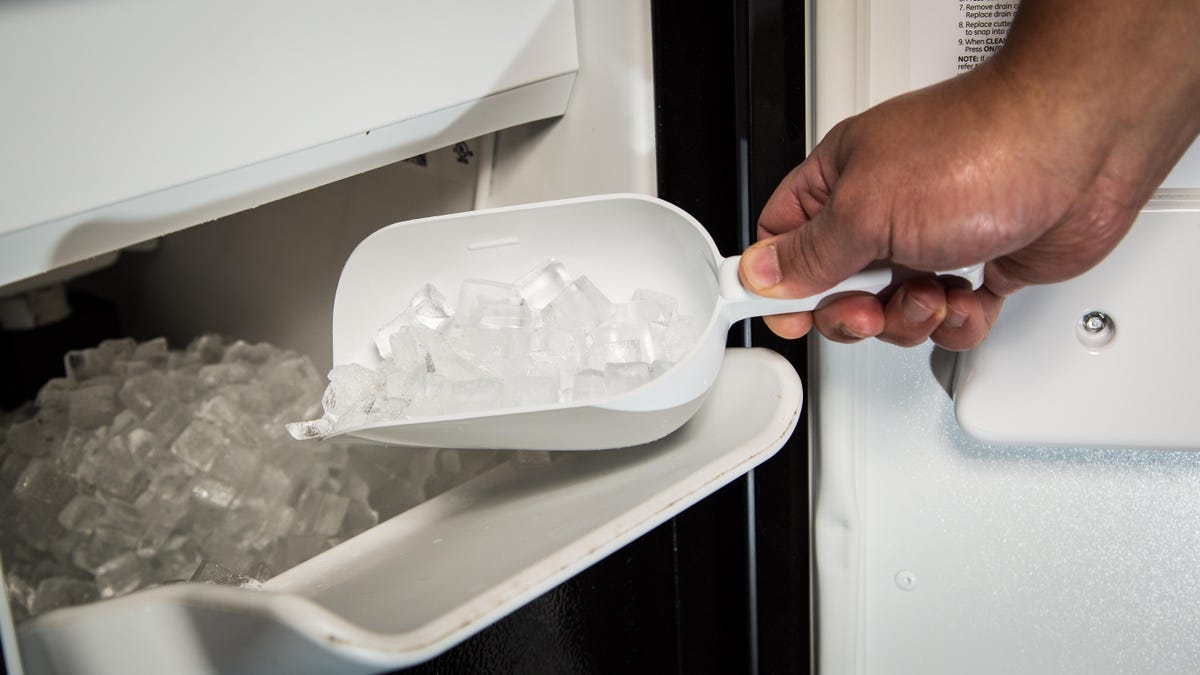
Refrigerator ice makers rely on small dispenser chutes to deliver ice on demand — and over time, those chutes are highly susceptible to clogs. Clumped ice and frozen blockages are the usual culprits. Resist the temptation to force anything sharp or rigid into the chute to break it free. Instead, gently clear any stuck cubes or ice chunks, then dry everything completely to prevent refreezing in the same spot.
For freezer-compartment ice makers with built-in bins, periodic checks are essential. If the ice isn't dispensing the way it should, the chute or bin could have a blockage forming. Empty the bin regularly — especially if you don't use the machine frequently. Clearing it out every two to three weeks is a simple habit that prevents most clog-related headaches before they start.
Give It Room to Breathe
Standalone ice machines need proper airflow to run efficiently. Without adequate ventilation, the compressor and fan work overtime — shortening the life of the unit and raising your energy bill. Most manufacturers recommend a minimum clearance of at least 3 inches on the sides and back of the machine, and front-facing models must be positioned so warm air can escape without obstruction.
Brands like Scotsman, True, and GE design ventilation openings along specific edges of their machines — front-facing, rear, or side — to regulate internal temperature. Blocking these vents even partially can lead to performance drops, overheating, and premature wear. Always consult your owner's manual to confirm the correct ventilation configuration for your specific model.
Featured Product
Air-cooled, compact, and built for demanding environments — a professional-grade dispenser for your home or business.
Hoshizaki Mini Ice Dispenser