


 Damage
  Loss
Loss  Theft
Theft 


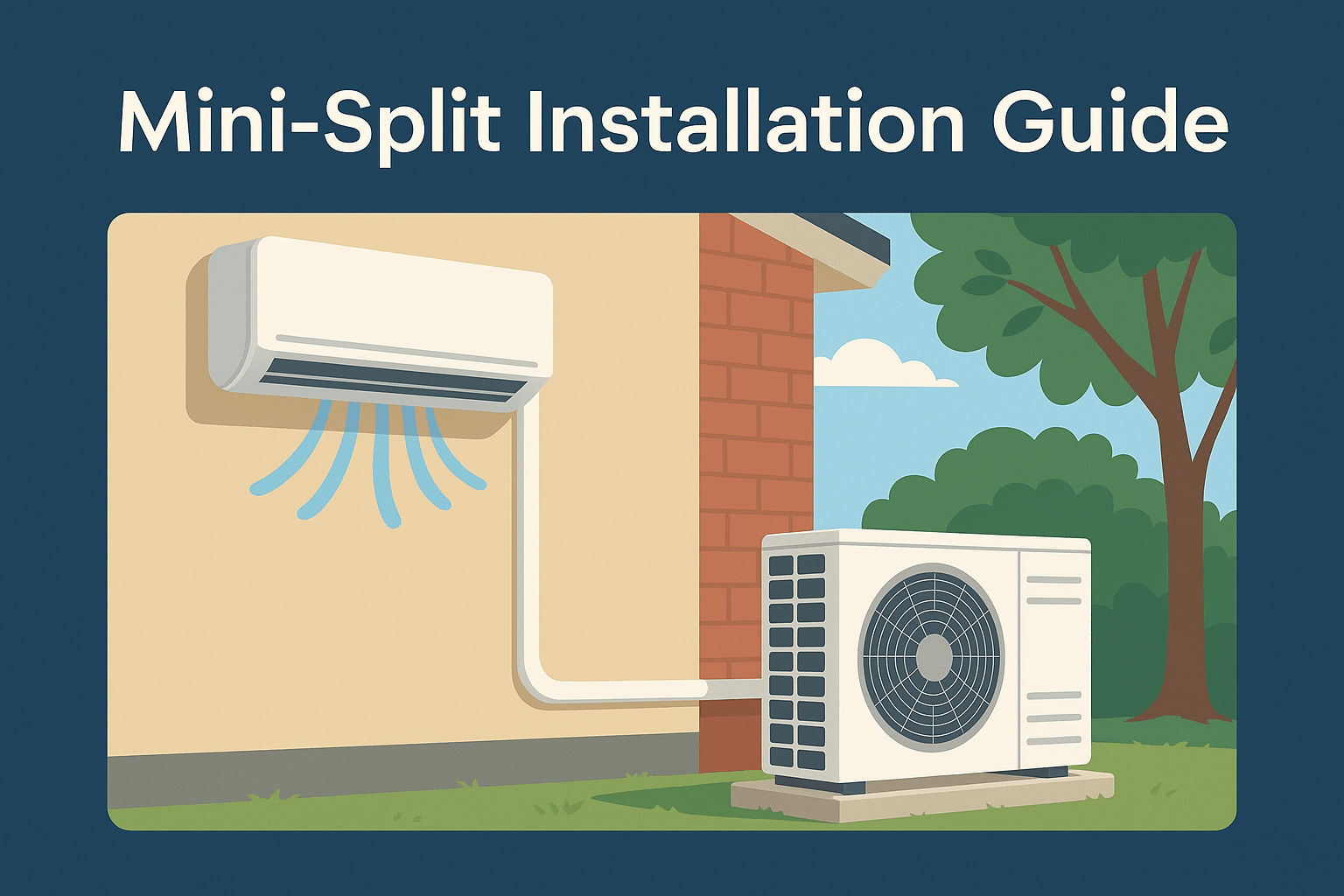
Mini-Split Installation Guide: 9 Expert Steps That Actually Prevent Costly Mistakes
Sizing the System: The Goldilocks Rule of Cooling
Getting the right BTU rating isn't guesswork — it's a calculation. An oversized unit short-cycles constantly, leaving rooms feeling clammy and wasting electricity. An undersized unit runs non-stop and never quite gets the space where you want it. Both scenarios shorten equipment life dramatically.
A proper load calculation (Manual J) accounts for square footage, ceiling height, insulation values, window area, local climate, and even how many people regularly occupy the space. As a rough starting point, most installers use 20 BTU per square foot — but always refine this with a full load calculation before purchasing.

Choosing the Perfect Indoor Unit Location: Height, Airflow, and Reach
Where you mount the indoor head unit determines how evenly conditioned air is distributed throughout the space. Mount it too low and you'll get hot and cold spots. Mount it behind an obstruction and airflow is restricted, putting unnecessary strain on the blower motor.
The ideal installation height is typically 7–8 feet from the floor, on an exterior wall when possible, with at least 6 inches of clearance on all sides. The unit should have an unobstructed line of airflow across the longest axis of the room.
- Mount on a structurally sound wall capable of supporting the unit's weight
- Keep the indoor unit away from direct sunlight, heat sources, and steam
- Ensure the condensate drain line can flow freely by gravity — no uphill runs
- Avoid placement above TVs, electronics, or anywhere that dripping condensate could cause damage
- Position the remote sensor receiver to face into the room, unobstructed

Understanding Permits and Codes: Paperwork That Protects You
Many homeowners skip this step — and many later regret it. Installing a mini-split without the required permits can void your homeowner's insurance, create complications when selling the property, and in some jurisdictions result in fines or mandatory removal of the system.
Most municipalities require a mechanical permit for mini-split installations. Some also require an electrical permit for the dedicated circuit. Always check with your local building department before starting work. A licensed HVAC contractor will handle this automatically — if you're DIY-ing, it's your responsibility.

Spotting the Perfect Outdoor Unit Location and Running the Line Set
The outdoor condenser unit is the heart of the system — it needs unrestricted airflow, solid footing, and a location that keeps line set runs as short as practical. Longer line sets mean more refrigerant, more potential leak points, and slightly reduced efficiency.
Outdoor Unit Placement
Keep the unit on a level pad at least 12 inches off the ground in snow-prone regions. Ensure 24+ inches of clearance in front and on all sides for airflow. Shield from direct afternoon sun if possible, but never enclose the unit.
Line Set Routing
Run line sets through the wall at a slight downward pitch toward the outside to assist condensate drainage. Use line hide covers for a clean finish. Secure the line set every 3–4 feet to prevent vibration and sagging.

Refrigerant Handling: Why Nitrogen and Vacuum Matter
This is where DIY installs most commonly go wrong. Before any refrigerant is introduced (or before a pre-charged line set is connected), the system must be pressure-tested with dry nitrogen and then evacuated to a deep vacuum — typically 300–500 microns or lower.
Skipping the vacuum step is the single most common cause of premature compressor failure in field-installed mini-splits. Moisture left in the line set will mix with refrigerant oil and create acids that destroy the compressor from the inside out, usually within a few years of installation.

Electrical Connections: Dedicated Circuits and Safe Starts
Mini-split systems require a dedicated electrical circuit — sharing a circuit with other appliances is not permitted by the NEC and will trip breakers under load. The circuit must be sized to the unit's minimum circuit ampacity (MCA) and protected by a breaker no larger than the maximum overcurrent protection (MOP) listed on the unit nameplate.
Use copper wiring only. Run conduit where the wiring is exposed. The outdoor disconnect box should be located within sight of the outdoor unit and within 100 feet of the indoor unit, per NEC 440.14. Low-voltage communication wire between the indoor and outdoor units must be routed and protected separately from the high-voltage power wiring.

Testing and Commissioning: Turning Things On the Right Way
The first startup of any new mini-split should be deliberate and methodical — not just flipping the power on and hoping for the best. Perform a visual inspection of all connections before energizing. Verify that the crankcase heater (if present) has been energized for at least 4 hours before running the compressor in cold weather.
- Verify all flare connections are torqued to spec and leak-checked with electronic detector or soap bubbles
- Confirm communication wire polarity matches between indoor and outdoor units
- Check that the condensate drain flows freely before running the unit in cooling mode
- Monitor supply and return air temperatures — expect a 16–22°F delta in cooling mode under normal conditions
- Verify operating pressures are within manufacturer spec using refrigerant gauges

Finishing and Dressing the Line Set: Turning Pro Appearance Into Long-Term Protection
A properly finished installation isn't just aesthetically satisfying — it actively protects the system. UV rays degrade un-insulated refrigerant lines, causing refrigerant loss over time. Unsupported line sets vibrate, work-hardening the copper and eventually causing cracks at flare connections.
Use purpose-made line hide conduit systems that protect and organize the refrigerant lines, communication wire, and condensate drain together in one clean run. Seal all wall penetrations with fire-rated foam. Cap the line set terminations neatly at both the indoor and outdoor units.
Owner Handoff and Seasonal Maintenance: Teaching Some Self-Care
A mini-split system properly maintained will reliably deliver comfort for 15–20 years. Neglected systems fail in 5–7. The difference comes down to a handful of simple habits that every homeowner should understand before the installer packs up their tools.
Monthly Tasks
Clean the indoor air filters every 4–6 weeks during heavy-use seasons. Visually inspect the outdoor unit for debris buildup around the coil. Check that the condensate drain is flowing and not blocked.
Annual Tasks
Professionally clean the indoor coil and blower wheel once per year. Have a technician check operating pressures and inspect all electrical connections. Clean the outdoor coil with a gentle coil cleaner.
Ready to Install? Start With the Right System.
The Senville AURA Concealed Duct Mini-Split delivers ultra-quiet performance, dual-stage filtration, and whisper-silent operation — built for installs where discretion and efficiency both matter.
Senville AURA 18000 BTU Concealed DuctA mini-split done right is one of the best investments you can make in your home's comfort and efficiency. Follow these nine steps without cutting corners, use quality components, and you'll have a system that performs flawlessly for decades. When you're ready for the right equipment to match the right installation process, Backyard Provider has you covered.