


 Damage
  Loss
Loss  Theft
Theft 


What Is a Concealed Duct Mini-Split AC?
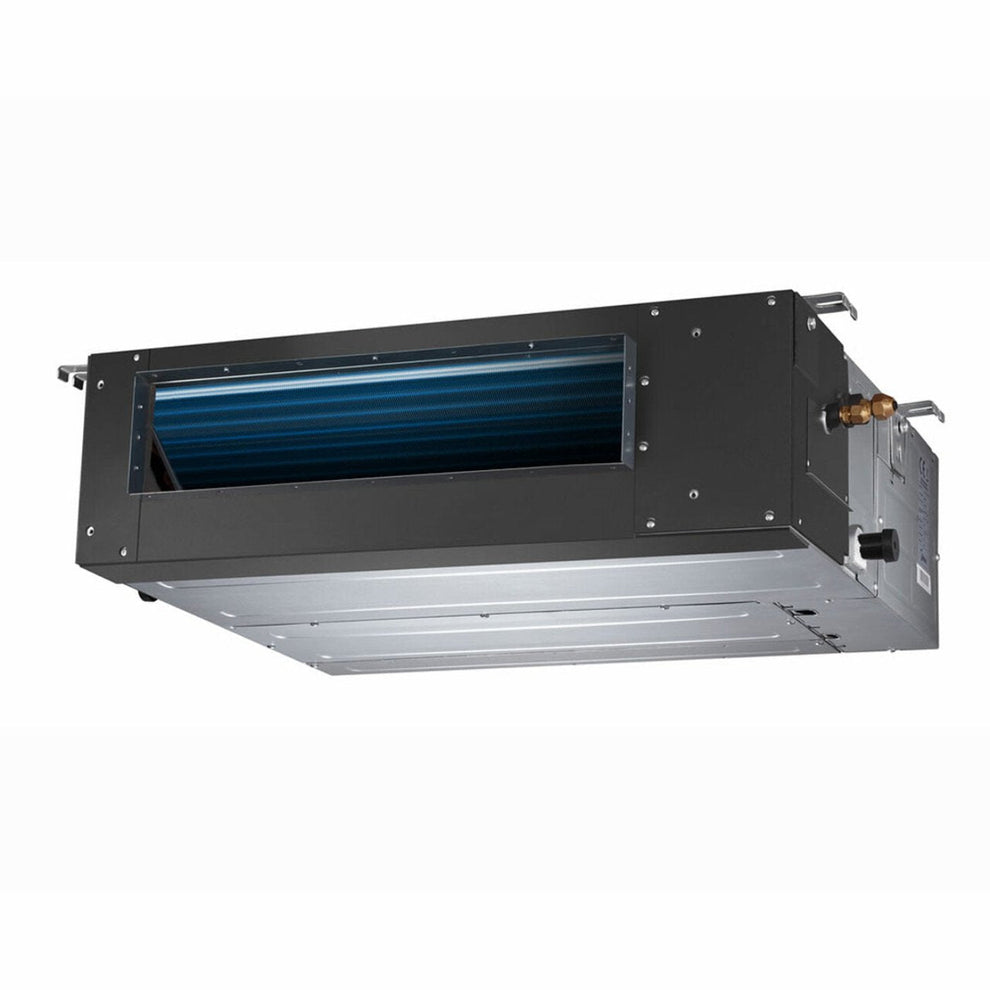
Looking for a cooling solution that delivers powerful climate control without the bulky look of traditional vents or wall-mounted units? A concealed-duct mini-split might be exactly what your space needs. These quiet, efficient systems blend seamlessly into your home while giving your living areas a cleaner, more refined appearance.
Let's walk through how these streamlined systems operate and what separates them from traditional split-system air conditioners and ductless mini-split units.
What Is a Concealed-Duct Mini-Split?
With a concealed-duct mini-split, the air handler is tucked discreetly inside a wall or ceiling cavity. The slim, compact air handler features a wide discharge opening and a filtered air intake, making it an excellent match for conditioning open-plan living spaces. During installation, insulated ductwork connects to the discharge outlet and extends to ceiling vents. Unobtrusive ceiling or wall grilles channel return air back to the concealed air handler.
How Does a Concealed-Duct Mini-Split Work?
Concealed-duct mini-splits pair an outdoor compressor with an indoor air handler, linked by insulated refrigerant lines. Conditioned air flows through the ductwork to your rooms, and return ducting draws it back to the air handler for reconditioning.
Where Is the Ductwork Located With a Hidden Ducted Air Conditioner?
The air handler and ducts typically sit inside a ceiling or wall cavity, though attic and crawl space installations are also common. Concealed split air conditioners provide the same zoning flexibility as ductless mini-split systems and come with a remote that communicates directly with the air handler, giving you precise temperature control across one or several rooms.
What Is the Difference Between Concealed-Duct Mini-Splits and Traditional Split AC Systems?
From a system architecture standpoint, concealed-duct mini-splits and traditional split-system air conditioners share common ground. Both rely on outdoor compressors paired with indoor air handlers, and both distribute conditioned air through ductwork.
That said, concealed-duct mini-splits hold several performance advantages worth highlighting:
Superior Efficiency
Ducted mini-splits outperform conventional split-system ACs on energy use. Shorter, narrower duct runs mean less heat gain and loss during air distribution.
Simpler Installation
The compact air handler and ducts fit easily into existing wall, ceiling, or attic cavities, which streamlines installation compared to a traditional split system.
Built-In Zoning
Ducted mini-splits come with zoning functionality built right in, while conventional AC systems require additional adjustable dampers and zoned thermostats to match that capability.
Compared with ductless mini-split units, in-wall mini-splits offer meaningful upgrades in both aesthetics and noise control. The air handler stays completely out of sight, with only the discreet vents revealing where the cooling happens. A concealed air conditioner also runs noticeably quieter because the fan lives in a separate space behind a wall or ceiling. Plus, the ductwork helps absorb fan noise, even when the unit is running at full power.
Ready to Experience Discreet, Efficient Cooling?
The Senville AURA 18,000 BTU concealed-duct mini-split delivers powerful cooling and heating performance while staying completely hidden from view — perfect for open-concept spaces and whole-room comfort.
Shop Senville AURA 18,000 BTUHow Much Do Concealed-Duct Mini-Splits Cost?
A single-zone concealed-duct mini-split generally runs between $2,125 and $9,650 (CAD 2,985 to CAD 13,595), installation included. The wide spread in pricing reflects the broad range of cooling capacities available. At the lower end, a 9,000 BTU-per-hour unit falls in this bracket. A midsize 18,000 BTU-per-hour system typically costs between $2,600 and $8,225 (CAD 3,653 to CAD 11,555) installed. At the top end, 36,000+ BTU-per-hour units push toward the upper limit of that price window.
Are Ducted Mini-Split Systems Worth the Investment?
Now that you have a clearer picture of what concealed-duct mini-splits offer, you can make a more confident call on whether one is right for you. Here's a side-by-side look at the pros and cons:
Pros
- Consistent Comfort. Conditioned air reaches the room from several vent points rather than a single wall or ceiling outlet.
- Whisper-Quiet Performance. With the air handler tucked behind a wall or ceiling, a ducted mini-split runs noticeably quieter than a ductless model.
- Clean Aesthetics. The air handler stays completely hidden, so nothing disrupts the look of the room it serves.
Cons
- Higher Upfront Cost. Both equipment and installation expenses typically run higher than a similarly sized ductless mini-split.
- Not a DIY Project. Since the air handler and ducts must be routed inside a wall or ceiling and correctly connected, a qualified HVAC technician should handle the installation.
Bring Quiet, Hidden Cooling Into Your Home
Ready to upgrade your space with a concealed-duct mini-split? The Senville AURA 18,000 BTU model combines efficient cooling, reliable heating, and discreet installation — giving you year-round comfort without compromising your interior design.
Shop Senville AURA 18,000 BTU